Tsavo National Park, Kenya’s largest and oldest park, has earned the nickname ‘Land of Giants’ due to its vast landscapes and the magnificent giants that roam its terrain. In this article, we delve into the mystique and wonder that make Tsavo a natural marvel, a sanctuary for wildlife, and a draw for adventurers from around the world.
The Expanse of Tsavo
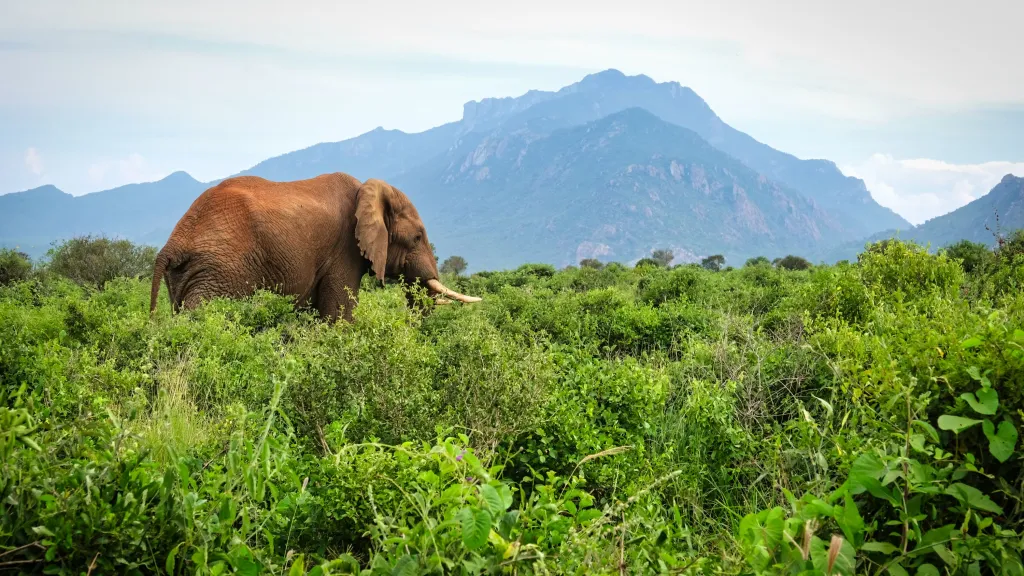
Spanning over 13,747 square kilometers, Tsavo National Park stands as Kenya’s largest and one of the world’s most vast wildlife sanctuaries. Its sheer size surpasses even the famous Yellowstone National Park in the United States, highlighting its global significance. The diversity within its boundaries is unparalleled, encompassing the Yatta Plateau, the world’s longest lava flow, and the meandering Galana River. This broad range of ecosystems, from savannahs and woodlands to riverine forests, fosters a habitat for some of Africa’s largest elephant herds, epitomizing the moniker “Land of Giants.” Additionally, Tsavo’s vast landscapes enable the coexistence of substantial populations of lions, rhinos, hippos, and diverse bird species, further cementing its reputation as a haven for giant species. The park’s immense scale and varied topography not only contribute to its rich biodiversity but also offer a sanctuary for these magnificent creatures, allowing them to thrive in their natural habitat, untainted by the outside world.
Historical Significance
Tsavo’s historical tapestry is rich and multifaceted, deeply entwined with archaeological discoveries, pre-colonial trade routes, and tales that have reached the annals of global legend. One cannot delve into the history of Tsavo without touching upon the archaeological findings that have shed light on early human activities within the region. These findings suggest Tsavo was a cradle of human civilization, part of the ancient trade routes that connected the interior of Africa to the coast, facilitating trade long before colonial borders were drawn.
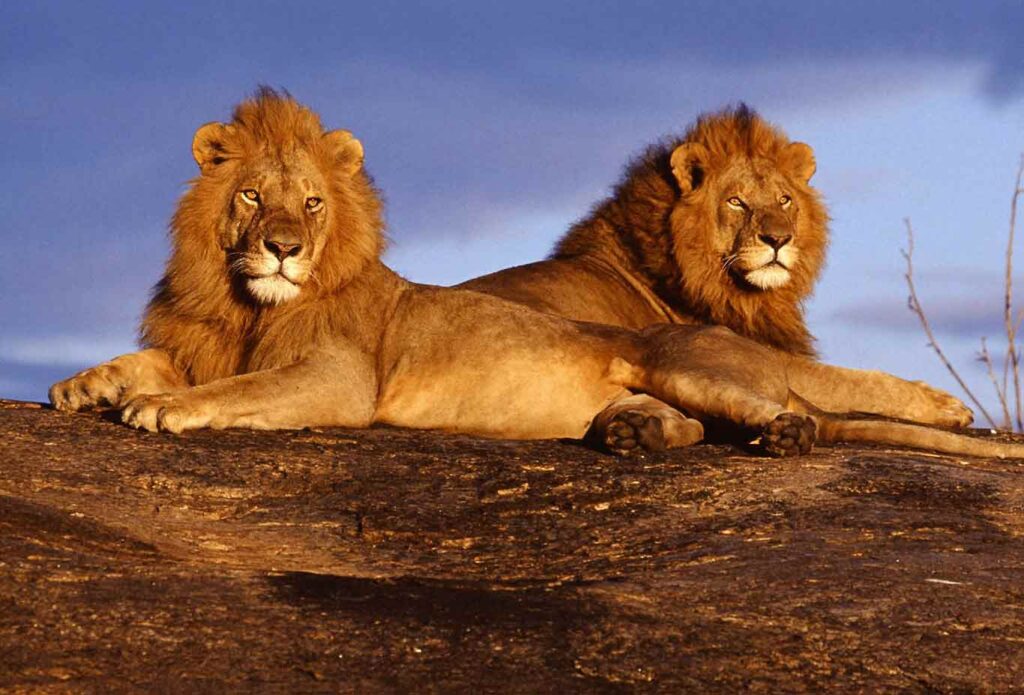
Beyond trade and ancient civilizations, Tsavo is globally recognized for the infamous tale of the Tsavo Man-Eaters. During the construction of the Uganda Railway at the end of the 19th century, two maneless male lions terrorized the area, preying on the workers and halting construction due to their relentless attacks. These man-eaters were not only a testament to the wild and untamed spirit of Tsavo but also contributed significantly to its mystique and global awareness. This tale epitomizes the challenges and dangers faced by humans when encroaching on the natural world, a narrative that has fascinated and horrified people across the globe.
These historical footprints, from ancient trade to modern tales of survival and coexistence, have significantly shaped Tsavo’s identity. They contribute to the perception of Tsavo as a land of not only ecological wonders but also of historical depth and intrigue. This blend of natural beauty and rich history sets the stage for the efforts to conserve and protect Tsavo, as detailed in the subsequent exploration of the Kenya Wildlife Service’s role in the park.
Guardians of Tsavo
Building on the historical framework of Tsavo, with its unique place in both archaeology and folklore, the guardianship of this expansive wilderness falls to the Kenya Wildlife Service (KWS), an entity at the heart of turning Tsavo into the protected haven it is today. Established in 1989, KWS’s inception marked a pivotal evolution in Kenya’s approach to conservation, from the piecemeal efforts of the past to a holistic and scientifically informed strategy aimed at preserving the country’s biodiversity.
At the forefront of KWS’s mandate in Tsavo is combating poaching, a battle that, despite the odds, has seen significant triumphs courtesy of an unwavering commitment to innovation, training, and community engagement. Notable among their success stories is the marked decrease in the elephant poaching crisis, illustrating the impact of their stringent anti-poaching measures. These include deploying aerial surveillance, advanced radio systems, and canine units, further strengthened by collaborations with local communities and international conservation bodies.
However, the journey has not been without its hurdles. Human-wildlife conflict, habitat encroachment, climate change, and the illicit ivory trade pose ongoing challenges to KWS’s conservation efforts. Despite these obstacles, KWS’s resolve in safeguarding Tsavo’s ecological integrity is unwavering, ensuring that the park continues to be a sanctuary for its giants.
In transitioning to the marvels that define Tsavo as the land of giants, it becomes clear that the role of KWS transcends mere guardianship. Their work in ecosystem management, species protection, and anti-poaching not only preserves but nurtures the lifeblood of the park, setting the stage for the iconic ‘Red Elephants of Tsavo’ and other colossal inhabitants that roam this ancient landscape. Through their tireless efforts, KWS ensures that Tsavo remains a testament to the possibilities of coexistence and conservation, heralding a future where the gentle giants of Kenya thrive amidst the challenges of the modern world.
A Haven for Giants
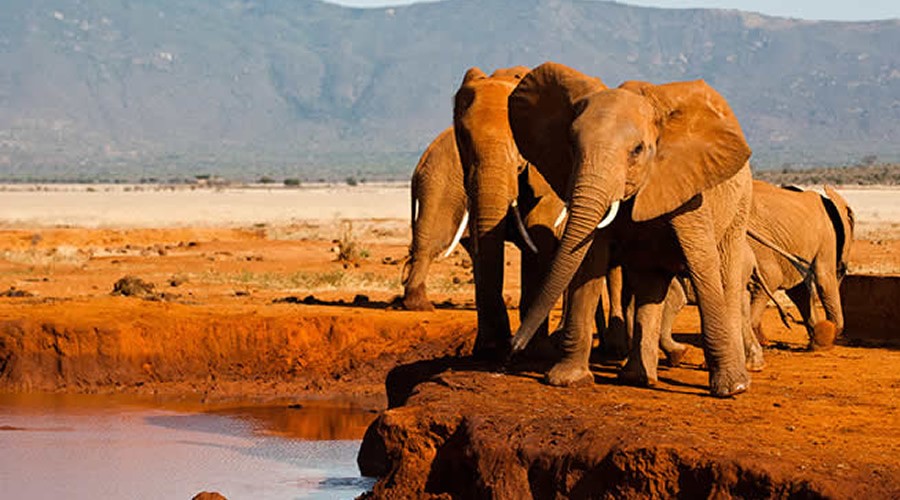
Continuing from the protective embrace of the Kenya Wildlife Service, Tsavo’s terrain has flourished, becoming a sanctuary for some of Africa’s most iconic giants. Foremost among these are the remarkable ‘Red Elephants of Tsavo’, so named for their unique habit of dust-bathing in the park’s rich red soil, which serves as both sunscreen and pest repellent. This adaptation, emblematic of the elephants’ deep interconnection with their habitat, helps them to survive in the harsh sun-baked environment. Tsavo’s expansive landscapes offer these majestic creatures the vast territories they require, showcasing the critical importance of this park in the preservation of elephant populations amidst growing human pressures.
Besides the elephants, Tsavo is home to other giants such as the maneless lions, notable for their size and the historical fear they instilled during the construction of the Uganda Railway. The park also shelters giant herds of buffaloes, hippos in its rivers, and the towering giraffes, all thriving within this protected ecosystem. The continuous efforts of conservationists have enabled these species to coexist and flourish, highlighting Tsavo’s role as a haven for these majestic animals. This ensures a genetic reservoir for future generations, fostering biodiversity which is crucial for environmental resilience.
This chapter of giants seamlessly transitions into the next, where Tsavo’s staggering geological features, like the Yatta Plateau, cast a significant shadow over the life teeming below. These geological wonders not only frame the habitat aesthetically, defining the park’s landscapes but also support and challenge its inhabitants in unique ways, exemplifying nature’s interwoven complexity.
Geological Wonders
Tsavo’s reputation as the land of giants is not only due to its majestic wildlife but also its monumental geological formations, among which the Yatta Plateau stands out. Stretching over 290 kilometers, it holds the record as the world’s longest lava flow, a testament to the park’s volcanic past. This natural fortress, formed from solidified basalt lava, embodies the park’s grandeur, offering an unparalleled vantage point to witness Tsavo’s expansive landscapes.
But the Yatta Plateau is more than just a stunning geological feature; it plays a pivotal role in the ecosystem. Its porous material stores rainwater, slowly releasing it to create a network of springs along its base. These hidden oases amidst the dry savannah are vital for the survival of Tsavo’s diverse fauna, especially during the dry seasons. By fostering these micro-environments, the plateau directly supports the park’s giants, offering refuge and sustenance.
Moreover, the geological diversity brought on by volcanic activity has sculpted a terrain that allows a unique blend of species to coexist. This varied landscape, comprising of savannah, acacia forests, and riverine ecosystems, is a result of the volcanic soil enriching the land, influencing the types of vegetation that thrive. This, in turn, shapes the diets, migrations, and habits of the resident animals, linking every life form in Tsavo to its ancient geological history.
Thus, Tsavo’s geological wonders, epitomized by the Yatta Plateau, not only sculpt the park’s breathtaking landscapes but are fundamental in shaping its ecosystem. They define the intricate web of life that sustains the giants of Tsavo, ensuring their continued legacy in Kenya’s largest park.
Life-Giving Waters
In the heart of Tsavo’s vast and rugged terrain, the presence of water sources like the Athi-Galana-Sabaki River and the Aruba Dam play a pivotal role in sustaining the park’s diverse ecosystems. These bodies of water emerge as life-giving oases amid the semi-arid landscape, forming the essence of survival for the flora and fauna that inhabit this land. The Athi-Galana-Sabaki River, stretching across the park, serves not only as a vital water supply but also as a corridor facilitating wildlife movement, thereby enhancing genetic diversity among animal populations. Similarly, the Aruba Dam, constructed in 1952, accumulates rainwater, creating a perennial water source that attracts a multitude of species, especially during dry periods.
These water bodies contrast starkly with the geological wonders like the Yatta Plateau described previously, yet they are equally significant in sculpting the ecological narrative of Tsavo. They underpin the delicate balance of life in this rugged landscape, enabling the survival of the park’s iconic giants such as elephants, rhinos, and hippos. As we transition to examining the flora of Tsavo in the following chapter, the indispensable role of these water sources becomes increasingly evident. They not only nourish the animals but also sustain the diverse plant life, from grasslands to savannas, that forms the foundation of this ecosystem’s food chain. This intricate interplay between water, wildlife, and vegetation underscores the dynamic complexity of Tsavo’s environment, affirming its status as a land of giants.
The Flora of Tsavo
The flora of Tsavo is a testament to nature’s resilience and adaptability, presenting a rich tapestry that supports its vast wildlife. In this land, marked by the life-giving waters of the Athi-Galana-Sabaki River and the Aruba Dam described earlier, the vegetation thrives in a mostly arid landscape, evolving to sustain the ‘giants’ that roam its expanse. Tsavo’s vegetation is predominantly composed of drought-resistant species, which have adapted ingeniously to the semi-arid conditions. Acacias, baobabs, and commiphoras dot the landscape, their deep root systems tapping into underground water sources, while their sparse leaf canopies minimize water loss.
The park transitions from grasslands in the more arid areas to savanna and woodlands around the water sources, creating a mosaic of habitats. These grasslands, while appearing sparse, are nutrient-rich, offering vital grazing for elephants, rhinos, and buffaloes. Meanwhile, the savannas provide a diverse diet for browsers and grazers alike. This variety not only supports the large populations of herbivores but also the predators that follow them.
The adaptation of Tsavo’s flora to its environment is a crucial component of the park’s ecosystem, ensuring the survival of its biodiversity. By retaining moisture through drought-resistant features and providing a varied diet to wildlife, the flora forms the foundation upon which the complex ecological interactions in Tsavo are built. As we transition to discussing human-wildlife coexistence in the following chapter, it becomes evident how this intricate balance of flora and fauna needs careful management to sustain both natural and human communities.
Human-Wildlife Coexistence
Continuing from the exploration of Tsavo’s diverse flora, which provides the essential backdrop for its large wildlife population, we delve into the interwoven lives of the local communities and the park’s giants. The relationship between the inhabitants of the areas surrounding Tsavo and its wildlife is deeply rooted in both historical and contemporary practices of mutual respect and coexistence.
Community-based conservation initiatives have been instrumental in this coexistence, fostering a symbiotic relationship where both human and animal populations benefit. For instance, programs such as the “Living with Lions” project help mitigate human-wildlife conflicts by equipping communities with the knowledge and tools to protect their livestock without harming predators. Additionally, the “Elephant Neighbors Center” focuses on facilitating peaceful human-elephant cohabitation, through measures like creating elephant-safe waterholes away from human settlements.
The impact of human activity on Tsavo cannot be overlooked, with challenges such as habitat fragmentation and resource competition posing real threats to wildlife. However, efforts to minimize these impacts are ongoing, with initiatives aimed at promoting sustainable farming and land use practices that consider the needs of the wildlife. For example, the integration of beekeeping projects not only provides a source of income for the local communities but also acts as a natural deterrent against elephants, reducing crop raiding incidents.
These efforts underscore the importance of promoting sustainable coexistence between humans and wildlife in Tsavo. By respecting the intricacies of the ecosystem and fostering community engagement in conservation, Tsavo continues to thrive as a land where giants roam freely, highlighting the delicate balance required to maintain this unique sanctuary. As we transition into discussing the challenges of conservation in the following chapter, understanding the foundation of human-wildlife coexistence is crucial for addressing the evolving threats to Tsavo’s status as a refuge for its magnificent giants.
Challenges of Conservation
Tsavo, Kenya’s vast wilderness, is under siege from several fronts, posing significant hurdles to its conservation efforts. The park, known for its majestic elephants and diverse ecosystems, is grappling with poaching, climate change, and development pressures, each a formidable threat to its status as a sanctuary for some of Africa’s most iconic species.
Poaching, driven by the illegal ivory trade and demand for bushmeat, has historically decimated Tsavo’s elephant populations, striking a blow to the park’s heritage and ecological balance. Despite considerable gains made through stringent anti-poaching measures, the specter of poaching persists, undermining conservation successes.
Compounding this challenge is climate change, which introduces a ripple of ecological shifts. Alterations in rainfall patterns and temperatures affect water sources and availability of fodder, placing immense stress on both flora and fauna. These climatic shifts exacerbate human-wildlife conflicts, particularly in areas where community lands border the park. The delicate balance previously maintained through community-based conservation initiatives now faces new pressures, demanding innovative approaches to human-wildlife coexistence.
Moreover, Tsavo’s expansive landscapes are under threat from infrastructure development and agricultural expansion, encroaching on wildlife corridors and fragmenting habitats. Such developments not only disrupt animal migratory patterns but also heighten human-wildlife conflicts, challenging efforts to promote sustainable coexistence.
In response to these multifaceted threats, Tsavo’s guardians are doubling down on cutting-edge conservation strategies. Anti-poaching patrols have been intensified, leveraging technology such as drones and advanced surveillance systems for real-time monitoring of the vast park. Collaborative efforts with local communities have been strengthened, emphasizing the mutual benefits of wildlife conservation and sustainable livelihoods. To tackle the impacts of climate change, conservation programs are increasingly incorporating habitat restoration projects and water conservation initiatives, ensuring the park’s resilience.
These concerted efforts signal hope for Tsavo, aiming not only to safeguard its current inhabitants but also to ensure it remains a refuge for giants for generations to come. Bridging the previous chapter’s focus on human-wildlife coexistence with the following exploration of experiencing Tsavo firsthand, this chapter underscores the indispensable role of conservation in sustaining both the park’s ecological integrity and its remarkable wildlife encounters.
Experiencing Tsavo
Experiencing Tsavo today is to walk in the footsteps of giants, where tourism acts as a double-edged sword, both sustaining the park and posing risks if not managed sustainably. Safaris in open-top vehicles offer unparalleled opportunities to witness the majesty of Tsavo’s elephants, lions, and the diverse bird species in their natural habitat. Visitors often find themselves mere meters away from these magnificent creatures, providing a thrilling and educational experience that fosters a deeper appreciation for wildlife conservation.
Camping under the African sky, with the sounds of the nocturnal world as a backdrop, offers an immersive experience into the wild. The revenue generated from these tourism activities is vital, funding anti-poaching units and conservation projects. It also bolsters the local economy, creating jobs and supporting community projects that aim to harmonize human and wildlife coexistence.
However, careful consideration is given to ensure that human presence does not disturb the natural balance. Visitor numbers are monitored, and guidelines are strictly enforced to minimize human-wildlife conflict, ensuring that Tsavo remains a sanctuary for its giants. Through sustainable tourism, Tsavo illustrates the complex relationship between conserving wildlife and providing economic opportunities for local communities, embodying a model for conservation that benefits both nature and people.
Conclusions
Tsavo, the Land of Giants, is a testament to Kenya’s commitment to conservation and the natural grandeur that can flourish under devoted protection. Despite its challenges, Tsavo’s vast landscapes, rich history, and colossal wildlife continue to captivate and inspire. It speaks to the collective responsibility to safeguard such treasures for the generations to come.