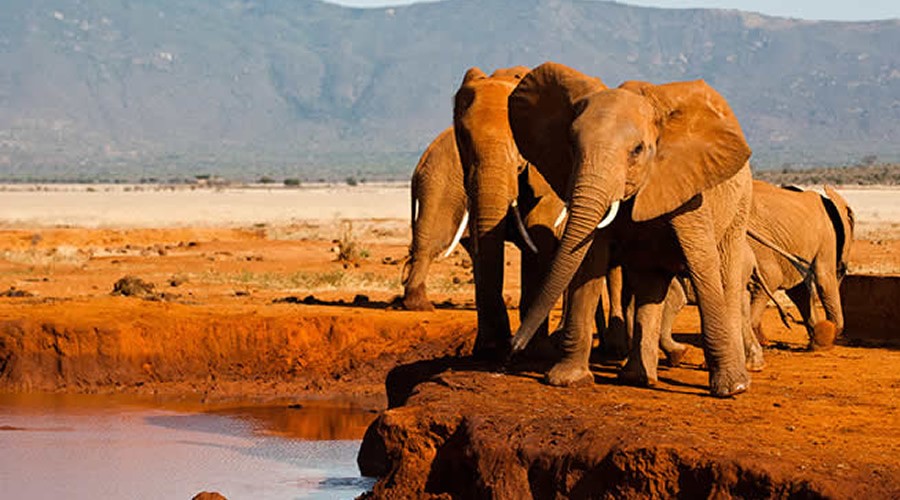
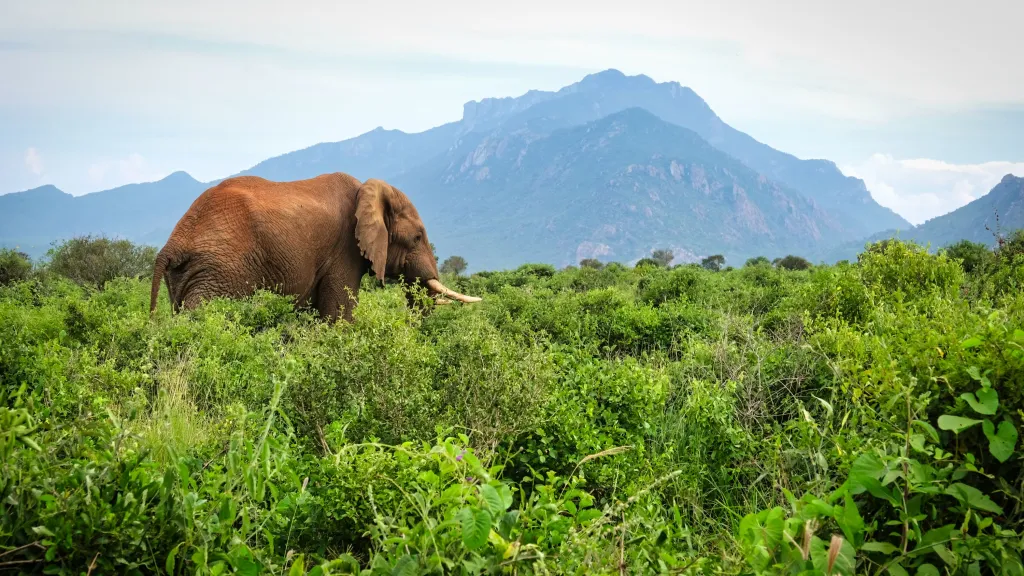
Deep within Kenya’s Tsavo East National Park roam the legendary red elephants, known for their unique earthen hue. This extraordinary pigmentation results from their dust bathing habits and has piqued the curiosity of many. Join us as we explore the majestic and intriguing world of Tsavo’s red elephants.
The Natural Habitat of Tsavo
The Natural Habitat of Tsavo: Examine the geographical features of Tsavo East National Park, emphasizing its dry plains, savanna, semi-arid grasslands, and defining water features like the Tsavo River. Discuss the ecosystem that sustains a diverse range of wildlife, focusing on how the park’s features support the elephants’ population and contribute to their unique coloring. Highlight the role of natural landmarks such as the Yatta Plateau and Lugard Falls.
Transformational Dust Bathing
Delving into the unique behavior of Tsavo’s giants reveals a fascinating aspect of their daily lives – dust bathing. This practice, essential for their well-being, showcases their intelligence and adaptability. In Tsavo National Park, the elephants ingeniously utilize the park’s abundant red soil, which is rich in iron oxide, giving them a distinct reddish tint. This activity is not merely a whimsical choice; it serves multiple crucial biological purposes.
Foremost among these is thermoregulation. Elephants’ large size makes it challenging to dissipate body heat, more so in Tsavo’s dry, harsh climate. Dust acts as a thermal barrier, reflecting the sun’s rays and aiding in cooling their massive bodies. This natural sunscreen also offers protection from UV radiation, adding another layer of defense against the baking African sun.
Another significant benefit is parasite management. Tsavo’s soil, when caked on their skin, helps to smother external parasites and provides relief from insect bites. This is particularly vital in an environment where pests like tsetse flies and ticks can transmit diseases.
Moreover, the dust and mud serve as a protective layer for their skin. Elephants lack the dense fur of other mammals that might protect them from the elements, making their skin vulnerable to sunburn and dehydration. By coating themselves in this natural salve, they create a barrier against environmental damages.
Interestingly, while dust and mud bathing is a behavior shared among elephants globally, it is the unique composition of Tsavo’s soil that imparts the iconic red hue to its inhabitant giants. This distinctive coloration not only sets them apart visually but also symbolizes their deep connection to the landscape of Tsavo.
In synthesis, the red elephants of Tsavo are a vivid testament to nature’s inventiveness. Through their dust bathing practices, they’ve adapted to their environment not just to survive but to thrive, turning a simple act of rolling in the dirt into an art of living. This behavior underscores the intricate balance of life in Tsavo, highlighting the elephants’ integral role in its ecosystem and how, in turn, the park shapes them. As we continue to explore Tsavo’s ecosystem and its inhabitants, it becomes increasingly clear how pivotal these practices are not only for the well-being of the elephants but for the maintenance of the ecological harmony within the park.
The Legacy of Tsavo’s Giants
The legacy of Tsavo’s giants stretches far beyond their unique red hue, stemming from the mineral-rich soils of Tsavo National Park. These elephants have been a central part of the region’s history and culture, symbolizing both the majesty of nature and the challenges of conservation. Among the notable individuals is Satao, revered as one of the park’s largest tuskers before tragically falling victim to poaching. This reflects the ongoing battle between humans and the survival of these majestic creatures.
Organizations such as the Tsavo Trust and the Kenya Wildlife Service have been pivotal in efforts to protect these elephants. Their work includes anti-poaching patrols, habitat preservation, and community education, aiming to secure a safe environment for both the wildlife and the local communities. Conservation efforts face challenges such as poaching, driven by demand for ivory, and habitat loss due to human encroachment and climate change impacts.
The relationship between humans and elephants in Tsavo is a complex one, colored by both conflict and cooperation. While some local communities may see elephants as competitors for resources, others recognize their importance for the ecosystem and the potential benefits of ecotourism. The future of Tsavo’s elephants hangs in a delicate balance, reliant on continued and enhanced conservation efforts to mitigate threats and ensure these giants continue to roam the landscapes of Kenya.
Towards a Sustainable Future
Building on the profound historical and cultural significance of the red elephants of Tsavo, conservation strategies must evolve to ensure the survival of these majestic animals and the preservation of their unique habitat. Current efforts by organizations such as the Tsavo Trust and the Kenya Wildlife Service (KWS) have made significant strides in mitigating the impacts of poaching and habitat loss. However, the sustainability of these efforts requires a multifaceted approach, encompassing global awareness, local community involvement, and robust international policies.
The significance of global awareness cannot be overstated. Educating the international community about the unique phenomenon of Tsavo’s red elephants and the challenges they face is crucial. This can be achieved through comprehensive media campaigns, wildlife documentaries, and partnerships with global conservation entities. Elevated awareness leads to increased funding and support for conservation initiatives, contributing significantly to the protection of Tsavo’s elephants.
Local community involvement is another pivotal aspect of sustainable conservation. The communities living adjacent to Tsavo National Park play a critical role in the conservation of wildlife. Empowering these communities through education, sustainable livelihood projects, and participatory conservation efforts ensures their investment in the protection of the elephants and their habitat. Initiatives such as the establishment of community conservancies have shown promising results, where locals benefit economically from conservation activities, thus reducing the allure of poaching and habitat encroachment.
Lastly, the role of international policies in wildlife conservation cannot be understated. Strengthening and enforcing international legislation against ivory trade and other wildlife trafficking is imperative. Collaboration among nations, through bodies such as CITES (the Convention on International Trade in Endangered Species of Wild Fauna and Flora), plays a crucial role in curbing poaching and illegal trade. Moreover, funding and technical support from international partners to conservation programs in Tsavo can significantly augment local efforts.
In conclusion, the conservation of Tsavo’s red elephants requires a concerted effort that integrates global awareness, local community participation, and strong international policies. By fostering a sustainable coexistence between humans and wildlife, the legacy of Tsavo’s giants can be preserved for future generations to marvel at and learn from.
Conclusions
The red elephants of Tsavo symbolize nature’s adaptability and beauty, thriving within a unique landscape that defines their distinctive hue. Sustainable practices, global contention against poaching, and proactive conservation efforts are critical for preserving this magnificent spectacle for future generations to admire and learn from.