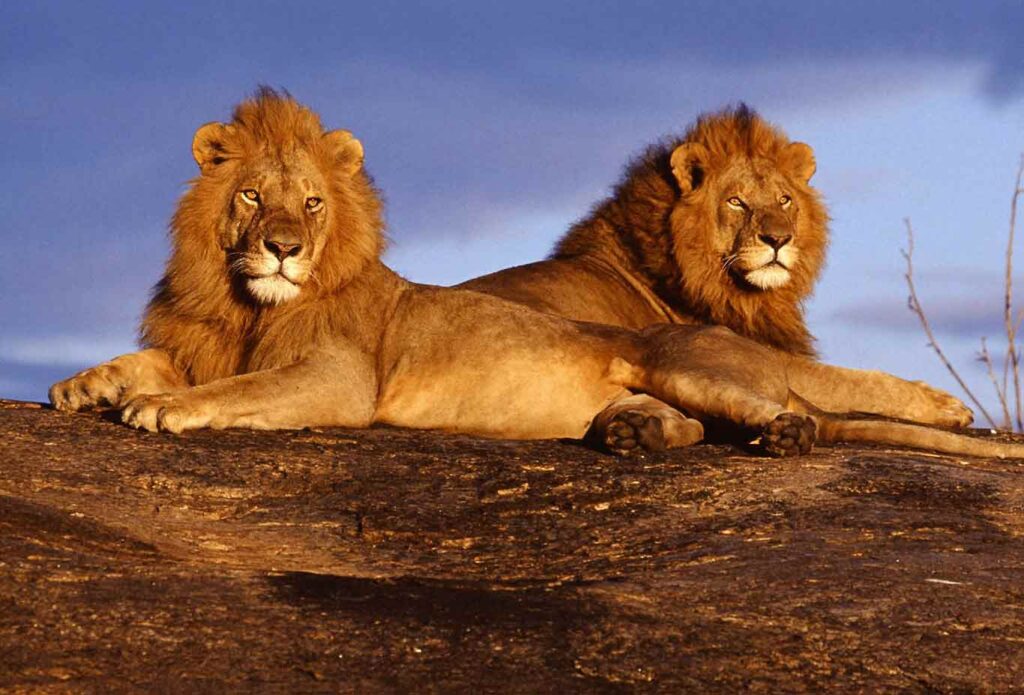
The story of the Tsavo Man-Eaters is as chilling as it is fascinating. In the late 19th century, two maneless male lions terrorized workers constructing a railway in Kenya. Their infamy grew as they continued their killing spree, ultimately becoming subjects of extensive scientific and historical intrigue.
The Terror Begins: Construction on the Tsavo Railway
In 1898, as the British embarked on a venture to construct a crucial railway bridge over the Tsavo River in Kenya, thousands of workers began arriving at the site. Lieutenant-Colonel John Henry Patterson, tasked with leading the project, arrived just as mysterious disappearances and killings began. This chapter examines the critical context of the colonial project and the initial impact of the lion’s attacks on the workforce and construction progress.
A Campaign of Fear: The Lions’ Savage Assaults
Following the mysterious disappearances and killings, the campaign of fear unleashed by the Tsavo lions escalated dramatically. The attacks, under the dark veil of the African night, saw these predators brazenly enter the camps, their frightening roars preceding their arrival. The lions displayed an unsettling boldness, dragging workers from their tents into the darkness, often leaving nothing but scattered remnants behind. This reign of terror was meticulously documented by Lieutenant-Colonel John Henry Patterson, whose detailed observations paint a harrowing picture of the chaos that ensued.
Workers lived in a state of constant fear, their sleep disturbed by the slightest sound, and the dread of being the next victim permeated the camps. The psychological toll was immense, leading to mass evacuations as many refused to continue working under such dire conditions. This exodus significantly halted the construction of the railway bridge over the Tsavo River, showcasing the power these majestic yet fearsome animals held over human endeavors.
Patterson’s accounts reveal the desperation that gripped the workers and the measures taken to protect them, albeit often futile against the cunning and might of the Tsavo lions. Makeshift barriers and bonfires lit to ward off the predators proved inadequate, leading to a standoff between man and beast that highlighted the sheer resilience and survival instincts of these lions. The campaign of fear not only halted a monumental engineering feat but also left an indelible mark on the psyche of those involved, underlining the unpredictable and often unforgiving nature of the wild.
Patterson’s Hunt: Turning the Tide
In the shadow of the terror unleashed by the notorious Tsavo lions, Colonel John Henry Patterson embarked on a mission that would test his resolve and ingenuity to its limits. Following a series of horrific attacks that led to an exodus of workers and a halt in the construction of the railway through Tsavo National Park, Patterson recognized that conventional hunting tactics were inadequate against these formidable predators. Determined to turn the tide, he delved into an exhaustive pursuit, characterized by innovative trapping mechanisms and strategic ambushes designed to outwit the lions.
Patterson’s first strategy involved the construction of elaborate traps. Despite his methodical planning and utilization of bait, the lions demonstrated an uncanny ability to evade capture, often coming tantalizingly close but ultimately eluding the traps set for them. These initial failures served only to embolden the lions, further complicating Patterson’s efforts.
Undeterred, Patterson adapted his approach, opting for a more direct confrontation. He spent countless nights perched in trees or makeshift platforms, rifle in hand, awaiting the opportune moment to strike. The dense bush and the darkness of night worked in the lions’ favor, providing them with ample cover to stalk their prey undetected. Patterson’s accounts detail multiple close encounters during these vigils, where patience and nerve were tested to their limits.
The pivotal moment in Patterson’s hunt arrived with a renewed strategy of combining his knowledge of the lions’ behavior with a meticulously arranged ambush. Leveraging the lions’ habitual routes and the geography of the terrain, Patterson managed to isolate one of the lions. After a tense and prolonged engagement, he succeeded in killing the first of the two man-eaters, a triumph that marked the beginning of the end for the reign of terror.
Emboldened by this success, Patterson intensified his efforts to track down the second lion. Employing a similar tactic of patience and precision, he ultimately succeeded, bringing the saga of the Tsavo man-eaters to a close. The relief among the railway workers was palpable, as was the admiration for Patterson’s unwavering determination. His success not only allowed the railway project to resume but also solidified his legacy as the man who ended the terror of the Tsavo lions. This chapter in the story bridges the callous onslaught of the lions and the ensuing analysis of their behavior, reflecting on the desperate struggle between human determination and the primal instincts of nature’s formidable predators.
Mysteries Unveiled: Analyzing the Man-Eaters
Following Colonel Patterson’s relentless hunt and eventual success in overcoming the man-eaters of Tsavo National Park, the focus shifts toward understanding the underlying reasons that transformed these lions into notorious man-eaters. This inquiry delves into the anatomical and behavioral peculiarities that set the stage for their unprecedented predatory behavior towards humans.
Scientific analyses have played a crucial role in unveiling the mysteries behind the man-eating behavior of the Tsavo lions. One of the most revealing findings came from detailed dental examinations. These studies uncovered significant dental injuries in both lions, suggesting a compelling reason for their shift in prey. It is theorized that these injuries likely caused them pain and difficulty when hunting their traditional prey items, such as zebras and buffaloes, which are considerably more challenging to catch and kill. The resulting discomfort might have led these lions to view humans, who were far less capable of defending themselves and easier to catch, as a more accessible and less painful food source.
Further insight into the Tsavo lions’ behavior comes from modern behavioral studies, which seek to understand the ecological and social factors that could contribute to such rare predatory habits. Research has suggested that several factors, including the absence of older males in the pride, environmental pressures, and the availability of easy prey in the form of humans, could have influenced the lions’ unusual choices. These studies suggest that the man-eating behavior of the Tsavo lions might not have been an isolated phenomenon driven solely by necessity due to dental pain but could also have been influenced by a complex interplay of behavioral and environmental factors.
Additionally, investigations into the local ecology during the time of the attacks have hinted at severe drought and an outbreak of rinderpest disease, which decimated the lions’ natural prey populations. Faced with such dire ecological conditions, the lions’ turn to human prey could be viewed as a desperate adaptation to survive in a changing environment.
Through the lens of modern science, the story of the Tsavo man-eaters is not simply a tale of two rogue lions terrorizing humans but a fascinating case study of adaptation, survival, and the complex relationship between humans and wildlife. The analysis of the Tsavo lions has contributed significantly to our understanding of predator-prey dynamics and the factors that can drive predators to change their natural hunting behavior.
Legacy and Legend: The Tsavo Lions in Popular Culture
Following the elucidation of the Tsavo lions’ propensity for man-eating due to potential injuries and behavioral anomalies, their story was catapulted into the annals of popular culture, garnering attention far beyond the confines of scientific discourse. This transition from obscure historical accounts to a subject of global fascination was largely facilitated by Colonel John Henry Patterson’s riveting narrative, “The Man-Eaters of Tsavo.” Published in 1907, Patterson’s recounting of his experiences while overseeing the construction of a railway bridge over the Tsavo River offered readers a firsthand look into the terror that gripped the region during the late 19th century. The vividness and detail with which he described his encounters with these formidable beasts captivated the imagination of the public, transforming the lions from mere animals into the stuff of legend.
The fascination with these man-eating lions transcended the pages of literature, eventually finding a berth in Hollywood. The film industry, always in pursuit of compelling stories, saw in the Tsavo lions an opportunity to explore themes of adventure, survival, and the unpredictability of the natural world. Notably, the 1996 film “The Ghost and the Darkness,” starring Val Kilmer and Michael Douglas, brought the tale of the Tsavo man-eaters to the silver screen. Though the movie took considerable liberties with the factual accuracy of events, it succeeded in introducing the story to a new generation, further cementing the Tsavo lions’ place in popular culture.
In the realm of academia, the story of the Tsavo lions has spurred numerous studies and scholarly articles, aiming to peel back the layers of myth and investigate the biological and environmental factors that could have led to their notorious behavior. These scientific inquiries have delved into various aspects of the lions’ lives, from dental pathologies to the isotopic analysis of their fur and bones, in an effort to understand the intersection of natural history and human legend.
The legacy of the Tsavo lions, therefore, straddles the line between fact and fiction, science and storytelling. They are at once real animals that once roamed the vastness of Tsavo National Park, and characters immortalized in literature and film, serving as reminders of nature’s capacity for unpredictability and ferocity. This duality has ensured that their story remains a subject of fascination, embodying the broader human attraction to tales of survival against the odds and the mystery of the natural world.
Conclusions
The Tsavo Man-Eaters continue to intrigue and inspire. Their story reveals much about human resilience and nature’s unpredictability. From a nightmare to a legend, they have left a lasting mark on history and science. This exploration into the past underlines humanity’s constant struggle and coexistence with the wilderness.