Maasai Mara National Reserve, often called The Mara, is one of Africa’s most renowned wildlife conservation areas. Situated in Kenya, it is celebrated for its stunning landscapes, rich biodiversity, and the iconic Great Migration. In this article, we delve into the allure of the Maasai Mara, exploring its geography, cultural heritage, and environmental significance.
The Rich History of Maasai Mara
Established in 1961, the Maasai Mara National Reserve has a storied past that intertwines with the lives and culture of the Maasai people. Initially marked out as a wildlife sanctuary, the reserve has seen several expansions to encompass a larger area, allowing for greater protection of the diverse wildlife and the preservation of the natural ecosystem. The original demarcation was a result of recognizing the need to conserve the rich biodiversity of the area while simultaneously acknowledging the traditional lands of the Maasai people.
The Maasai Mara’s history is deeply embedded with that of the Maasai people, whose name it bears. This semi-nomadic community has lived in harmony with the land for centuries, their lifestyle and culture intricately linked with the ecosystem of the Mara. Their traditional practices, such as pastoralism, have played a central role in maintaining the balance of the reserve’s ecosystem. The reciprocal relationship between the Maasai people and the land has contributed significantly to the conservation efforts that have made the Maasai Mara one of Africa’s premier game reserves.
Over the decades, the reserve has undergone significant changes – both in terms of size and conservation strategies. Efforts to enhance the sustainability of the Maasai Mara have been influenced by historical developments, such as the shift towards community-based conservation. This approach acknowledges the critical role of the Maasai community in the reserve’s upkeep and aims to provide benefits from tourism and conservation back to the local people.
The integration of traditional Maasai knowledge with modern conservation science has been a notable development in the reserve’s history. This blend of knowledge has enhanced the management of the reserve, ensuring that it remains a refuge for the spectacular array of wildlife, including the iconic Great Migration, and a testament to the unique culture of the Maasai people. These efforts, rooted in the reserve’s rich history, continue to shape its path towards sustainable conservation and coexistence between humans and wildlife.
Geographical Marvels of the Mara-Serengeti Ecosystem
Following the rich historical tapestry outlined in the preceding chapter, we delve into the geographical splendor that the Maasai Mara and its contiguous ecosystem, the Serengeti National Park, offer. The Maasai Mara, an extension of the Serengeti plains, does not only share historical continuity with its Tanzanian counterpart but also a profound geographical and ecological bond that is central to the biodiversity of both reserves.
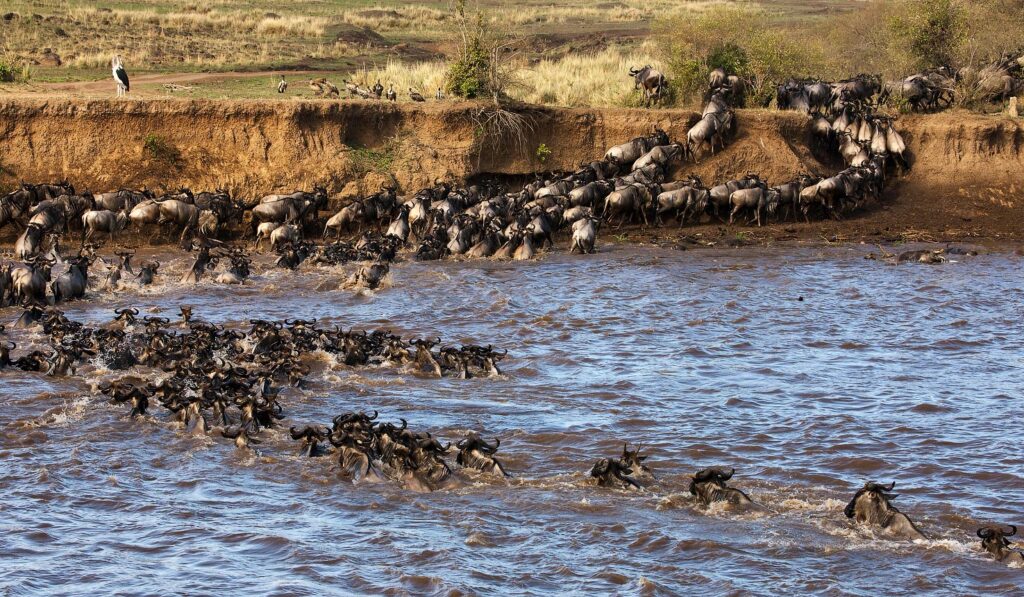
The geographical marvel that is the Maasai Mara encompasses the Mara River, whose waters meander through the reserve, serving as a critical lifeline for the flora and fauna inhabiting the region. Particularly during the dry season, the Mara River becomes the epicenter of animal activity, drawing hundreds of species in search of water, thereby transforming the landscape into a bustling hub of wildlife interaction and survival. The river’s course further sets the stage for one of the most awe-inspiring natural phenomena on the planet: the annual Great Migration, an event that seamlessly ties into the lifeblood of the area’s ecological diversity.
Another distinguishing geographical feature within the Mara-Serengeti ecosystem is the Esoit Escarpment. This escarpment provides a breathtaking backdrop to the rolling plains of the Mara, defining the western border of the reserve. Its high-altitude terrain contributes to the cooler temperatures experienced in this part of the reserve, offering a microclimate that supports a variety of plant and animal species distinct from those in the savannah plains. The escarpment’s elevation also affords visitors panoramic views of the vast landscape below, marking it as a scenic point of interest within the reserve.
The semi-arid climate reigning over the Maasai Mara molds the seasonal rhythm of life in the region. The reserve witnesses two rainy seasons; the short rains from November to December and the long rains from March to May. These seasonal downpours rejuvenate the Mara, ushering in a period of abundance that supports the high-energy demands of the birthing season and primes the landscape for the subsequent migration. Conversely, the dry season underscores the harsh reality of life in the savannah, with water becoming a scarce resource that animals across the ecosystem compete for.
The unique confluence of the Mara River, the encompassing plains, the Esoit Escarpment, and the prevailing semi-arid climate cultivates a biodiversity hotspot within the Maasai Mara. This ecological richness is further amplified by the reserve’s geographical connectivity with the Serengeti, allowing for the fluid movement of species between the two reserves. The resulting biodiversity is not only essential for the ecological balance but also underpins the reserve’s global significance as a conservation area and a premier destination for wildlife tourism.
In bridging the historical context with the geographical richness of the Mara-Serengeti ecosystem, we pave the way to explore the ecologically pivotal and visually mesmerizing spectacle of the Great Migration. This natural phenomenon not only showcases the dynamic and interconnected nature of the ecosystem but also highlights the critical role of geography in shaping the region’s biodiversity. The unfolding narrative of life in the Maasai Mara, against the backdrop of its unique landscape, continues to captivate and inspire, underscoring the importance of safeguarding such natural wonders for generations to come.
A Wildlife Spectacle: The Great Migration
Unfortunately, it seems like there was a misunderstanding in your last request since there wasn’t any provided text to update with internal links for the parks mentioned. Could you please provide the specific text or article sections you’d like to update with the anchored links for Amboseli National Park, Masai Mara National Park, and Tsavo National Park? This way, I can correctly apply the HTML anchor tags as per your specifications.
Cultural Significance and Living Traditions of the Maasai
The cultural significance of the Maasai people within the Maasai Mara National Reserve transcends merely the conservation of wildlife; it embodies the essence of harmonious coexistence between humans and nature, a principle that has underpinned their traditions, language, and lifestyle for centuries. The Maasai, semi-nomadic pastoralists known for their distinctive customs and bright red clothing, have maintained a sustainable relationship with the land, allowing them to both preserve their cultural identity and contribute to modern conservation efforts significantly.
Their lifestyle, deeply rooted in cattle herding, demonstrates a unique dynamic where traditional practices coexist with contemporary conservation strategies. Cattle are not merely livestock to the Maasai; they symbolize wealth, social status, and are integral to various cultural practices and ceremonies. This deep connection to their environment has cultivated a profound understanding and respect for the flora and fauna that share their land, guiding their sustainable living practices.
In recent years, the Maasai have increasingly engaged in sustainable tourism, seeing it as a pathway to not only safeguard their way of life but also to protect the ecosystems of the Maasai Mara. By welcoming visitors into their villages, they offer an immersive experience into their rich culture, from witnessing the adumu, or jumping dance, to sharing stories and knowledge passed down through generations. This cultural exchange benefits the Maasai economically and allows them to preserve their traditions and language in the face of globalization.
Moreover, the Maasai have been pivotal in conservation efforts, collaborating with conservationists to implement initiatives that protect the reserve’s diverse species while ensuring the community’s needs are met. Their indigenous knowledge of wildlife behavior and migratory patterns has been invaluable in shaping conservation strategies that are culturally sensitive and ecologically effective.
The symbiotic relationship between the Maasai people and the Maasai Mara ecosystem is a powerful example of how traditional practices can complement modern conservation efforts. Their deep-rooted respect for nature and the wildlife with which they share their home has positioned the Maasai as key stewards of the land. Their engagement in sustainable tourism and conservation initiatives demonstrates a commitment to preserving their cultural heritage while ensuring the Maasai Mara remains a vibrant, living ecosystem for generations to come.
Conservation Efforts and Future Challenges
Conservation Efforts and Future Challenges:
In the heart of Africa lies the majestic Maasai Mara National Reserve, a sanctuary not only for wildlife but also as a testament to successful conservation efforts driven by a unique partnership between local communities, governmental bodies, and international organizations. These entities work collaboratively to preserve this natural wonder for future generations, addressing the multitude of challenges that threaten its existence.
The involvement of the local Maasai communities in conservation initiatives has been pivotal. Through education and empowerment programs, they have transitioned from seeing wildlife solely as competition for grazing land to recognizing the animals as key components of their heritage and livelihood via sustainable tourism. Community conservancies have become a cornerstone of the Maasai Mara’s conservation strategy, creating a buffer zone around the reserve which alleviates the impact of human activities on the core protected area.
Governmental bodies and international organizations play a crucial role in providing funding and expertise for conservation projects. These range from anti-poaching patrols to sophisticated monitoring of animal movements using GPS technology. They also sponsor habitat restoration projects to combat the effects of climate change and ensure the biodiversity of the Maasai Mara is maintained.
Despite these efforts, challenges such as climate change, poaching, and human-wildlife conflict threaten the reserve’s sustainability. Climate change, in particular, alters precipitation patterns, leading to periods of drought and flooding that affect both the wildlife and the vegetation on which they depend. Poaching, although reduced through concerted efforts, remains a concern for endangered species within the reserve. Human-wildlife conflict also poses a significant challenge as the human population expands into areas traditionally roamed by wildlife.
To secure the future of the Maasai Mara, a multi-faceted approach is essential. Enhanced community engagement, where locals are not just participants but leaders in conservation efforts, promises a sustainable future. Policies that support both wildlife conservation and the socioeconomic development of local communities can reduce human-wildlife conflicts. Research and technology will play a crucial role in adapting conservation strategies to the changing environment, ensuring the Maasai Mara remains a jewel in Africa’s crown of natural wonders.
Conclusions
Maasai Mara National Reserve stands as a testament to the harmony between nature and culture. Its rich history, stunning geographical features, and vibrant wildlife continue to captivate visitors worldwide. Through dedicated conservation efforts and sustainable practices, the Maasai Mara remains a vital sanctuary both for its ecological treasures and the Maasai people who call it home.