The Maasai Mara, a vast national game reserve in Kenya, is a wildlife enthusiast’s dream. Known for its breathtaking landscapes and diverse wildlife, including the Great Migration, it is a pivotal part of the Mara-Serengeti ecosystem. This article explores the history, geography, wildlife, and cultural significance of the Maasai Mara.
A Historical Perspective
The history of the Masai Mara National Park is a poignant narrative of wildlife conservation intertwined with the lives of the Maasai people, whose name it bears. Officially established as a wildlife sanctuary in 1961, it spanned a modest 520 square kilometers, aimed primarily at protecting wildlife from hunting and to preserve a nature reserve for the future. However, its status evolved into that of a game reserve in the following years, expanding its boundaries and altering its management strategies to accommodate the dual aims of conserving wildlife and meeting the needs of the local communities.
The Maasai community, synonymous with the Mara, has played a pivotal role in the preservation and management of this territory. Traditionally, the Maasai were semi-nomadic pastoralists who lived in harmony with the land and its creatures, practicing a belief system that revered the earth and its natural resources. This intrinsic respect for nature made them the stewards of the plains, coexisting with the wild animals and using the land’s resources judiciously.
Over the years, land management policies within the Maasai Mara have seen significant shifts, deeply influencing both the wildlife and the Maasai way of life. The creation of the reserve has led to restricted access to traditional grazing lands, altering the nomadic lifestyle of the Maasai. Efforts to involve the community in conservation through conservancy models have been a crucial step towards sustainable coexistence. These conservancies, areas set aside for wildlife that allow for controlled grazing, have been instrumental in easing the conflict between humans and wildlife. They serve as buffers to the main reserve and provide an income source to the Maasai through ecotourism.
Nonetheless, the expansion of agricultural activities, coupled with increased human settlement around the Mara, poses threats such as habitat fragmentation and increased human-wildlife conflicts. These challenges necessitate ongoing adaptation in land management approaches to balance conservation efforts with the socioeconomic needs of the surrounding communities.
The intertwined destinies of the Maasai community and the wildlife of the Maasai Mara reflect a complex relationship between humans and nature. As the reserve continues to adapt to the pressures of modernization and climate change, the preservation of this iconic ecosystem remains a testament to the resilience of both its human and animal inhabitants. Through collaborative conservation initiatives, the legacy of the Maasai Mara as a wildlife paradise and a cultural heritage site endures, showcasing the critical role of indigenous knowledge and community involvement in the stewardship of natural resources.
Geography and Terrain
Following the historical exploration of the Maasai Mara, a revelation of its unique geological and climatic patterns emerges, underpinning its status as a wildlife sanctuary since 1961. The Maasai Mara, situated as the northern frontier of the expansive Mara-Serengeti ecosystem, unfolds a canvas of diverse geographical elements that craft its distinction as one of the world’s most vibrant natural habitats. The terrain of the Maasai Mara is an undulating plain, punctuated by the prominence of the Esoit Escarpment that provides a dramatic backdrop to the rolling grasslands and riverine forests below. This escarpment not only towers over the landscape but also acts as a significant watershed, feeding into the life-giving Mara River.
The Mara River, meandering through the reserve, becomes the epicenter of life, especially during the dry seasons when it serves as the primary water source for the resident species. It’s along its banks that the cyclical drama of life and predation unfolds, providing some of the most intimate glimpses into wildlife behavior. The river’s course is pivotal for the reserve’s ecology, sustaining not only the diverse mammal population but also underpinning the annual spectacle of the Great Migration.
Complementing this terrain is the semi-arid climate that blankets the Mara. Characterized by warm days and cool nights, the climate oscillates between two rainy seasons and dry spells, dictating the rhythm of movement and life within the ecosystem. This climatic pattern has sculpted a landscape that supports an astounding array of flora, which in turn sustains a rich tapestry of wildlife, emerging as the cornerstone of the region’s biodiversity.
The diversity of habitats, from open savannahs, hills, and ridges to densely wooded riverbanks, creates niches for a plethora of species, supporting a unique biodiversity unseen elsewhere. This complex mosaic of geography and climate underlies the Maasai Mara’s significance as a quintessential wildlife habitat, providing for and sustaining the great spectacles of nature, most notably the much-anticipated Great Migration. Here, the intrinsic link between the geography of the Maasai Mara and its biological diversity becomes apparent, revealing the natural majesty that draws enthusiasts from around the globe to witness Africa’s untouched wilderness. Transitioning from a historical perspective to an understanding of the geographical bedrock that nourishes the riches of the Maasai Mara sets the stage to delve into the Great Migration, an annual event that showcases the dynamism and resilience of life within this unparalleled ecosystem.
The Great Migration
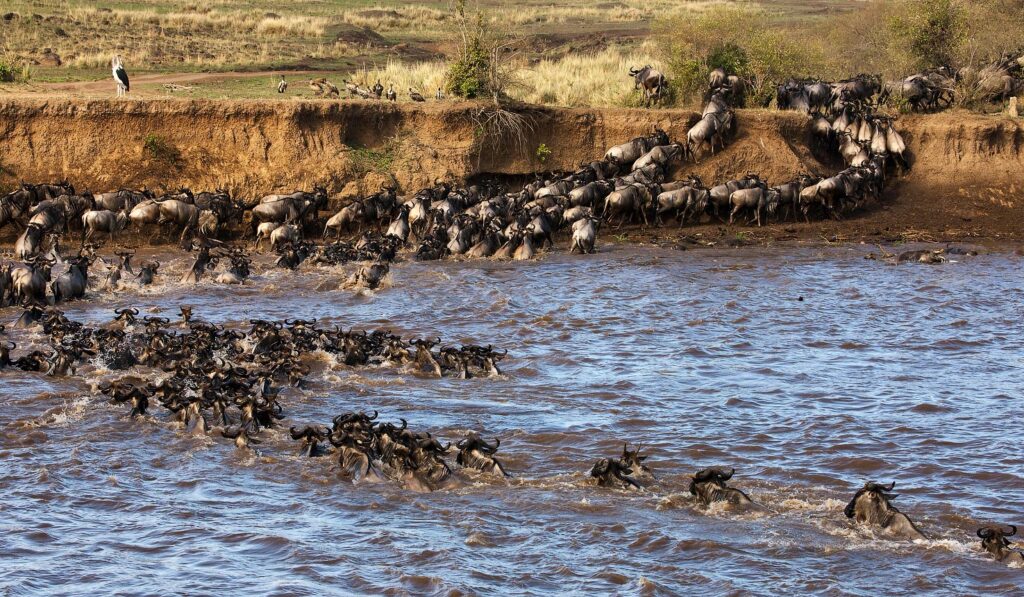
The vast landscapes of the Masai Mara National Park serve as the backdrop for one of nature’s most spectacular events: the Great Migration. This annual pilgrimage of millions of wildebeest, accompanied by large numbers of zebra, and smaller numbers of Grant’s gazelle, Thompson’s gazelle, eland, and impala, is driven by an ancient rhythm, a relentless search for fresh grazing and water. The timing of the migration is determined primarily by the weather patterns, typically occurring between July and October when the Mara plains are filled with fresh grass following the long rains.
The move from the Serengeti in Tanzania into the Masai Mara across the swollen Mara River is fraught with peril. Not only does the treacherous crossing feature strong currents and steep banks, but lurking in the waters are large crocodiles ready to prey on the weaker members of the herd. The sheer scale of the migration, with thousands of animals crossing at various points along the river, creates a spectacle that attracts visitors from across the globe to witness this remarkable natural wonder—considered one of the Seven Natural Wonders of Africa.
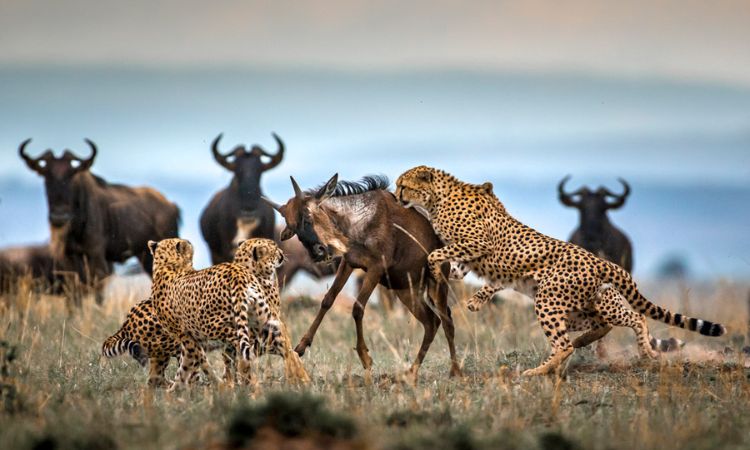
Beyond its scale, the migration plays a crucial role in the ecosystem, serving as a key source of food for the predators of the Masai Mara. The lions, leopards, cheetahs, and hyenas of the region thrive during this period, and the health of these predator populations is a testament to the migration’s importance. The influx of prey also offers a unique opportunity to observe natural selection and predator-prey dynamics in real-time, providing invaluable insights into the ecological balances of the Mara.
Moreover, the migration has a significant economic impact, drawing tourists who contribute to the conservation efforts and the local economy. Lodges, campsites, and safari tours in and around the Masai Mara gear up for this peak season, ensuring that visitors can experience the migration safely and responsibly. This influx of tourism helps fund conservation projects and supports local communities, making the Great Migration pivotal not just for the wildebeest but for the people and predators of the Masai Mara.
Following the passage of the herds, the Mara’s landscape is transformed, illustrating the migration’s role in shaping the environment. The grazing wildebeest fertilize the land, ensuring the cycle of growth for the next season. This intricate ecological dance underscores the interconnectedness of the Masai Mara’s inhabitants and their habitat, setting the stage for the discussion on the region’s remarkable wildlife richness in the successive chapter.
Wildlife Richness
Following the awe-inspiring spectacle of the Great Migration in the Masai Mara National Park, it’s essential to delve deeper into the rich tapestry of wildlife that calls this landscape home. The Maasai Mara is not just a transient passage for migratory species; it’s a complex ecosystem where the drama of life and survival unfolds daily.
At the heart of the Maasai Mara’s allure are the Big Five: lions, leopards, elephants, rhinos, and buffaloes. These species, so named for their storied history with hunters, now draw visitors from around the globe, eager to catch a glimpse of them in their natural habitat. The lions, in particular, are a symbol of strength and majesty, often seen resting during the day or coordinating hunts in the cooler evenings. Their presence is pivotal in the predator-prey dynamics that play out across the savanna.
Leopards add a touch of elusive beauty to the Mara, their spotted coats blending seamlessly into the tall grasses, making them a rare and thrilling sight. Elephants, the gentle giants of the Mara, roam in matriarchal herds, their social interactions and intelligent behaviors a subject of endless fascination. Meanwhile, the critically endangered rhinos demand reverence and protection, with the Mara offering one of the last refuges for these magnificent creatures. Buffaloes, often underestimated, are formidable when threatened, and watching a herd defend itself against predators is a testament to the raw power of nature.
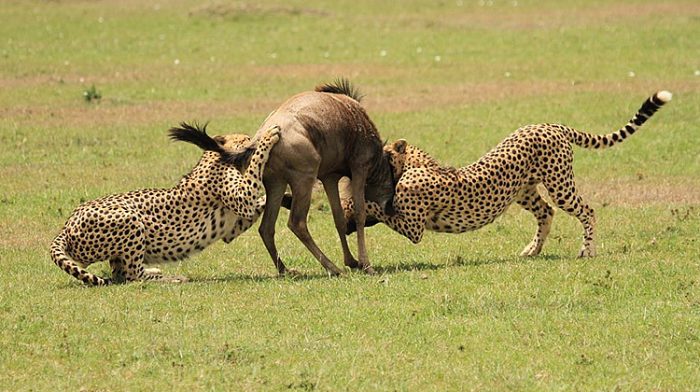
Beyond the Big Five, the Maasai Mara is a haven for cheetahs, the fastest land animals, which can be seen sprinting across the plains in pursuit of prey. Hyenas, though less glamorous, play an essential role in the ecosystem as both hunters and scavengers. The birdlife, too, is prolific, with over 470 species recorded, including the majestic martial eagle and the colourful lilac-breasted roller.
The intricate dance of predator and prey defines the Mara’s daily life. Cheetahs target the smaller, swifter antelopes, while lions and leopards might set their sights on larger game, such as zebras and wildebeests. The cycle of life, death, and rebirth here is a poignant reminder of the natural order and the resilience of these species in the face of challenges.
However, the Maasai Mara is not an isolated paradise. It is part of a larger ecosystem that includes human communities, notably the Maasai people. The following chapter will explore the deep connection between the Maasai culture and this land, highlighting how conservation and traditional ways of life intersect in the modern world. This interdependence between man and wildlife underpins the essence of the Maasai Mara, making it a truly unique wilderness.
Cultural Tapestry
Transitioning from the biodiversity prowess that the Masai Mara National Park exhibits, it’s essential to delve into the cultural quintessence this landscape holds for the Maasai people, an ethnic group that has lived in harmony with the very essence of this land for centuries. The Maasai Mara is not only a wildlife sanctuary but also a vibrant cultural tapestry woven with traditions, beliefs, and practices that have stood the test of time.
The Maasai’s traditional lifestyle, deeply intertwined with cattle herding, reflects a unique coexistence with the wild. Their nomadic life is a rhythmic dance with nature, moving in sync with the seasons and the needs of their livestock. The Mara provides grazing land during the dry season, demonstrating a symbiotic relationship where both the land and the people benefit. This lifestyle, though rich in heritage, is subject to modern-day pressures and conservation efforts that sometimes clash with the pastoralist way of life.
Attire is another distinctive aspect of the Maasai identity. Bright reds and blues dominate their clothing, with intricate beading that tells stories of community, age, and status. Their attire is not just for aesthetic appeal but serves practical purposes and cultural significance, embodying their resilience and respect for tradition amidst changing times.
However, the encroachment of conservation territories and the increasing demands of modernization pose significant challenges. The establishment of the Maasai Mara National Reserve, while crucial for wildlife conservation, has restricted grazing lands, creating conflicts over land rights. Furthermore, climate change exacerbates the scarcity of resources, adding another layer of challenge for the traditional Maasai lifestyle.
Despite these hurdles, the Maasai community remains integral to conservation strategies. Their indigenous knowledge and practices are valuable assets in managing the Mara ecosystem. Initiatives that involve community-based conservation efforts highlight the importance of blending traditional wisdom with modern conservation techniques. Engaging the Maasai in wildlife management and eco-tourism provides sustainable pathways that honor both their cultural heritage and the preservation of the natural world they have long coexisted with.
As this chapter unfolds, the intricate relationship between the Maasai people and the Masai Mara National Park reveals a complex narrative of adaptation, resilience, and the relentless push and pull between conservational needs and the preservation of cultural identity. This interplay continues to shape the evolving landscape of both the Maasai community and the conservation efforts in the Mara, underscoring the need for inclusive approaches that honor and safeguard the heritage and ecological integrity of this majestic land.
Conclusions
The Maasai Mara offers a rich tapestry of wildlife, geography, and culture, marking it as a unique and vital conservation area. As we explore the historical and cultural significance, along with its awe-inspiring natural events like the Great Migration, we recognize the delicate balance between nature and human endeavors, reinforcing the importance of sustainable conservation efforts.