There’s a moment on every safari when time seems to stop. The vehicle engine hums low, the air grows still, and suddenly you see them — the Big Five. An elephant moves through red dust. A lion’s eyes catch the sunlight. A buffalo lifts its head from the grass.
In Tsavo National Park, these encounters are not manufactured; they’re earned. The Big Five — lion, elephant, leopard, buffalo, and rhino — still roam freely here, just as they have for centuries. This is one of Kenya’s last great wildernesses, vast enough for animals to live on their terms.
For travelers seeking an authentic, unspoiled safari, Tsavo is the place to find it. With Woodsly Adventures and the Tsavo National Park Adventure, you’ll experience these legendary creatures safely, respectfully, and up close — guided by people who know the land as home.
Table of Contents
-
The Story of Tsavo’s Big Five
-
The Red Elephants – Giants of the Savannah
-
The Lions of Tsavo – Power and Legacy
-
The Elusive Leopards – Shadows of the Wild
-
The Cape Buffalo – Strength in Numbers
-
The Endangered Black Rhino – A Story of Hope
-
When and Where to Spot the Big Five
-
Photography Tips for Wildlife Lovers
-
The Woodsly Adventures Way – Ethical and Expert Safaris
-
Final Thoughts – Where the Wild Still Rules
1. The Story of Tsavo’s Big Five
The term “Big Five” originally came from early hunters who considered these five animals the most dangerous and challenging to track on foot. Today, the phrase stands for something very different — awe, respect, and the privilege of seeing these animals in their natural home.
Tsavo, which covers more than 20,000 square kilometers, offers some of the best opportunities in Kenya to witness all five species in one ecosystem. Unlike smaller parks, Tsavo’s vastness means these animals live without confinement — their behaviors, migrations, and interactions unfolding naturally.
2. The Red Elephants – Giants of the Savannah
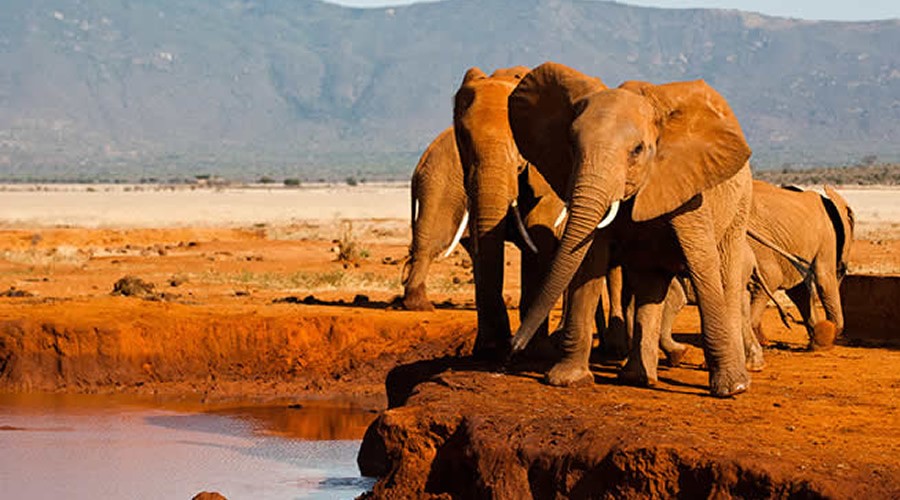
No animal defines Tsavo more than its red elephants. Their distinctive hue comes from bathing in the park’s iron-rich soil, giving them a striking, almost mythical appearance. Watching these giants move through the landscape at sunrise, their skin glowing copper under the early light, is one of Africa’s most unforgettable sights.
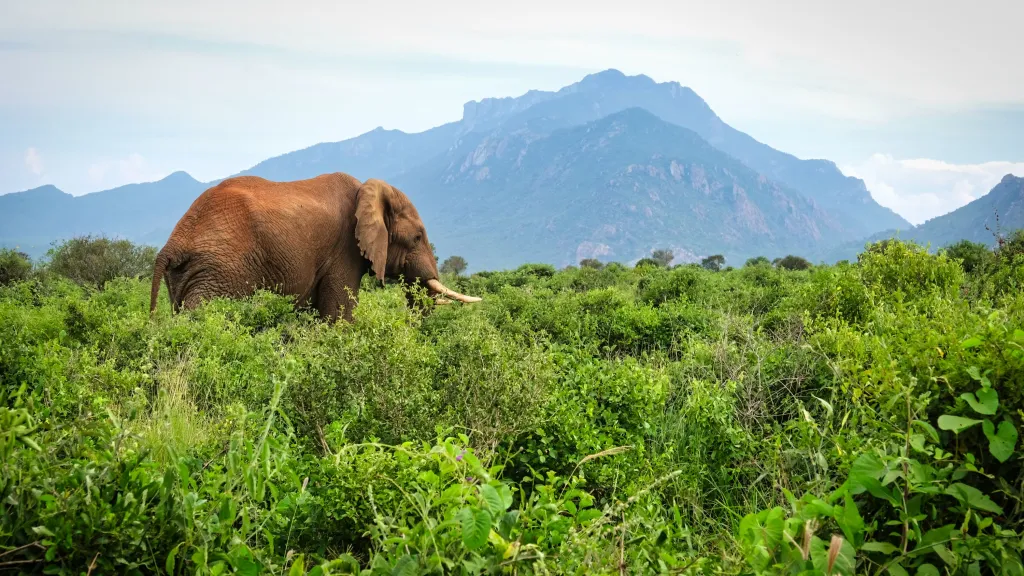
Elephants in Tsavo are known for their intelligence and close-knit family bonds. You’ll often see mothers guiding their calves or large bulls walking alone across the plains.
To deepen your elephant experience, pair your visit with the Amboseli Elephant Safari, where elephants march in front of Mount Kilimanjaro’s snow-capped peak — a breathtaking contrast to Tsavo’s red dust.
3. The Lions of Tsavo – Power and Legacy
The lions of Tsavo are legendary. In the late 19th century, two lions became infamous as the “man-eaters of Tsavo” during the construction of the Kenya-Uganda railway. While their story is part of history now, their descendants still roam the park — powerful, fearless, and regal.
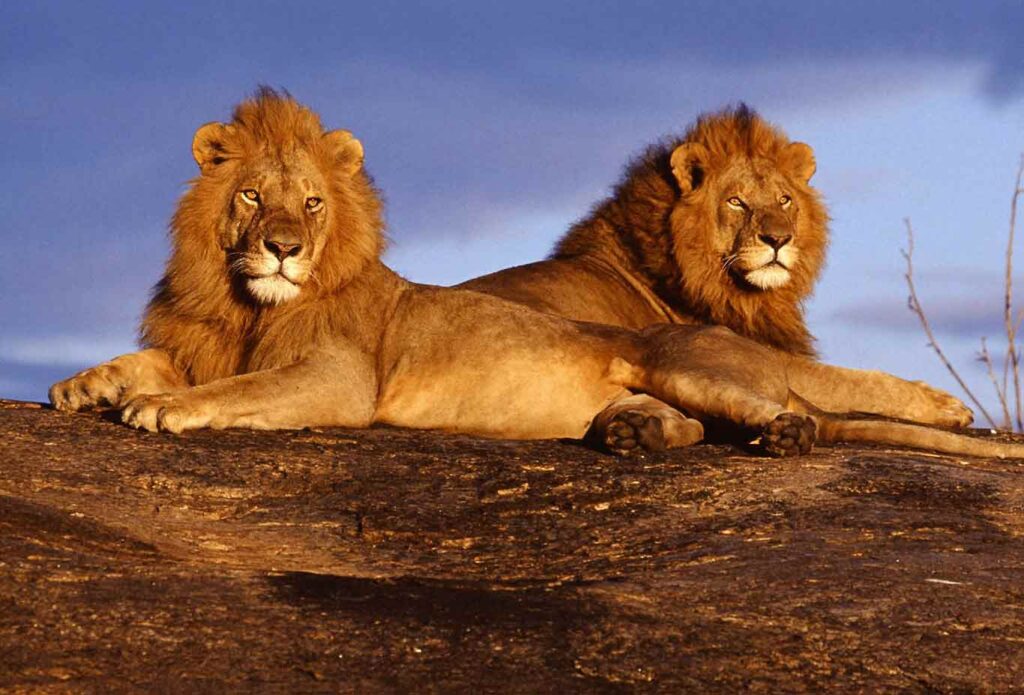
Tsavo’s lions are known for their short manes, which make them distinct from their northern cousins in the Masai Mara. You might find them resting in dry riverbeds during the heat of the day or roaring across the plains at dusk.
There’s something ancient in their presence, something that reminds you that here, nature is still in charge.
4. The Elusive Leopards – Shadows of the Wild
If the lion is the king, the leopard is the ghost of the savannah — beautiful, silent, and hard to find. In Tsavo, leopards are most commonly seen in Tsavo West, especially around the Ngulia Hills and Mzima Springs.
Their spotted coats blend perfectly with the park’s shadows and rocks, and spotting one feels like uncovering a secret. Woodsly Adventures’ expert guides know the signs — a dragging track, an alarm call from monkeys, a flicker in the branches — and with patience, your chances of seeing one rise dramatically.
For photographers, a leopard sighting is pure gold. Their grace, power, and solitude embody the mystery of Africa’s wild.
5. The Cape Buffalo – Strength in Numbers
The Cape buffalo is one of Africa’s most underestimated animals. Massive and muscular, they often gather in herds that move like dark rivers across the grasslands. Their calm appearance hides a deep intelligence and a fierce instinct to protect their own.
In Tsavo, you’ll see buffaloes congregating near waterholes in the mornings and evenings, often mingling with zebras and elephants. Watching a herd drink together as birds perch on their backs is one of the park’s quietest but most powerful moments.
Their resilience mirrors Tsavo’s spirit — unyielding, communal, and grounded.
6. The Endangered Black Rhino – A Story of Hope
Perhaps the most moving part of the Big Five story is the black rhino. Once nearly wiped out by poaching, these incredible animals are slowly recovering thanks to dedicated conservation efforts.
In Tsavo West, the Ngulia Rhino Sanctuary provides a safe haven where rhinos are carefully protected. The sanctuary’s rugged terrain, dotted with acacia and volcanic rock, is perfect for their survival. Seeing one in the wild is rare — and deeply humbling.
Woodsly Adventures supports responsible tourism that contributes to these conservation projects. Every visit helps sustain the park and its wildlife for future generations.
7. When and Where to Spot the Big Five
The dry seasons (June–October and January–February) are the best for Big Five sightings, as animals congregate near water sources.
Top spots in Tsavo East:
-
The Galana River and Aruba Dam – elephants, lions, and buffalo.
-
The Yatta Plateau – scenic drives with chances to spot large herds.
Top spots in Tsavo West:
-
Ngulia Rhino Sanctuary – rhinos and leopards.
-
Mzima Springs – hippos, crocodiles, and birdlife.
-
Shetani Lava Flows – lions and elephants roaming the rugged terrain.
A well-planned Tsavo National Park Adventure from Woodsly Adventures combines these regions for the full experience.
8. Photography Tips for Wildlife Lovers
Photographing the Big Five in Tsavo requires patience, timing, and understanding of the environment.
-
Early mornings and late afternoons offer the best light and activity.
-
Use long lenses (200mm–400mm) for intimate shots without disturbing animals.
-
Focus on behavior, not just portraits — an elephant dusting itself, a lion yawning, a buffalo locking horns.
-
Respect distance: your safety and the animals’ peace come first.
Woodsly Adventures’ guides are trained to position vehicles perfectly for photography, ensuring you get that iconic shot while maintaining ethical viewing standards.
9. The Woodsly Adventures Way – Ethical and Expert Safaris
Every Big Five encounter with Woodsly Adventures is guided by one principle — respect.
-
Expert Local Guides: Born and raised near Tsavo, our guides read the land like a map and the animals like old friends.
-
Sustainable Travel: We partner with lodges that support conservation and local communities.
-
Personalized Itineraries: From first-time visitors to wildlife photographers, we tailor every safari to your goals.
-
Responsible Viewing: No chasing, no crowding — just real moments, experienced naturally.
When you travel with Woodsly Adventures, you don’t just see the Big Five; you understand them.
10. Final Thoughts – Where the Wild Still Rules
Seeing the Big Five in Tsavo isn’t about ticking boxes. It’s about feeling the heartbeat of Africa through its most powerful creatures. It’s about silence broken by the crunch of footsteps in the dust, or the thrill of meeting a lion’s gaze and realizing — you’re in its world.
Tsavo remains one of the last places where nature rules absolutely. The red plains, the deep skies, the quiet strength of the animals — everything here reminds you of how wild the world can still be.
If the Big Five are on your bucket list, let Tsavo be the place where you meet them.
Book your Tsavo National Park Adventure with Woodsly Adventures and experience Kenya’s greatest wildlife story — told by the land itself.