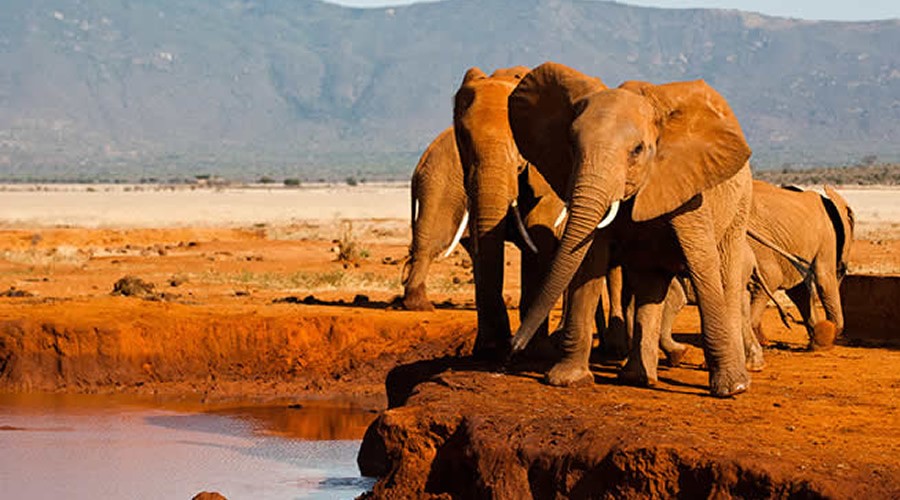
There’s a moment in Tsavo that no photograph can truly capture. As the first rays of morning sun touch the red soil, enormous shapes begin to move — slow, powerful, and calm. They are elephants, covered in the same crimson dust as the land itself. These are the Red Elephants of Tsavo, and they are among Africa’s most remarkable natural wonders.
To see them is to witness a symbol of wild Kenya — strength, grace, and endurance shaped by time and terrain. For those who travel with Woodsly Adventures on the Tsavo National Park Adventure, encountering these red-coated giants isn’t just part of the itinerary; it’s an unforgettable connection to the spirit of Tsavo itself.
Table of Contents
-
The Legend of Tsavo’s Red Elephants
-
Why Tsavo Elephants Are Red
-
A Life Shaped by the Land
-
The Elephant Families of Tsavo
-
Conservation Efforts and Challenges
-
Where and When to See Them
-
The Experience with Woodsly Adventures
-
How to Photograph Tsavo’s Red Elephants
-
The Symbolism of the Red Dust
-
Why They Matter – A Deeper Connection
-
Final Thoughts – Meeting the Giants of Tsavo
1. The Legend of Tsavo’s Red Elephants
Long before Tsavo was declared a national park, travelers and local communities spoke of elephants unlike any others. Their skin wasn’t grey but deep red — as if the earth itself had given them color.
Early explorers were fascinated by this sight, describing “phantoms of fire” moving across the plains. To this day, the red elephants remain one of Tsavo’s defining images — living proof that nature and landscape can shape identity in ways we rarely see elsewhere.
For many visitors, seeing them for the first time feels like stepping into a legend — a meeting with ancient Africa, raw and real.
2. Why Tsavo Elephants Are Red
Despite the myths, Tsavo’s elephants aren’t born red. Their distinctive hue comes from a behavior known as dust bathing.
After wallowing in waterholes, the elephants coat themselves in Tsavo’s rich red soil to protect their skin from insects and the sun. Over time, the fine iron-rich dust clings to their hides, giving them that iconic rusty color.
This act isn’t just practical; it’s cultural. Generations of elephants teach the young where to find the best mud and dust — a ritual passed down through families, tying them to the land as much as any human tradition.
3. A Life Shaped by the Land
Tsavo’s vast, dry terrain creates both challenge and opportunity. Unlike wetter regions such as the Masai Mara, Tsavo’s elephants have adapted to long distances and scarce water sources.
Their tusks are often thicker, their routes longer, and their resilience unmatched. They travel between Tsavo East and Tsavo West, following ancient migratory corridors — some stretching toward Amboseli National Park, home to Kenya’s largest elephant herds.
This connection between parks helps sustain the population, making Tsavo an essential part of Kenya’s greater elephant ecosystem.
4. The Elephant Families of Tsavo
Tsavo’s elephants live in tightly bonded family groups led by matriarchs — the oldest, wisest females. These leaders remember migration routes, safe waterholes, and seasons of abundance.
Young males eventually leave their families to roam independently or form small bachelor groups. Mature bulls, often coated in a deeper red dust, are a sight of immense presence and power.
Watching them interact — mothers protecting calves, bulls testing strength, herds moving in perfect unison — is one of Tsavo’s greatest privileges.
Woodsly Adventures guides are trained not just to find elephants but to interpret their behavior, helping guests understand the subtle communication that defines their lives.
5. Conservation Efforts and Challenges
Like many wildlife populations, Tsavo’s elephants have faced challenges. In the past, poaching and habitat loss severely reduced numbers. But through decades of dedication by the Kenya Wildlife Service (KWS) and community-led conservation, Tsavo’s herds have made a remarkable recovery.
Today, Tsavo is home to over 12,000 elephants, making it one of the largest elephant strongholds in Africa.
Still, conservation is ongoing. Human-wildlife conflict, climate change, and resource competition remain real threats.
By booking your safari through Woodsly Adventures, part of your fee supports sustainable tourism and conservation efforts that keep these elephants safe for future generations.
6. Where and When to See Them
The best places to see Tsavo’s red elephants are around water sources, especially during the dry season (June to October and January to February).
Top viewing spots include:
-
Aruba Dam (Tsavo East): Elephants gather here in large numbers during the afternoon.
-
Galana River: Offers scenic sightings with a backdrop of rugged wilderness.
-
Mzima Springs (Tsavo West): A lush contrast where elephants come to drink and cool off.
-
Ngulia Valley (Tsavo West): Known for family herds during the dry months.
Woodsly Adventures structures game drives around these peak activity zones, ensuring guests have the best chance to witness herds at close range while maintaining respectful distance.
7. The Experience with Woodsly Adventures
Seeing elephants with Woodsly Adventures isn’t just about checking off a sighting. It’s about understanding their world.
Guides share insights about elephant behavior, conservation, and Tsavo’s ecology, turning every moment into education through experience.
Guests can even extend their journey to Amboseli National Park, where elephants walk beneath the snowcapped peak of Mount Kilimanjaro — a stunning complement to Tsavo’s red-coated giants.
Together, these safaris form one of Africa’s most complete elephant experiences.
8. How to Photograph Tsavo’s Red Elephants
Photographing Tsavo’s elephants is about more than a long lens — it’s about light and patience.
Tips for perfect shots:
-
Golden hours: Early morning and late afternoon give the richest red tones.
-
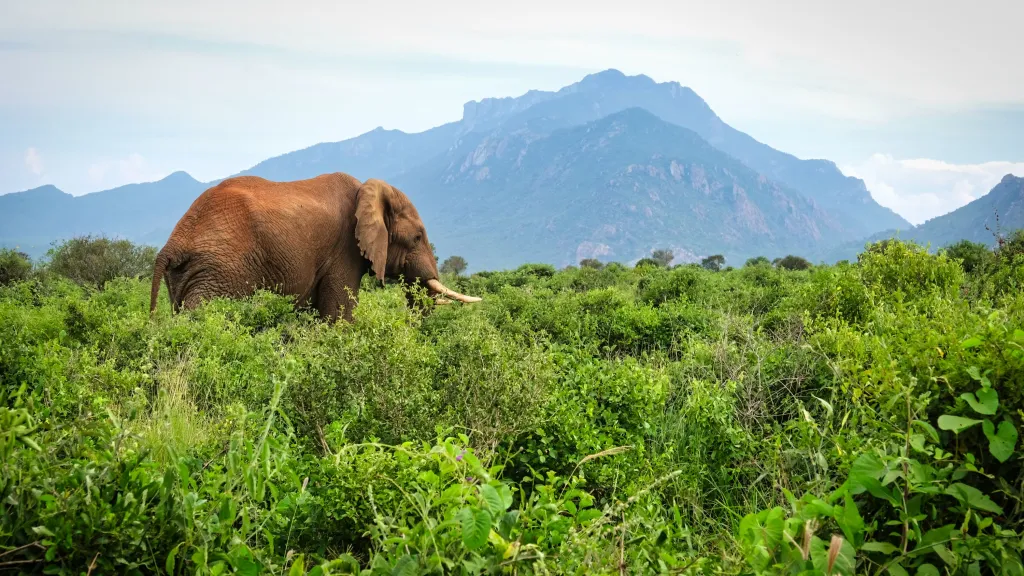
Use contrast: Frame elephants against blue sky or green vegetation for color balance.
-
Capture interaction: Look for family groups, dust baths, or crossings.
-
Stay low: Shooting from vehicle window height creates intimacy and scale.
Woodsly Adventures’ guides position vehicles strategically for unobstructed angles, helping both amateurs and professionals capture incredible moments without disturbing the animals.
9. The Symbolism of the Red Dust
In Tsavo, red isn’t just a color — it’s identity. The elephants’ dusted hides symbolize harmony between life and land.
To locals, these elephants represent resilience — the ability to adapt, survive, and thrive in one of Africa’s toughest environments. To travelers, they represent connection — a reminder that beauty often comes from coexistence with nature.
This symbolism makes seeing them more than an observation; it becomes a lesson about the balance between strength and gentleness.
10. Why They Matter – A Deeper Connection
Every elephant in Tsavo is part of a story that began long before tourism and will continue long after. They shape the ecosystem — clearing paths, spreading seeds, and creating waterholes that benefit countless species.
Protecting them means protecting everything around them. That’s why responsible travel through partners like Woodsly Adventures matters. It ensures that each visit contributes to the preservation of these giants and their fragile world.
When travelers come with curiosity and respect, they become part of something far greater than a safari — they become part of Tsavo’s legacy.
11. Final Thoughts – Meeting the Giants of Tsavo
Standing before a red elephant changes the way you see the wild. Their calm power, their quiet intelligence, and their unspoken bond with the land remind you that true wilderness is not just seen — it’s felt.
In Tsavo, that feeling runs deep.
Let Woodsly Adventures take you there — to the watering holes, the red plains, and the moments when time seems to stand still. Book your Tsavo National Park Adventure today and meet the elephants that wear the color of the earth.