Few places in Africa carry the mystery, power, and legend that Tsavo does. Its vast wilderness holds not just wildlife, but stories — of bravery, survival, and the untamed spirit of Kenya itself. From the infamous Man-Eaters of Tsavo to the silent ruins of forgotten railways, every corner of this land whispers a piece of history.
To walk or drive through Tsavo with Woodsly Adventures is to travel through time — across savannahs where lions once halted progress, past rivers that shaped history, and into landscapes that still feel ancient and alive.
The Tsavo National Park Adventure takes you deep into this legend — where myth meets memory, and every sunrise feels like a continuation of the stories that began more than a century ago.
Table of Contents
-
The Origins of Tsavo’s Name and Mystique
-
The Building of the Railway – The Birth of a Legend
-
The Man-Eaters of Tsavo – Truth Behind the Tale
-
The Science Behind the Man-Eaters
-
The Legacy of the Man-Eaters Today
-
Myths, Spirits, and the Cultural Meaning of Tsavo
-
Ancient Footprints – Archaeology and Early Life
-
Modern Conservation and Rewriting Tsavo’s Story
-
Exploring the Legends with Woodsly Adventures
-
How to Visit the Historical Sites
-
Extending the Journey Beyond Tsavo
-
Final Thoughts – Legends That Still Roam
1. The Origins of Tsavo’s Name and Mystique
The name Tsavo is derived from the Kamba word “Sabuk,” meaning “slaughter,” a reflection of the fierce tribal battles that once occurred here. But beyond its violent associations, Tsavo has always symbolized resilience and survival — a place where life persists despite heat, drought, and time.
Long before it became a national park, Tsavo was feared and respected by local tribes. It was seen as a place of spirits, where ancestors and animals shared the same sacred land.
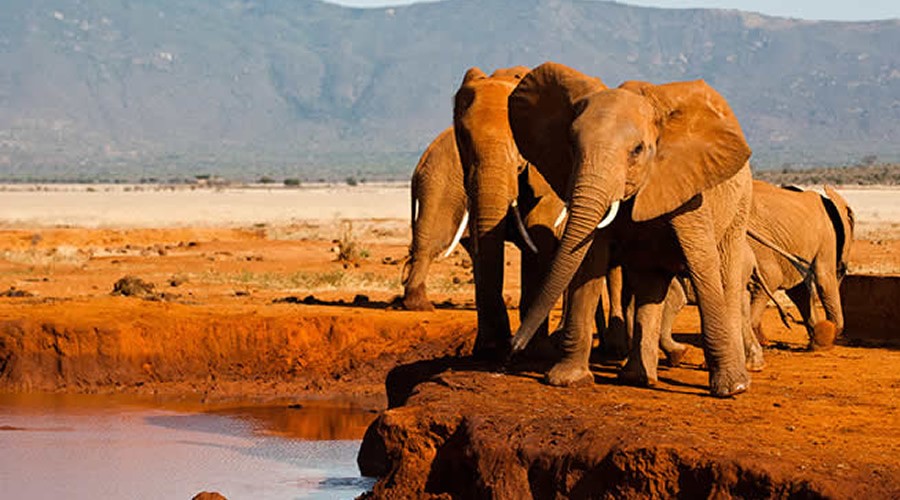
Today, that sense of reverence remains. Standing on Tsavo’s red earth, watching elephants cross the horizon, you feel a connection that transcends history.
2. The Building of the Railway – The Birth of a Legend
In 1898, as the British began constructing the Kenya-Uganda Railway — often called the “Lunatic Line” — Tsavo became the site of one of Africa’s most terrifying and fascinating episodes.
Workers building a bridge across the Tsavo River were stalked and killed by two maneless lions. The attacks were so frequent and brutal that the project came to a standstill.
For months, fear gripped the camp. The workers believed the lions were possessed spirits, avenging the intrusion of men into sacred land.
The story spread beyond Africa, turning Tsavo into legend — a place where wilderness had fought back.
3. The Man-Eaters of Tsavo – Truth Behind the Tale
The two lions became known as The Man-Eaters of Tsavo, responsible for the deaths of at least 35 to 100 workers, depending on historical sources.
The man tasked with stopping them was Lieutenant Colonel John Henry Patterson, the British engineer overseeing the bridge’s construction. After months of pursuit, he finally shot both lions in late 1898.
Their bodies were preserved and are now displayed at the Field Museum in Chicago, yet their story remains deeply tied to Tsavo’s identity — a symbol of nature’s dominance and mystery.
For many visitors, standing at the Tsavo River Bridge site, where the events unfolded, is both haunting and awe-inspiring. Woodsly Adventures includes this site in select Tsavo itineraries, offering travelers the chance to see where history and wilderness met in one unforgettable confrontation.
4. The Science Behind the Man-Eaters
For decades, the reasons behind the lions’ behavior were debated — superstition, demonic possession, or revenge. But modern science offers fascinating explanations.
Research by scientists from the Field Museum discovered that one of the lions had severe dental damage, which may have made hunting natural prey difficult. The other likely adapted to human prey after observing the first.
In essence, the man-eaters were victims of circumstance — forced into desperate behavior by injury and environment. Yet their legend grew far beyond biology, becoming one of the greatest true stories in natural history.
5. The Legacy of the Man-Eaters Today
The story of Tsavo’s man-eaters continues to shape its identity. Today, lions still roam these lands, though they are protected and respected as vital parts of the ecosystem.
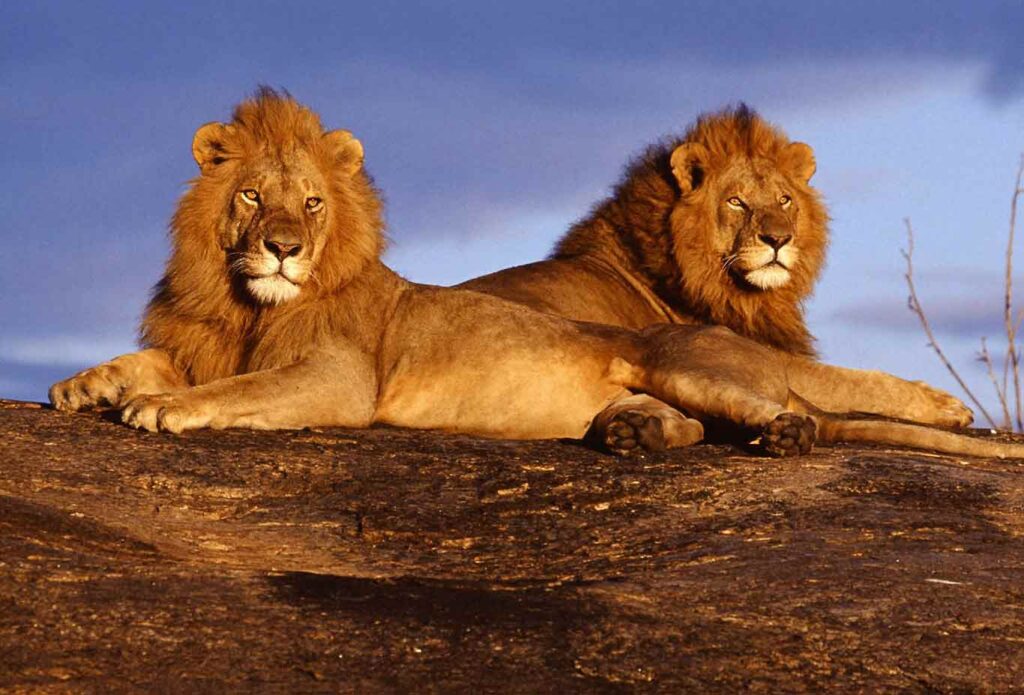
Interestingly, Tsavo’s lions remain distinct — many of the males are naturally maneless, just like the infamous man-eaters. Scientists believe this adaptation helps them stay cool in Tsavo’s hot, arid climate.
Seeing a maneless male lion today feels like watching a living ghost of the past — a reminder that Tsavo’s history is not dead; it walks beside you.
6. Myths, Spirits, and the Cultural Meaning of Tsavo
To local communities, Tsavo has always been more than a wildlife reserve. It’s a place where the spiritual and the physical coexist.
The Kamba and Maasai peoples share stories of ancestral spirits that guard the land and its animals. Elephants are seen as wise messengers, lions as protectors and punishers. Even today, many elders refer to certain hills and water sources as sacred.
When Woodsly Adventures guides lead visitors through Tsavo, they often share these oral histories — stories passed down through generations that add depth to every landscape.
7. Ancient Footprints – Archaeology and Early Life
Long before colonization, Tsavo was a cradle of early human life. Archaeologists have found stone tools, pottery, and settlement remains dating back thousands of years.
Sites like Mzima Springs and Lake Jipe were once watering points for both animals and early humans. In these places, you’re not just seeing wildlife — you’re standing on the same ground where humanity took its early steps.
These discoveries give Tsavo another layer of fascination: it’s not only about lions and elephants but also about the shared history between people and the wild.
8. Modern Conservation and Rewriting Tsavo’s Story
Tsavo’s history may be filled with danger and legend, but today it stands as a beacon of conservation success.
Under the protection of the Kenya Wildlife Service, Tsavo’s wildlife populations — especially elephants and lions — have rebounded. Anti-poaching units patrol vast areas, and community education programs have helped local people see wildlife as an asset rather than a threat.
Woodsly Adventures supports these initiatives by promoting eco-conscious travel, responsible guiding, and community involvement. Every visit helps sustain the park’s future, transforming a place once known for fear into one known for hope.
9. Exploring the Legends with Woodsly Adventures
There’s no better way to experience Tsavo’s legendary past than with experts who know how to bring it to life.
Woodsly Adventures offers guided tours that combine wildlife viewing with historical storytelling. Guests can:
-
Visit the Tsavo River Bridge, where the man-eaters struck.
-
Explore Tsavo East and West, learning how each landscape shaped history.
-
See maneless lions and connect their modern lives to their infamous ancestors.
-
Hear local myths and cultural tales from the park’s early communities.
It’s not just a safari; it’s an expedition through living history — one that merges adventure, education, and emotion.
10. How to Visit the Historical Sites
To fully experience the legends of Tsavo, plan a multi-day journey.
Suggested itinerary by Woodsly Adventures:
-
Day 1–2: Tsavo East – Explore Aruba Dam, Yatta Plateau, and visit the historical Tsavo River Bridge.
-
Day 3–4: Tsavo West – Visit Mzima Springs, Shetani Lava Flow, and Ngulia Hills.
-
Optional Extension: Continue to Amboseli National Park or the coast for a Mombasa Beach Retreat.
Each journey is customized according to traveler interests — whether you’re drawn by wildlife, photography, or history.
11. Extending the Journey Beyond Tsavo
The legends don’t end at Tsavo’s borders. Kenya’s landscape is filled with stories, and combining destinations offers a broader view of its natural and cultural soul.
-
Wasini Island Marine Park: After Tsavo’s dust and legend, dive into a different kind of adventure with the Wasini Island Marine Park Excursion — snorkeling, dolphins, and Swahili culture.
-
Masai Mara: For those drawn to mythic landscapes and the Great Migration.
-
Amboseli: For iconic views of elephants and Mount Kilimanjaro.
With Woodsly Adventures, these transitions are seamless — blending Kenya’s history, wildlife, and coastal beauty into one unforgettable narrative.
12. Final Thoughts – Legends That Still Roam
Tsavo is not a place of the past — it is a living legend. Its lions still prowl, its elephants still roam, and its stories still echo through the wind that crosses the plains.
To visit Tsavo is to step into history, to feel the pulse of Africa’s wild heart, and to understand that legends never truly die — they simply evolve.
Let Woodsly Adventures take you there. Walk in the footsteps of explorers, listen to the whispers of the savannah, and discover the truth behind Tsavo’s timeless myths.
Book your Tsavo National Park Adventure today and experience a story that has lived for centuries — one that still breathes beneath the red dust and golden skies of Kenya.