Few moments in life compare to standing before an African elephant — feeling the earth tremble beneath its slow, graceful steps, hearing the rumble that echoes deep within your chest. In Amboseli National Park, these encounters are not rare; they’re the essence of the experience.
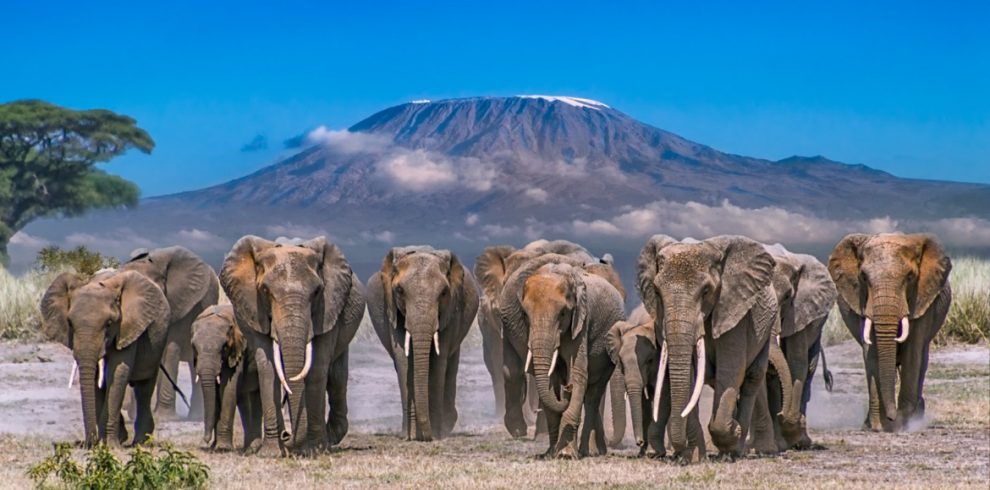
Amboseli is known as “The Land of Giants,” home to some of the largest and most studied elephant herds in Africa. Their calm presence defines the park’s rhythm — moving across the plains beneath the shadow of Mount Kilimanjaro, creating scenes so majestic they feel painted by nature herself.
With Woodsly Adventures, travelers don’t just watch elephants — they learn their stories, witness their intelligence, and come to understand their profound social bonds. Amboseli’s elephants are not simply wildlife; they’re living symbols of resilience, wisdom, and family.
Table of Contents
-
Why Amboseli Is Known as the Land of Elephants
-
The Elephant Families of Amboseli – Matriarchs and Bonds
-
Communication in the Wild – How Elephants Speak Without Words
-
Intelligence and Emotion – The Mind of a Giant
-
The Role of Elephants in Amboseli’s Ecosystem
-
Conservation and Coexistence – Protecting Amboseli’s Herds
-
Meeting the Elephants with Woodsly Adventures
-
Tips for Observing and Photographing Elephants Respectfully
-
Beyond Amboseli – Kenya’s Elephant Corridors
-
Conclusion – What Amboseli’s Elephants Teach Us
1. Why Amboseli Is Known as the Land of Elephants
Amboseli is a sanctuary where elephants thrive freely. Thanks to decades of research led by the Amboseli Elephant Research Project (AERP), the park is one of the most important elephant conservation sites in the world.
Here, scientists have studied generations of elephant families for over 50 years, giving us deep insight into how these remarkable animals think, feel, and live.
With over 1,600 elephants roaming the park, sightings are guaranteed — not from afar, but up close. Families gather at the park’s swamps, cooling themselves in the water while Mount Kilimanjaro rises behind them. It’s an image that defines Amboseli — wild, peaceful, and deeply moving.
When you travel with Woodsly Adventures, your guides — trained in elephant behavior — interpret each movement and interaction. You don’t just see elephants; you understand their world.
2. The Elephant Families of Amboseli – Matriarchs and Bonds
Elephants are matriarchal, meaning the oldest and most experienced female leads the family. In Amboseli, many of these matriarchs are known by name. They carry decades of wisdom — knowing where to find water in drought, how to navigate danger, and when to lead their families across the plains.
A typical herd includes the matriarch, her daughters, and their calves — a tight-knit group built on trust and affection. Males, known as bulls, leave the family when they reach adolescence but often remain nearby, forming loose bachelor groups.
Watching these herds interact is like observing a family drama — full of care, playfulness, and emotion. Calves chase egrets through the grass, mothers nudge them gently with trunks, and the matriarch stands tall, always alert.
Through Woodsly Adventures, travelers learn to recognize these dynamics. You’ll see not just animals, but personalities — the curious calf, the patient mother, the protective leader — each a vital part of Amboseli’s living story.
3. Communication in the Wild – How Elephants Speak Without Words
Elephants don’t just communicate with sound — they speak through touch, movement, and vibration.
Their low-frequency rumbles, often too deep for human ears, can travel several kilometers through the ground. These “infrasound” signals allow herds to stay in contact even when miles apart.
They also use visual cues — flapping ears, raised trunks, or gentle trunk touches — to express reassurance, curiosity, or warning. Calves, for example, learn their family’s unique “language” by mimicking older elephants.
When you’re on a safari with Woodsly Adventures, your guide will explain these subtle gestures. A raised head might mean alertness; a soft rumble, affection. It’s this layer of understanding that transforms a safari into something far richer than sightseeing — a real connection with nature’s intelligence.
4. Intelligence and Emotion – The Mind of a Giant
Elephants are among the most intelligent creatures on earth. Scientists have observed behaviors that reveal self-awareness, empathy, grief, and even humor.
They recognize themselves in mirrors, mourn their dead, and remember friends and places for decades. Some elephants return to the bones of relatives, touching them gently with their trunks — a quiet ritual of remembrance that mirrors human emotion.
Amboseli’s elephants show these behaviors daily. You might see a mother patiently teaching her calf to drink, or a family huddled protectively around a newborn. These are moments that remind us how close we truly are to them — not in species, but in spirit.
Travelers with Woodsly Adventures often describe these encounters as transformative. Watching elephants interact teaches patience, compassion, and respect — lessons that stay long after the safari ends.
5. The Role of Elephants in Amboseli’s Ecosystem
Elephants are the architects of Amboseli’s landscape. Their size and habits shape the environment in ways that support other wildlife.
When elephants knock down trees to feed on branches, they create open grasslands for grazers like zebras and wildebeests. Their footprints fill with rainwater, forming small pools for birds and amphibians. Even their dung spreads seeds, helping new vegetation grow.
This constant renewal makes elephants keystone species — vital to the health of the entire ecosystem. Without them, Amboseli would change dramatically.
Through eco-conscious safaris, Woodsly Adventures helps guests understand this delicate balance — how every creature, from the smallest bird to the largest elephant, plays a role in sustaining Kenya’s wild beauty.
6. Conservation and Coexistence – Protecting Amboseli’s Herds
Elephants in Amboseli are thriving, but their future depends on constant vigilance. Human expansion, poaching, and climate change all pose threats to their survival.
Thankfully, Amboseli has become a model for conservation success. Community partnerships, research, and ethical tourism — led by organizations like the Amboseli Trust for Elephants — have created a sustainable environment where humans and wildlife coexist.
Woodsly Adventures supports responsible tourism practices that benefit both nature and local communities. By choosing their Amboseli Elephant Safari, travelers directly contribute to conservation funding and awareness.
Every safari booked is a vote for protection — ensuring these gentle giants continue to roam free for generations to come.
7. Meeting the Elephants with Woodsly Adventures
There’s something profoundly moving about your first elephant encounter in Amboseli. The air stills. Cameras lower. Words fade. It’s just you and the giants — unhurried, unbothered, deeply present.
Woodsly Adventures designs its Amboseli Elephant Safari to honor these moments. Game drives are paced thoughtfully, avoiding crowds and approaching elephants respectfully. You’ll learn how to read their moods, anticipate their movements, and appreciate their grace.
Guides share stories about individual elephants — families known for decades — so you begin to recognize them not as herds, but as personalities. Some are playful, some cautious, others regal.
These encounters often become the emotional highlight of a trip — the moment travelers realize they’re not just visiting Amboseli; they’re part of its story.
8. Tips for Observing and Photographing Elephants Respectfully
Elephant encounters are deeply photogenic, but patience and respect come first. Woodsly Adventures encourages responsible photography that values experience over intrusion.
Tips for the best experience:
-
Stay quiet — elephants respond calmly to peaceful presence.
-
Avoid flash photography or loud clicking noises.
-
Focus on natural behavior — let the moment unfold.
-
Early morning and late afternoon light create stunning, golden shots with Kilimanjaro in the background.
-
Use longer lenses to capture details like trunks, eyes, and social gestures without getting too close.
The goal isn’t just a photo — it’s a memory that reflects both beauty and ethics.
9. Beyond Amboseli – Kenya’s Elephant Corridors
Amboseli is part of a larger network of elephant habitats that stretch across southern Kenya. Through migration corridors, elephants travel between Amboseli, Tsavo, and Mount Kilimanjaro regions — following age-old paths that sustain their movement and genetic diversity.
Travelers can explore this greater ecosystem through Woodsly Adventures’ connected itineraries:
-
Tsavo National Park Adventure: Discover Tsavo’s red elephants and rugged landscapes.
-
Masai Mara Safari: Witness the Great Migration and different elephant dynamics in western Kenya.
-
Mombasa Beach Retreat: Relax after your safari along Kenya’s coast.
-
Wasini Island Marine Park Excursion: Add a marine twist with snorkeling and dolphin encounters.
These combinations reveal Kenya’s full diversity — where every landscape, from savannah to sea, tells part of the elephant’s journey.
10. Conclusion – What Amboseli’s Elephants Teach Us
To watch elephants in Amboseli is to witness wisdom in motion. They teach patience, cooperation, and strength. They remind us that leadership can be gentle, that family is sacred, and that memory binds us all.
In their footsteps, we see the story of Africa itself — enduring, powerful, and profoundly beautiful.
A safari with Woodsly Adventures is more than travel. It’s an invitation to understand, to feel, and to contribute. Because when you stand before Amboseli’s gentle giants, you realize you’re not just observing nature — you’re learning from it.
Book your Amboseli Elephant Safari today and discover the heart of Kenya’s wild — through the eyes of its most majestic residents.