Table of Contents
-
Introduction: Beyond the Beaten Path
-
A Brief History of Tsavo National Parks
-
Tsavo East National Park: The Theater of the Wild
-
Tsavo West National Park: The Land of Contrast
-
Key Differences Between Tsavo East and Tsavo West
-
Safari Experiences in Tsavo
-
The Scenic Highlights of Tsavo
-
The People and Culture Around Tsavo
-
Best Time to Visit Tsavo
-
Accommodation Options in Tsavo
-
Accessibility and Travel Routes
-
Conservation Efforts in Tsavo
-
Tsavo vs. Other Safari Destinations
-
Frequently Asked Questions (FAQs)
-
Conclusion: The Ultimate Wild Frontier
Introduction: Beyond the Beaten Path
While the Maasai Mara and Amboseli often steal the spotlight, true safari connoisseurs know that Kenya’s real hidden gems lie further south. Tsavo East and Tsavo West National Parks together form one of the largest protected wildlife areas on Earth—a vast, untamed wilderness that offers a raw and adventurous safari experience far from the crowds. Tsavo is a land of dramatic contrasts: from the flat, red-dusted plains of the east to the lush, volcanic springs of the west. It’s a place where famous “red elephants” roam, black rhinos are protected in a secretive sanctuary, and the legends of history echo across the landscape. If you’re seeking a Kenya safari tour that delivers diversity, seclusion, and a true sense of adventure, the Tsavo ecosystem is your ultimate destination.
A Brief History of Tsavo National Parks
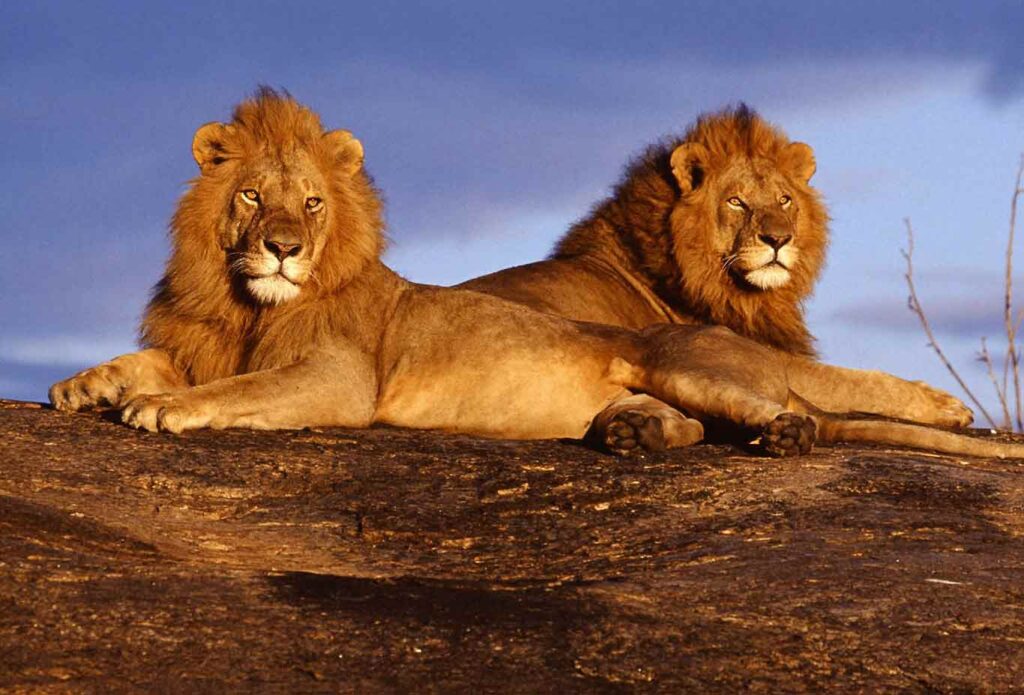
Established in 1948, Tsavo was later split into East and West for administrative purposes. Its history is deeply intertwined with the construction of the Kenya-Uganda Railway, infamously marked by the “Man-Eaters of Tsavo”—a pair of lions that preyed on railway workers in the late 19th century. This story cemented Tsavo’s reputation as a wild and formidable place. The parks have played a critical role in conservation tourism in Kenya, serving as a vital sanctuary for elephants and rhinos, especially during the poaching crises of the 20th century. Today, they stand as a testament to resilience and the enduring power of wilderness.
Tsavo East National Park: The Theater of the Wild
Tsavo East is defined by its vast, open spaces and a feeling of infinite horizons. Its landscape is a mesmerising palette of red earth and golden grass, shaped by the Galana River—a life-giving artery that cuts through the arid plains. Key features include the Yatta Plateau, the world’s longest lava flow, and the dramatic Lugard Falls, where water cascades through a series of rock formations.
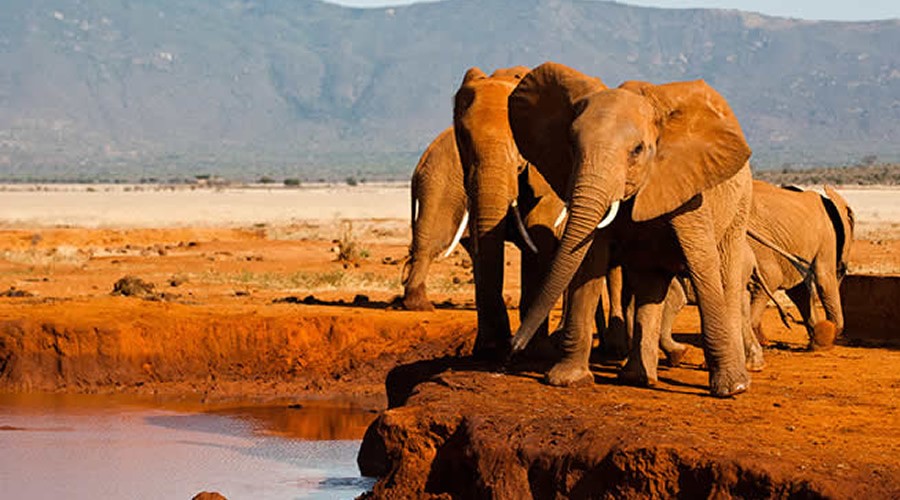
This is the realm of the “red elephants,” who dust-bathe in the iconic red soil, giving them a unique, rusty appearance. Wildlife viewing here is fantastic, with large herds of dust-reddened elephants, lions, giraffes, and zebras. The park is also a birdwatcher’s paradise, with numerous species attracted to the Galana River.
Tsavo West National Park: The Land of Contrast
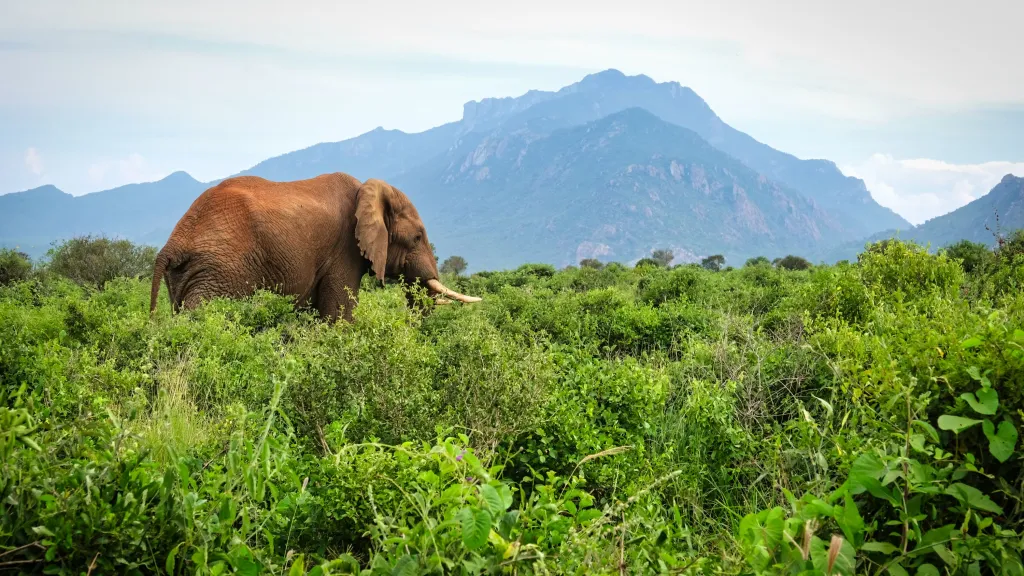
Tsavo West presents a completely different face: greener, hillier, and more volcanic. Its rugged terrain includes ancient lava flows like the Shetani lava beds, the Chaimu Crater, and the magnificent Chyulu Hills on its border. The crown jewel of Tsavo West is Mzima Springs, a series of crystal-clear natural springs sourced from underground aquifers in the Chyulu Hills. Here, you can watch hippos and crocodiles underwater from a submerged observation hide—a truly unique safari experience.
Tsavo West is a stronghold for the critically endangered black rhino, protected within the heavily guarded Ngulia Rhino Sanctuary. The thicker vegetation can make game viewing trickier than in the east, but the rewards—including leopards, elephants, and a vast array of birdlife—are incredible.
Key Differences Between Tsavo East and Tsavo West
| Feature | Tsavo East | Tsavo West |
|---|---|---|
| Landscape | Flat, open plains, semi-arid bush. | Rugged, volcanic hills, lush springs, lava flows. |
| Wildlife Viewing | Generally easier due to open terrain. | More challenging but diverse; famous for rhinos. |
| Key Attractions | Red elephants, Galana River, Yatta Plateau. | Mzima Springs, Ngulia Rhino Sanctuary, Chyulu Hills. |
| Atmosphere | Wild, remote, vast. | More varied, scenic, and accessible. |
Safari Experiences in Tsavo
A safari in Tsavo is about exploration. Game drives in Tsavo East are spent traversing vast plains, while in Tsavo West, they involve navigating rocky tracks to discover hidden springs and waterholes. Walking safaris are a highlight, especially around the Chyulu Hills, offering a chance to appreciate the smaller details of the ecosystem. The most unique experience is undoubtedly visiting Mzima Springs to observe aquatic life from the underwater hide. For those staying in private conservancies, night game drives offer a chance to see the elusive nocturnal world.
The Scenic Highlights of Tsavo
Beyond the wildlife, Tsavo is a geologist’s dream.
-
Lugard Falls (Tsavo East): Where the Galana River funnels through a narrow gorge of sculpted rocks.
-
Mzima Springs (Tsavo West): An oasis of palm trees and crystal-clear water teeming with life.
-
Shetani Lava Flows (Tsavo West): A vast, black expanse of solidified lava, its name meaning “devil” in Swahili.
-
Chyulu Hills (Tsavo West): Rolling green hills often called the “Green Hills of Africa,” with stunning views.
The People and Culture Around Tsavo
The lands surrounding Tsavo are home to the Taita and Kamba communities. Cultural visits to local villages offer a chance to learn about traditional farming, crafts, and folklore. Engaging with these communities provides a deeper understanding of the human-wildlife coexistence in this region and supports local livelihoods through cultural tourism.
Best Time to Visit Tsavo
The best time for wildlife viewing is during the dry seasons (June-October and January-February), when animals congregate around permanent water sources like the Galana River and Mzima Springs. The wet seasons (November and March-May) transform the parks into a lush, green paradise, ideal for bird watching and photography, though some roads may become challenging.
Accommodation Options in Tsavo
| Accommodation Type | Experience | Ideal For |
|---|---|---|
| Luxury Lodges | Stunning architecture, pools, fine dining, prime locations. | Honeymooners, travelers seeking comfort & unique design. |
| Mid-Range Camps | Comfortable tented camps, great service, good value. | Families, couples, most travelers. |
| Budget Camping | Public campsites or simple bandas; self-catering. | Adventurous travelers, backpackers, groups. |
Accessibility and Travel Routes
Tsavo is incredibly accessible. Tsavo West is located roughly 240 km from Nairobi and 250 km from Mombasa, making it a perfect stop on a Nairobi-Mombasa road trip. Tsavo East’s main gates are also easily reachable from the Mombasa highway. For those short on time, domestic flights connect to several airstrips within the parks. Tsavo is perfectly positioned to be combined with a beach holiday on the Kenyan coast or with a safari in Amboseli National Park.
Conservation Efforts in Tsavo
Tsavo is at the forefront of Kenya’s conservation battle. The Ngulia Rhino Sanctuary in Tsavo West is a critical, fenced-off breeding ground for the highly endangered black rhino. Anti-poaching units work tirelessly to protect elephant populations. Community-based projects ensure that those living alongside the park benefit from tourism, fostering a crucial partnership for wildlife conservation.
Tsavo vs. Other Safari Destinations
-
Vs. Maasai Mara: Tsavo offers raw, rugged wilderness and solitude, while the Mara offers the concentrated spectacle of the Great Migration and higher predator density.
-
Vs. Amboseli: Amboseli is famous for its elephant herds and Kilimanjaro views. Tsavo offers a vastly larger, more diverse landscape and unique attractions like Mzima Springs.
Tsavo appeals to those who have already seen the classics or who want a more adventurous, off-the-beaten-path experience.
Frequently Asked Questions (FAQs)
Is Tsavo better than Maasai Mara for safaris?
It depends on your goal. The Mara is best for the Great Migration and easy, dense wildlife sightings. Tsavo is best for a sense of vast, untouched wilderness, unique landscapes, and avoiding crowds.
How many days should I spend in Tsavo East and West?
We recommend a minimum of 2 days per park to appreciate their vastness and diversity. A 4-5 day trip covering both parks is ideal.
Are the “red elephants” unique to Tsavo?
While elephants elsewhere dust-bathe, the uniquely red soil of Tsavo East gives its elephants their famous, consistent russet colour, making them a special feature of the park.
Can I combine Tsavo with a beach holiday?
Absolutely! Tsavo’s location between Nairobi and Mombasa makes it the perfect safari-beach combo. A classic itinerary is a few days in Tsavo followed by relaxation on the beaches of Diani or Watamu.
Is Tsavo safe for tourists?
Yes. As with all Kenyan national parks, you will be guided by experienced professionals. It’s important to always follow your guide’s instructions and stay within your vehicle during game drives.
Conclusion: The Ultimate Wild Frontier
Tsavo East and West offer a different rhythm of safari—one of exploration, discovery, and awe for the scale of nature. It’s a place where you can feel truly immersed in an ancient, untamed Africa. From the red elephants of the east to the underwater world of Mzima Springs in the west, Tsavo delivers breathtaking moments that are entirely its own. For the traveler seeking authenticity and adventure beyond the ordinary, Tsavo is Kenya’s ultimate wild frontier.
Ready to explore Kenya’s largest and most wild park? Let Woodsy Adventures craft your perfect Tsavo safari itinerary. With expert guides who know these hidden gems intimately, we’ll take you to the heart of the wilderness. Plan Your Tsavo Safari with Woodsy Adventures today!