The Masai Mara, a renowned wildlife sanctuary in Kenya, offers an unparalleled safari experience. Known for its vast landscapes, diverse animal populations, and the iconic Great Migration, the Masai Mara captivates adventurers from around the globe. Embark on a journey to explore its breathtaking beauty and cultural richness, deserving its status among the world’s natural wonders.
The Majestic Landscape and Geography of Masai Mara
The majestic landscape and geography of the Masai Mara National Park draw visitors from around the world, inviting them into a world where nature and wildlife coexist in a beautifully intricate balance. Stretching over thousands of kilometers, the park is an endless plain that hosts an extraordinary variety of life. The heart of Masai Mara is crossed by the Mara River and its tributaries, which play a critical role in the ecosystem. During the dry season, these water sources become a lifeline for the wildlife, creating a dramatic stage for the quest of survival.
The landscape is a picturesque collection of rolling grasslands, dotted with acacia trees, which provides not only a home but a sanctuary for the myriad of species that roam the plains. This diverse habitat supports everything from the majestic African elephants to the elusive leopards, cheetahs, and a host of herbivores, which in turn support the larger predators.
Climatic variations in the Mara are a testament to the dynamic nature of this ecosystem. With the rains, the plains turn into a lush canvas of green, teeming with new life as animals take advantage of the abundance to feed and nourish their young. The dry season paints a harsher picture, one of survival and endurance, as water becomes scarce and food harder to find. It’s these climatic cycles that dictate the rhythm of life in the Mara, influencing migration patterns and ensuring the delicate balance of this ecosystem continues.
The geography of Masai Mara is not just a backdrop to the drama of survival played out by the wildlife; it shapes the culture and lifestyle of the Maasai people who have lived in harmony with this land for centuries. The vast plains and the scattered water sources define their nomadic patterns, moving in sync with the cycles of the weather, following the rains for the sake of their livestock.
Understanding the geography of Masai Mara is key to appreciating the intricate link between land, weather, animal, and human life—a link that makes Masai Mara not just a geographical location but a dynamic, living ecosystem. This incredible interplay of natural forces sets the stage for one of nature’s greatest spectacles, the Great Migration, framing a narrative where every creature plays a vital role in the story of the Mara.
The Rich Biodiversity: Wildlife and the Great Migration
Transitioning from the geographical wonders that form the backdrop of the Masai Mara National Park, the narrative brings us closer to the vibrant life forms that inhabit this magnificent landscape. The park, heralded for its rich biodiversity, is an arena where the drama of life unfolds in its most primal form. This chapter delves into the heart of Masai Mara’s wildlife sanctuary, showcasing the circle of life that mesmerizes and educates all who venture into this sacred territory.
At the core of Masai Mara’s appeal is its astonishing diversity of life. The park is home to the “Big Five” – lions, leopards, elephants, buffalo, and rhinoceros – drawing visitors from all corners of the globe. However, the Mara’s magic does not end with these iconic species. It teems with a myriad of other creatures, including cheetahs, hyenas, giraffes, antelopes, and over 450 bird species, creating a kaleidoscope of life that thrives within the grasslands and riverine forests.
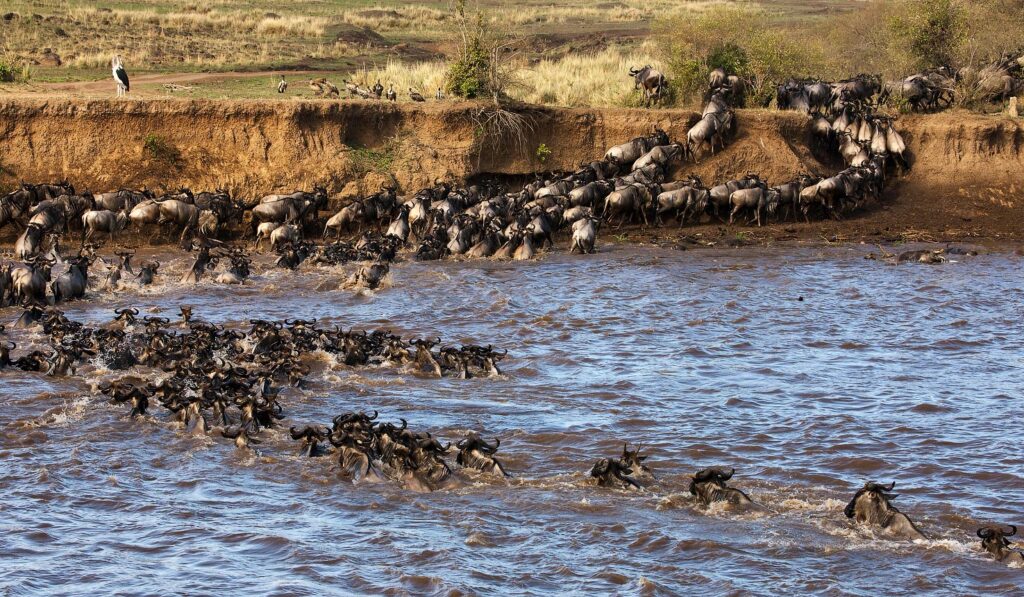
The pinnacle of Masai Mara’s natural spectacle is undoubtedly the Great Migration, deemed one of the Seven Natural Wonders of Africa. This annual event sees over a million wildebeest, accompanied by hundreds of thousands of zebras and gazelles, traverse the plains from the Serengeti in Tanzania, in search of fresh pasture and water. Their perilous journey across the crocodile-infested Mara River is a dramatic survival saga that captivates and enthralls.
Amidst the splendor of this natural event lies a fragile ecosystem, vulnerable to the threats of climate change and human encroachment. Conservation efforts are tirelessly at work within the Mara, seeking to preserve this unparalleled spectacle of nature. Initiatives aimed at curbing poaching, habitat restoration, and community engagement programs work in tandem to ensure the survival of the Mara’s diverse inhabitants. These programs not only protect wildlife but also support the coexistence of nature and the local Maasai communities, embodying a harmonious relationship that has thrived for centuries.
The story of Masai Mara’s biodiversity is a testament to the resilience and beauty of the natural world. It reinforces the park’s significance as a sanctuary for wildlife conservation and an enchanting wilderness for adventurers. As visitors witness the breathtaking vistas and the elemental struggle for survival, they are reminded of the intrinsic value of preserving such pristine environments. In the continuum of the Masai Mara narrative, the interplay between the land’s geography, its wildlife, and the ensuing chapter on the Maasai people and their heritage, underscores a profound connection. The seamless blend of natural wonder and cultural richness forms a tapestry that is uniquely Kenyan, inviting explorers to immerse themselves in the unspoiled beauty of Masai Mara.
Cultural Tapestry: The Maasai People and Their Heritage
Following the breathtaking journey through the rich biodiversity of Masai Mara National Park, where the Great Migration paints a living tableau of nature’s most profound spectacle, our narrative weaves into the cultural tapestry of the Maasai people. This chapter delves deep into the heart of Maasai culture, exploring the intricate relationship between the Maasai community and the lands they have stewarded for centuries. Immersed in tradition, the Maasai way of life is an enchanting symbiosis with the environment, manifested through their pastoral lifestyle, intricate rites of passage, and vibrant social structures.
The Maasai people’s profound connection to their environment is apparent in how they navigate life. This community’s ethos, centered around respect and coexistence with nature, offers invaluable lessons in conservation. Their traditional practices, such as nomadic pastoralism, demonstrate a sustainable way of living that preserves the Mara’s biodiversity. The Maasai’s indigenous knowledge, passed down through generations, encompasses a deep understanding of wildlife behaviors, medicinal plants, and natural cycles, all crucial for the sustainable management of the ecosystem.
In this rich cultural context, the Maasai’s art stands as a vibrant testament to their heritage. Beadwork, intricate and colorful, is more than an art form; it’s a narrative medium that tells stories of identity, social status, and life passages. Each pattern and color in Maasai beadwork symbolizes specific aspects of their culture, offering insight into a complex societal framework. Engaging with this art form provides a deeper appreciation for the Maasai’s cultural depth and the intricate relationships between community, tradition, and the natural world.
Understanding the role of the Maasai in conservation is essential. Their traditional lands encompass vital ecosystems within the Masai Mara, and their practices have contributed to the preservation of these landscapes. The Maasai community embodies a model of conservation that balances human needs with ecological stewardship. Their involvement in conservation initiatives has been pivotal, showcasing a community-driven approach to environmental preservation that bridges traditional knowledge with modern conservation techniques.
This chapter not only celebrates the Maasai’s rich cultural heritage but also underscores their indispensable role in conserving the Mara’s pristine landscapes. As we transition into the next chapter on Eco-tourism, the narrative progresses from the vibrant tableau of Maasai culture to exploring how sustainable travel practices within the Masai Mara amplify conservation efforts, enhance visitor experiences, and support the local communities, including the Maasai, in their enduring role as guardians of this magnificent landscape.
Eco-tourism: Sustainable Travel in the Masai Mara
Building on the cultural insights from the Maasai people and their rich heritage, eco-tourism in the Masai Mara National Park emerges as a pivotal aspect of preserving this pristine wilderness. The essence of sustainable travel practices within the reserve hinges on a meticulous balance between minimal environmental impact and enhancing the visitor experience. Key to this delicate equilibrium is the partnership among local communities, conservationists, and policymakers.
In the heart of eco-tourism, the Masai Mara thrives on an ethos that respects the natural habitat while promoting a conservation economy that benefits local Maasai communities. Initiatives such as community-owned lodges provide direct economic benefits to the local population and incentivize the protection of wildlife. These ventures not only offer authentic and enriching experiences for travelers but also ensure that tourism revenues are funneled back into community projects and conservation efforts.
Eco-friendly practices are heavily encouraged, from the construction of lodges using sustainable materials and designs that blend into the landscape to the use of solar power and water recycling systems. Visitors are invited to embrace these practices, contributing to a culture of conservation through mindful travel behaviors. This includes adhering to park guidelines that reduce human-wildlife conflict, such as maintaining safe distances from animals, sticking to designated safari routes, and minimizing noise pollution.
The collaboration between conservationists and policymakers plays a crucial role in developing and enforcing regulations that protect the Mara’s biodiversity. This includes stringent monitoring of wildlife populations, anti-poaching efforts, and habitat restoration projects. By integrating scientific research and traditional knowledge, strategies are formulated to tackle ecological challenges, ensuring the Mara remains a vibrant ecosystem for future generations.
The trajectory of eco-tourism in the Masai Mara exemplifies how sustainable travel practices can foster an environment where wildlife thrives, local cultures are celebrated, and visitors leave with a deeper appreciation for nature’s interconnectedness. It underscores the conviction that responsible tourism can be a vehicle for conservation, cultural preservation, and community empowerment, securing the Masai Mara’s legacy as a jewel of ecological and cultural richness.
Planning Your Visit: Tips for an Unforgettable Masai Mara Safari
Following the exploration of eco-tourism, a fundamental step in your journey involves meticulous planning for your visit to the Masai Mara National Park. Ensuring an unforgettable safari experience necessitates an understanding of the best times to visit, optimal locations within the reserve for wildlife viewing, the spectrum of accommodation options, and essential preparations to undertake.
The optimal period to visit the Masai Mara is during the dry seasons, from July to October and December to February. These months offer the most favorable conditions for wildlife viewing, particularly the Great Migration, an awe-inspiring spectacle where millions of wildebeest, zebras, and gazelles traverse the plains in search of fresh pasture.
Regarding accommodation, the Masai Mara offers a variety of options ranging from luxury lodges to budget-friendly campsites. Luxury lodges provide an all-encompassing experience with guided safari tours, while budget campsites cater to those preferring a more hands-on approach to their adventure.
When it comes to the safari itself, visitors can choose between guided tours and self-driven safaris. Guided tours, operated by experienced locals, offer in-depth insights into the wildlife and landscapes of the Masai Mara. These guided experiences can be tailored to individual preferences, encompassing daily game drives, walking safaris, and even hot-air balloon safaris. On the other hand, a self-driven safari offers a more personal adventure, allowing visitors to explore at their own pace. However, this option requires thorough preparation and familiarity with the park’s guidelines to ensure both visitor safety and the preservation of wildlife habitats.
Preparation for your safari is crucial. It includes acquiring the appropriate visa, vaccinations, and travel insurance. Additionally, packing should be thoughtfully considered, with essentials such as binoculars, camera gear, and appropriate clothing for fluctuating day and night temperatures. Engaging with a reputable safari operator or lodge can also provide invaluable advice tailored to the Masai Mara’s specific conditions.
By adopting a conscientious approach to planning your Masai Mara safari, not only do you ensure a memorable journey but you also contribute to the sustainability efforts previously discussed. Embracing ethical practices, such as staying in eco-friendly accommodations and respecting wildlife viewing protocols, further enhances the integrity of your adventure in this pristine wilderness.
Conclusions
The Masai Mara, a sanctuary of magnificent wildlife and vibrant culture, offers an adventure of a lifetime. From its grand landscapes to the remarkable Great Migration and rich Maasai traditions, it illustrates the essence of nature and humanity. Embracing sustainable tourism ensures its continued preservation, allowing future generations to partake in its unparalleled beauty and splendor.