Located in Kenya, Tsavo National Park is one of the world’s largest wildlife reserves, split into Tsavo East and Tsavo West. Known for its stunning landscapes and diverse wildlife, this national park covers a vast area and offers unique geological features and historical significance worth exploring by nature enthusiasts and eco-tourists alike.
Overview of Tsavo National Park
Tsavo National Park, divided into Tsavo East and Tsavo West, covers approximately 22,000 square kilometers. Established in 1948, it is famous for its vast wildlife preserve. Together, these parks host a rugged wilderness that includes savannas, mountains, and river networks, providing a critical habitat for numerous species and offering breathtaking landscapes for tourists. The park’s development as a national attraction, its management by the Kenya Wildlife Service, and its cultural and natural importance make it a gem in Africa’s ecological crown.
Geography of Tsavo National Park
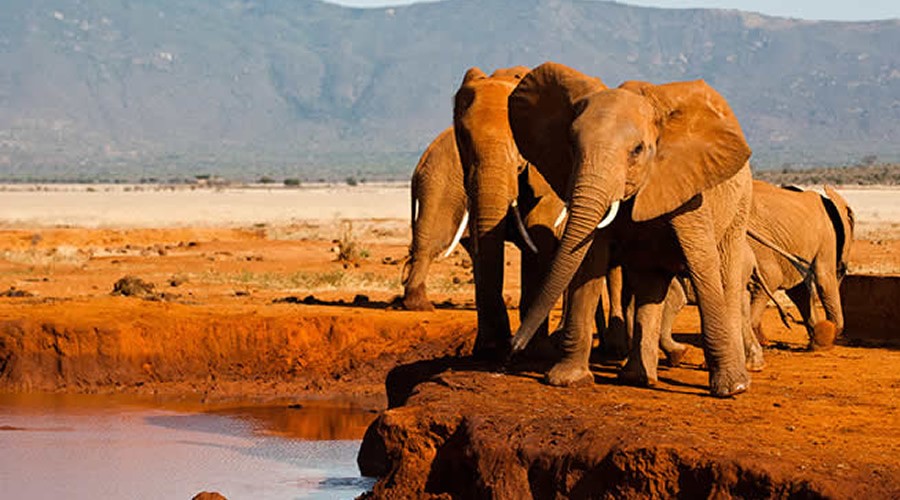
The geographical diversity of Tsavo National Park splits it into two distinct portions, Tsavo East and Tsavo West, each offering unique landscapes and experiences to visitors. Tsavo East is famed for its vast, open expanses of dusty red terrain punctuated by the remarkable Yatta Plateau, the longest lava flow in the world, stretching over 290 km. This arid, flat region is bisected by the life-giving Galana River, creating ribbons of greenery and attracting diverse wildlife to its banks. Furthermore, the park showcases Mudanda Rock, an imposing natural tower acting as a water catchment area that attracts a variety of animals during the dry season, making it an excellent spot for game viewing.
Conversely, Tsavo West presents a contrasting landscape characterized by its hilly, green terrain and higher levels of precipitation. The area is renowned for the Mzima Springs, a set of four natural springs sourced from the Chyulu Hills, providing a lush habitat for a myriad of aquatic life, including hippos and crocodiles, within their clear waters. Additionally, Shetani Lava Flow offers a stark, volcanic landscape, a reminder of the region’s volatile geological activity. The presence of Lake Jipe on the Tanzania border further enriches the park’s biodiversity, supporting unique fish populations and waterbirds, making it an attractive site for bird watchers.
This dichotomy of environments in Tsavo East and Tsavo West enhances the park’s ecological richness, fostering an extensive array of habitats. Such diversity not only supports a wide range of flora and fauna but also offers myriad opportunities for tourists to engage with nature through safari adventures, bird watching, and exploring the remarkable geological formations. The landscape’s variety encapsulates the essence of African wilderness, making Tsavo a cornerstone of Kenya’s natural heritage and a pivotal area for conservation.
Wildlife of Tsavo National Park
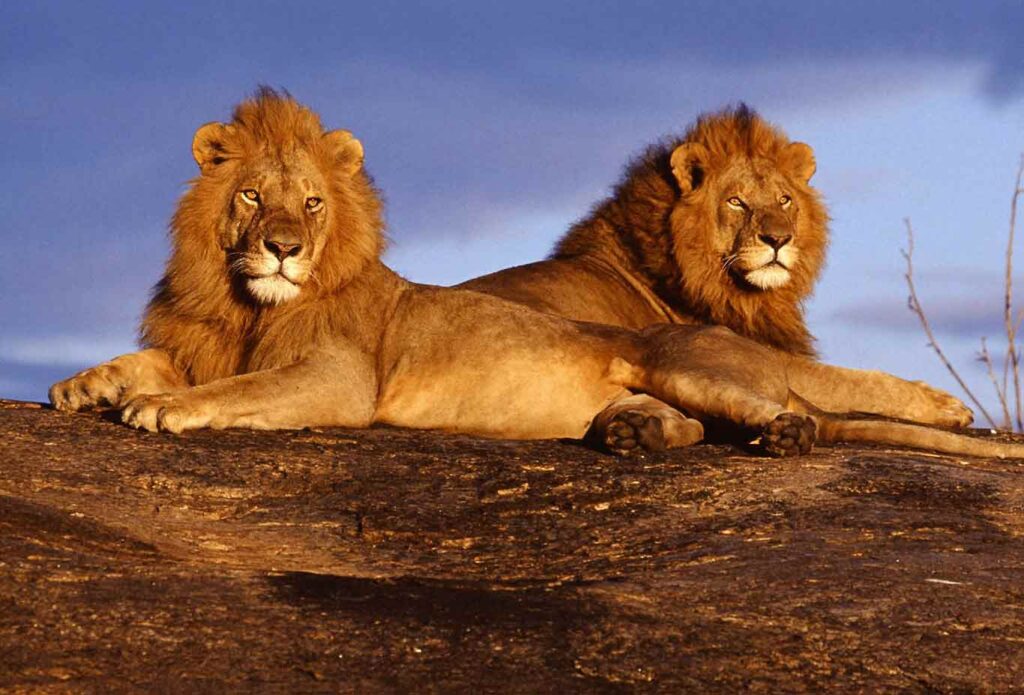
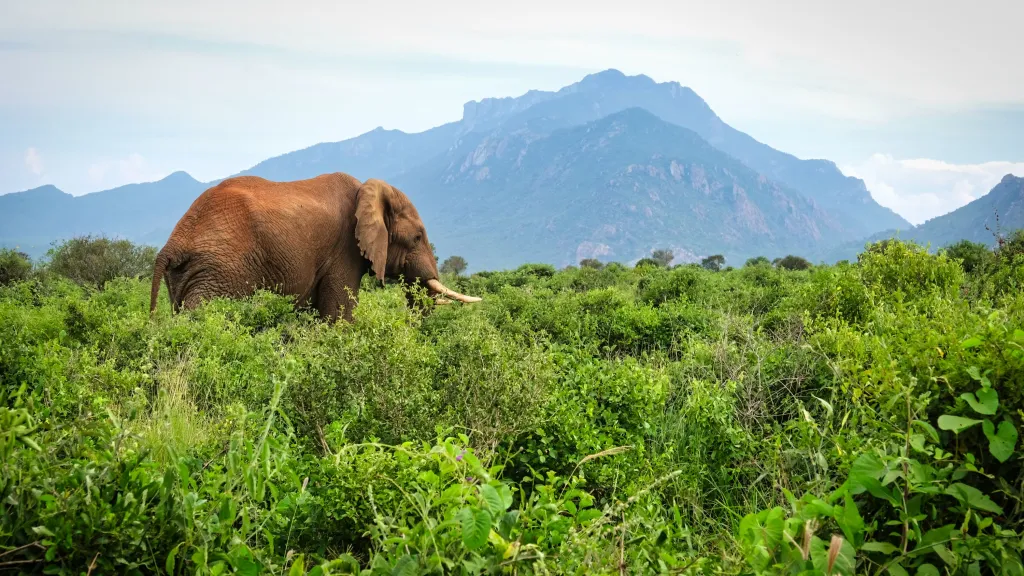
The abundant wildlife of Tsavo National Park includes ‘The Big Five’: elephants, lions, leopards, rhinos, and buffaloes. Tsavo is particularly renowned for its large herds of elephants and the infamous ‘Tsavo lions.’ Other wildlife includes giraffes, zebras, gazelles, and a rich array of bird species. This biodiversity makes it a prime spot for wildlife enthusiasts and photographers hoping to catch a glimpse of these majestic creatures within their natural habitat.
Historical and Archaeological Significance
Tsavo holds considerable historical and archaeological value, with evidence of prehistoric settlements dating back to the Late Stone Age. The infamous ‘Man-Eaters of Tsavo National Park‘ are a significant part of its colonial history, where maneless lions attacked railway workers in the late 19th century. The early trade interactions, archaeological finds like beads and cowry shells, and colonial efforts to build the Uganda Railway through the park add layers of historical intrigue that broaden the park’s appeal beyond just natural beauty.
Tourism and Conservation Efforts
Following the narrative of Tsavo’s historical and archaeological significance, the focus shifts to the pivotal role of tourism and conservation efforts that define the Tsavo National Park today. As a premier tourism destination, Tsavo plays a crucial role in Kenya’s economy, attracting thousands to witness its majestic wildlife and pristine landscapes. However, the sustainability of this natural treasure hinges on diligent conservation efforts spearheaded by the Kenya Wildlife Service (KWS). These efforts are multifaceted, tackling threats from poaching, which has seen a decline thanks to rigorous anti-poaching patrols, and confronting the challenges posed by climate change.
Equally important are the community engagement programs initiated by KWS, aimed at fostering a symbiotic relationship between Tsavo’s wildlife and the local communities. These programs not only educate the community on the importance of conservation but also create incentives for them through sustainable tourism practices. Such engagement has proved essential in mitigating human-wildlife conflicts, a perennial challenge in areas surrounding the park.
The infrastructure within Tsavo, including roads and accommodations, is designed to enhance the tourist experience while minimizing the ecological footprint. Such measures ensure that visitors can explore the vast landscapes of Tsavo in comfort and with the least disruption to the natural habitat. Moreover, guided tours and educational programs within the park offer immersive experiences, allowing tourists to gain a deeper appreciation for the ecological balance of Tsavo and the critical importance of conservation efforts.
In summary, the conservation strategies implemented in Tsavo, from anti-poaching patrols to community engagement and sustainable infrastructure development, are pivotal in safeguarding this natural heritage. These efforts not only ensure the viability of tourism as a crucial economic activity but also uphold the ecological integrity of Tsavo National Park, allowing future generations to enjoy and learn from its boundless natural wonders.
Conclusions
Tsavo National Park is a remarkable blend of natural beauty, diverse wildlife, and rich history. Its successful conservation and tourism initiatives highlight the importance of safeguarding such environments. For travelers and conservationists alike, Tsavo offers a dynamic experience filled with breathtaking sites and the promise of adventure, nurturing a deeper appreciation for Africa’s ecological treasures.