Kenya, known for its breathtaking landscapes and abundant wildlife, offers a rich tapestry of tourism experiences. From thrilling safaris in the Masai Mara to serene coastal retreats in Mombasa, Kenya’s tourism and hospitality sectors are renowned for providing unforgettable adventures.
The Landscape of Kenyan Tourism
Kenya, a land teeming with diversity, offers a vast landscape of tourism opportunities influenced by its rich history and cultural tapestry. From the breathtaking Great Rift Valley, a geological wonder extending thousands of kilometers, to the pristine coastal beaches that grace the Indian Ocean, and the iconic Nairobi skyline that showcases modernity amid nature, Kenya’s geographical and cultural diversity makes it a unique travel destination. This diversity, rooted in the nation’s rich history, has been pivotal in sculpturing the spectrum of tourism and hospitality experiences available to visitors.
Governmental support and strategic positioning have further cemented Kenya’s status as a leading tourism destination in Africa. Initiatives to preserve the natural environment, alongside investments in infrastructure, have made locations such as the Amboseli National Park, the Masai Mara National Park, and the Tsavo National Park even more accessible to international and domestic tourists alike.
The Kenyan government’s role in promoting tourism through sustainable practices has not only preserved the country’s natural heritage but has also encouraged the growth of a vibrant hospitality sector. Today, Kenya offers a wide array of accommodations and services, tailored to fit the desires of adventurers, luxury seekers, and cultural explorers. From luxury lodges to eco-friendly campsites, the hospitality industry in Kenya is prepared to cater to the needs of a diverse clientele, ensuring that every visitor experiences the warm, welcoming spirit of Kenyan culture.
Kenya’s strategic location, straddling the equator, accords it a year-round appeal for tourists seeking adventures and safaris. This geographical advantage means that visitors can enjoy a variety of activities, from wildlife safaris in the world-renowned Masai Mara, to hot air balloon rides over the Great Rift Valley, and relaxing beach holidays along its extensive coastline. Furthermore, Kenya’s commitment to conservation and community-based tourism ensures that visitors can enjoy authentic experiences while also contributing to the sustainability of tourism and the preservation of cultural heritage.
In conclusion, the landscape of Kenyan tourism is a testament to the country’s rich history, cultural diversity, and the concerted efforts of the government and local communities to promote sustainable tourism. With its major attractions like the Great Rift Valley, the coastal beaches, and the iconic Nairobi skyline, Kenya offers an unparalleled adventure that beckons travelers from all corners of the globe. As the industry continues to evolve, the fusion of natural beauty, cultural richness, and dedicated stewardship positions Kenya as a premiere destination in the world of travel and hospitality.
Safari Adventures in the Masai Mara
Following the exploration of Kenya’s rich history and cultural tapestry in the “Landscape of Kenyan Tourism” chapter, we delve into one of the most exhilarating facets of Kenya’s allure: its safari adventures, with a special focus on the Masai Mara National Reserve. This reserve is not just a wildlife haven; it’s an emblem of Africa’s wild beauty, drawing globetrotters to partake in what can only be described as a once-in-a-lifetime journey.
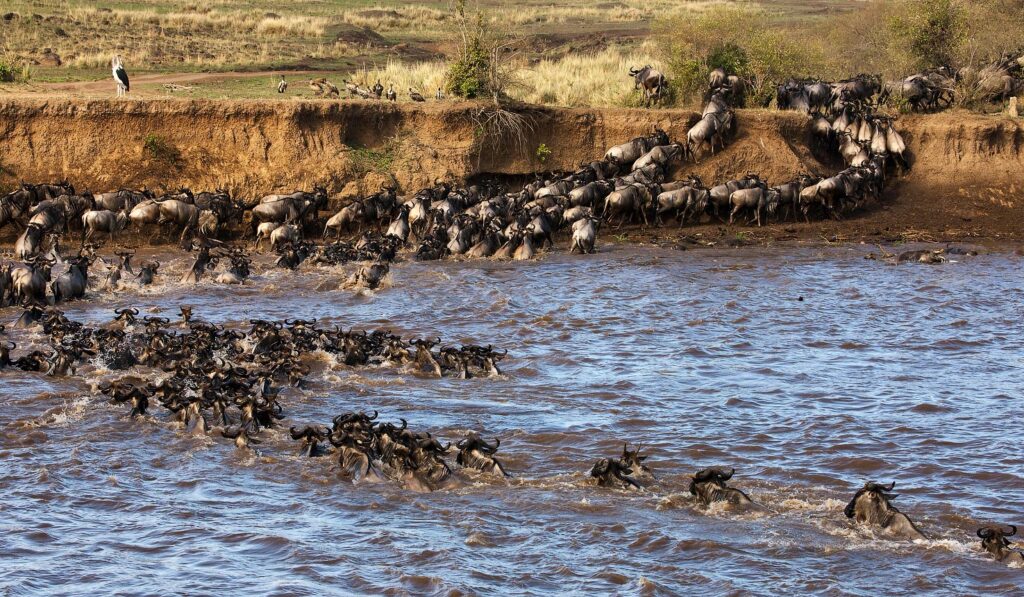
The Masai Mara is synonymous with the Great Migration, an annual spectacle where over a million wildebeest alongside hundreds of thousands of zebra and gazelles traverse its savannah in search of water and fresh pastures. This migration is not merely a natural marvel; it’s the lifeline of the Mara, attracting a global audience and spotlighting Kenya’s unparalleled wildlife diversity. Tourists flock from all corners of the earth to witness this epic journey of survival, which in turn bolsters local economies and underpins conservation efforts.
Safari experiences in the Masai Mara are manifold, catering to a range of preferences and budgets. Luxury campsites offering panoramic views and sumptuous amenities lie in close proximity to more modest, budget-friendly accommodation options, ensuring that the Mara’s wonders are accessible to all. Adventure-seekers can immerse themselves in nature through guided game drives, hot air balloon safaris, and walking tours, each offering a unique vantage point of the reserve’s abundant wildlife.
Integral to the safari experience is the engagement with local Maasai communities, whose symbiosis with the land and its denizens adds an enriching cultural dimension to the adventure. Through village tours and cultural exchanges, visitors gain insight into traditional Maasai ways of life, their customs, and how they coexist with the wildlife. This cultural immersion also opens avenues for sustainable tourism, wherein tourists’ expenditures directly contribute to the preservation of wildlife habitats and the upliftment of local communities.
As we transition to the “Hospitality Sector in Kenya” chapter, it’s crucial to acknowledge the synergy between Kenya’s natural endowments and the burgeoning hospitality industry. The evolution of safari lodgings from mere resting spots to hubs of luxury and eco-consciousness reflects a broader commitment to enhancing tourist experiences while safeguarding the natural heritage that draws visitors to Kenya’s shores. The interplay of wildlife conservation, cultural preservation, and tourism in regions like the Masai Mara exemplifies the holistic approach Kenya takes towards its tourism and hospitality sectors, setting a precedent for sustainable and responsible travel.
The Hospitality Sector in Kenya
The hospitality sector in Kenya has evolved remarkably, reflecting the country’s growth as a premiere tourism destination. Initially rooted in basic lodgings catering to the early adventurers, the landscape now boasts an array of accommodations that underscore Kenya’s commitment to luxury, sustainability, and world-class service. Renowned hotel chains, eco-friendly lodges, and boutique accommodations play pivotal roles in enhancing tourist experiences, each offering unique stays and immersive experiences that echo the natural beauty and cultural richness of Kenya.
Prominent hotel chains have established luxurious properties in key locations, including Nairobi, Masai Mara National Park, and coastal areas, offering standardized services that cater to international travelers’ expectations. Their presence has significantly contributed to raising the bar in the local hospitality industry, introducing new standards of service excellence and operational efficiency.
Eco-friendly lodges are at the forefront of a sustainability revolution within the sector. These establishments are often nestled within or near wildlife reserves, such as Amboseli National Park and Tsavo National Park, offering guests an unparalleled intimacy with nature while adhering to practices that minimize environmental impact. They utilize renewable energy, enforce waste reduction programs, and participate in conservation efforts, making them an integral part of Kenya’s eco-tourism push.
Boutique accommodations, on the other hand, offer personalized experiences in uniquely designed settings that reflect Kenyan heritage and contemporary style. These smaller, often locally owned properties, provide a more intimate and culturally rich lodging experience, enabling guests to connect with the local community and its traditions.
The surge in both international and domestic tourism has positively impacted the hospitality sector, driving demand for more diverse and high-quality accommodations. This has led to increased employment opportunities and has stimulated growth in related sectors such as food and beverage, recreation, and transport services. However, this growth has also necessitated the continuous improvement of service standards across the board to maintain competitiveness on the global stage.
In the pursuit of excellence, training institutions and hospitality associations in Kenya have intensified efforts to raise service standards. Through professional development, certification programs, and adherence to international best practices, the sector is committed to offering superior customer experiences. Furthermore, the hospitality industry is increasingly leaning towards sustainability, recognizing its role in preserving Kenya’s natural heritage for future generations. Through the adoption of green technologies, conservation practices, and community engagement, the sector aims to achieve a balance between welcoming tourists and protecting the environment.
This focus on quality, sustainability, and cultural authenticity places Kenya’s hospitality sector in a strong position to support the nation’s tourism ambitions. As visitors venture beyond the iconic safari experiences in the Masai Mara to explore other adventures Kenya has to offer, the hospitality sector stands ready to meet their needs with exceptional service and memorable stays, thereby reinforcing the country’s status as a top travel destination.
Adventure Tourism: Beyond the Safari
Beyond the quintessential safari experiences offered by Masai Mara National Park, Amboseli National Park, and Tsavo National Park, Kenya’s adventure tourism landscape is thrillingly diverse, engaging visitors beyond the wildlife encounters in the savannah. The ascent of adventure tourism complements the established hospitality offerings, highlighting Kenya’s rich biodiversity and the cultural tapestry that underpins the hospitality sector.
Hot air balloon rides provide an ethereal vantage point over the vast Masai Mara plains, granting a unique perspective of the great migration and the intricate ecosystems below. This serene experience contrasts with the rugged adventures found in the Aberdare Mountains, where hiking trails lead adventurous souls through dense forests, across moorlands, and past cascading waterfalls. This interaction with untamed nature extends to the Kenyan coast, a paradise for water sports enthusiasts. From kite surfing in Diani to deep-sea fishing off the coast of Malindi, the Indian Ocean offers myriad opportunities for adventure.
The surge in adventure tourism reflects a growing demand for immersive and authentic experiences. It leverages Kenya’s natural landscapes, offering a counter-narrative to the conventional safari and beach holiday. This shift signals an evolution in the tourism economy, with adventure tourists spending on a wider range of services, including specialized guide services, adventure gear rentals, and eco-friendly accommodations. Each of these segments ties back to the hospitality sector, underlining the symbiotic relationship between adventure tourism and hospitality services.
By diversifying tourist offerings, Kenya is not only enhancing its appeal as a premier global destination but also fostering economic development in regions beyond traditional wildlife parks. This approach supports the wider tourism economy, contributing to the sustainability goals discussed in the forthcoming chapter on sustainable tourism and future prospects. As the sector evolves, the interconnectedness of adventure tourism, traditional safaris, and hospitality services holds the promise of a resilient and dynamic tourism industry in Kenya.
Sustainable Tourism and Future Prospects
Building on the excitement of adventure tourism, Kenya’s commitment to sustainable tourism practices shines as a beacon for conservation and eco-friendly travel. The shift towards sustainability is not just a trend but a profound transformation in how tourism is perceived and conducted, particularly in iconic destinations such as Amboseli National Park, Masai Mara National Park, and Tsavo National Park. These initiatives, deeply rooted in ecological ethics, aim to preserve the country’s unparalleled natural beauty and biodiversity for future generations.
Ecotourism in Kenya is a substantial part of the nation’s strategy to ensure that tourism development benefits both the environment and local communities. By prioritizing minimal impact travel and investing in conservation efforts, Kenya sets a global standard for responsible tourism. This approach not only protects natural habitats and wildlife but also supports the welfare of local populations by promoting job creation and income generation from sustainable sources. Moreover, engaging tourists in these efforts fosters a deeper appreciation and understanding of Kenya’s natural and cultural heritage, encouraging ongoing support and awareness.
However, the path towards a fully sustainable tourism industry is not without its challenges. Climate change poses a significant threat to Kenya’s ecosystems, potentially impacting wildlife migration patterns, altering habitats, and increasing the vulnerability of certain species. Additionally, Kenya faces stiff competition from other safari destinations across Africa and the globe, each vying for a share of the lucrative tourism market. To navigate these challenges, Kenya is investing in innovative strategies such as adopting renewable energy sources within the tourism sector, enhancing water conservation efforts, and promoting community-based tourism projects. These initiatives not only mitigate the environmental impact of tourism but also ensure that the benefits of tourism are equitably distributed among local communities.
Looking to the future, Kenya’s tourism industry appears poised for continued growth, driven by its commitment to sustainability and resilience in the face of global challenges. By maintaining a balance between development and conservation, Kenya ensures that its natural treasures remain intact for adventurers and nature enthusiasts for generations to come. The country stands as a testament to the fact that with careful planning and community involvement, tourism can indeed be a force for positive environmental and social change.
Conclusions
Kenya’s diverse tourism offerings, from safaris to beach resorts, make it a top destination for global travelers. With its thriving hospitality industry and commitment to conservation, Kenya balances adventure with sustainability, offering a unique and unforgettable experience for every traveler. Embark on a journey to discover Kenya’s rich natural and cultural treasures.