Kenya’s diverse landscapes offer some of the most iconic African safari experiences in the world. From the breathtaking Great Migration in the Masai Mara to the vast plains of Tsavo and the majestic elephants of Amboseli, each park presents a unique blend of wildlife and natural beauty. In this article, we dive deep into these renowned safari destinations.
The Magic of Masai Mara
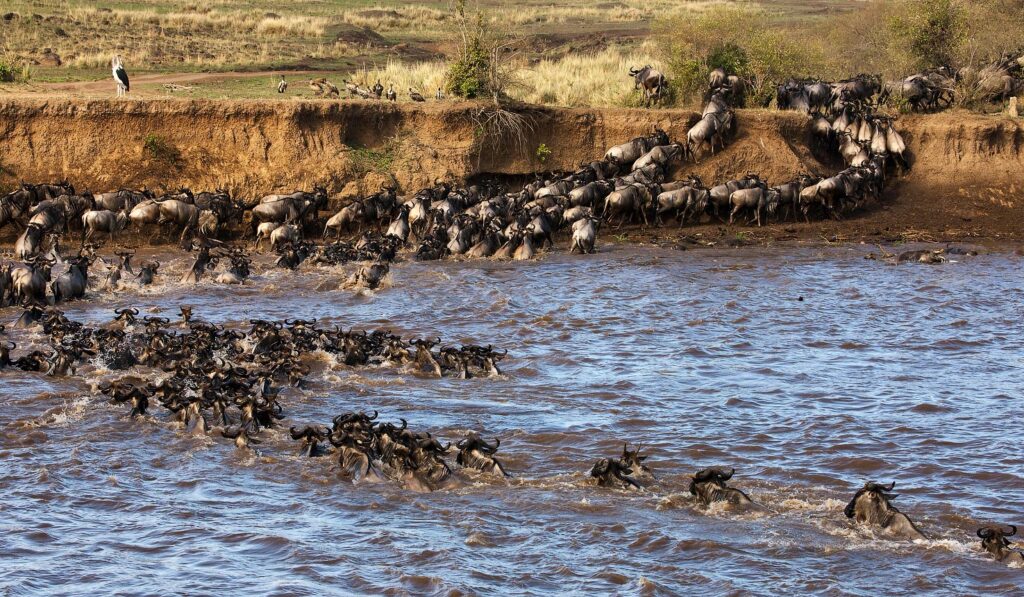
The Magic of Masai Mara: The Masai Mara National Reserve, adjacent to Serengeti National Park in Tanzania, is renowned for its extraordinary wildlife, particularly during the Great Migration when over a million wildebeest, zebra, and antelope traverse the Mara River.
Tsavo National Park Splendor
Exploring the expansive landscapes of Tsavo East and Tsavo West National Parks reveals a realm where nature’s vibrancy is on full display. Together, these parks form one of the largest national conservation areas in the world, a testament to Kenya’s dedication to preserving its unique wildlife heritage. The parks’ distinct feature, the Yatta Plateau, stretches over 290 km, making it the world’s longest lava flow, a geological marvel that has shaped the landscape for millennia.
Among the iconic inhabitants of Tsavo are its red elephants, so named for the rich, red earth they bathe in, serving as both a cooling agent and a protection against parasites. This distinctive coloration is a vivid symbol of the park’s unique ecosystem, an adaptation to the arid environment that dominates the region.
The historical context of Tsavo is as compelling as its natural beauty. The infamous “Man-Eaters of Tsavo,” a pair of lions responsible for the deaths of numerous railway workers in the late 19th century, have entered into legend and highlight the often fraught relationship between humanity and the wild. The establishment of the park in 1948 marked a shift towards conservation and understanding, a recognition of the need to protect these lands and their inhabitants for future generations.
Tsavo’s diverse ecosystems, ranging from savannas and riverine forests to rocky outcrops and arid plains, support a vast array of wildlife and plant species. This biodiversity is not only of ecological interest but has also proven to be of significant archaeological importance. Excavations in the region have uncovered evidence of some of humanity’s earliest ancestors, adding a rich historical tapestry to the area’s natural splendor.
Following the exploration of Tsavo, the journey into Kenya’s wild beauty continues into Amboseli National Park, framed by the majestic Mount Kilimanjaro. Known for its large herds of elephants, Amboseli’s ecosystems offer a different yet equally mesmerizing safari experience, from its dry lake beds to the lush swamps that attract a myriad of bird species. The park’s commitment to conservation is evident, with research efforts like the Amboseli Elephant Research Project playing a critical role in preserving its gentle giants, while also maintaining strong cultural partnerships with the Maasai communities.
Amboseli’s Elephant Kingdom
Framed by the stunning backdrop of Mount Kilimanjaro, Amboseli National Park is a sanctuary for some of Africa’s most iconic wildlife, especially its large elephant herds. The park’s diverse ecosystems range from the dried-up beds of Lake Amboseli to lush, life-giving swamps, supporting a rich variety of flora and fauna. The Amboseli Elephant Research Project, one of the longest-running wildlife studies in the world, plays a pivotal role in the park’s conservation efforts, offering crucial insights into elephant behavior and social structure. Beyond its natural wonders, Amboseli’s history is deeply intertwined with the local Maasai communities, whose traditional lands and lifeways form an integral part of the park’s cultural tapestry. Its designation as a UNESCO Biosphere Reserve underscores Amboseli’s global importance for conservation and its successful model of integrating community partnership in preserving natural heritage.
Conservation and Community: Balanced Priorities
Building on the legacy of protecting its majestic elephants in the Amboseli National Park, Kenya extends its conservation efforts across all its safari destinations. The interplay between wildlife conservation and community development in Kenya showcases a country deeply committed to both ecological integrity and the socio-economic needs of its local communities.
Kenya employs a multifaceted strategy to protect its natural landmarks. Tourism, a vital engine of the economy, plays a crucial role in funding conservation efforts. The revenue generated from park fees and safari tours is reinvested into wildlife protection, habitat restoration, and community projects. For instance, proceeds from the Masai Mara National Park and Tsavo National Park not only support the protection of species like the African elephant and the black rhino but also empower local communities through employment opportunities and infrastructure development.
Kenya has pioneered initiatives like the Positive Impact initiative, which integrates sustainable tourism with community empowerment. Such programs ensure that the benefits of tourism are equitably distributed among local populations, enhancing education, healthcare, and livelihood projects that are vital for long-term sustainability.
Kenya’s approach to conservation and community development serves as a role model in African conservation. It highlights how strategic planning, inclusive of both environmental and human needs, can lead to mutually beneficial outcomes. Visitors are encouraged to contribute positively to these efforts by choosing eco-friendly tours, respecting local customs, and supporting community-based projects. In doing so, tourists play an active role in the preservation of Kenya’s natural heritage for future generations.
Conclusions
Kenya’s safari destinations offer an unparalleled window into Africa’s wildlife and natural beauty. Masai Mara, Tsavo, and Amboseli exemplify the diversity of ecosystems, cultural heritage, and conservation success. As tourism thrives, the need for sustainable practices and community involvement becomes even more vital, ensuring these natural wonders endure for generations. Engaging with these habitats responsibly can help support both the environment and local communities.