Introduction – Timing the Wild
Every season in Tsavo National Park tells a different story.
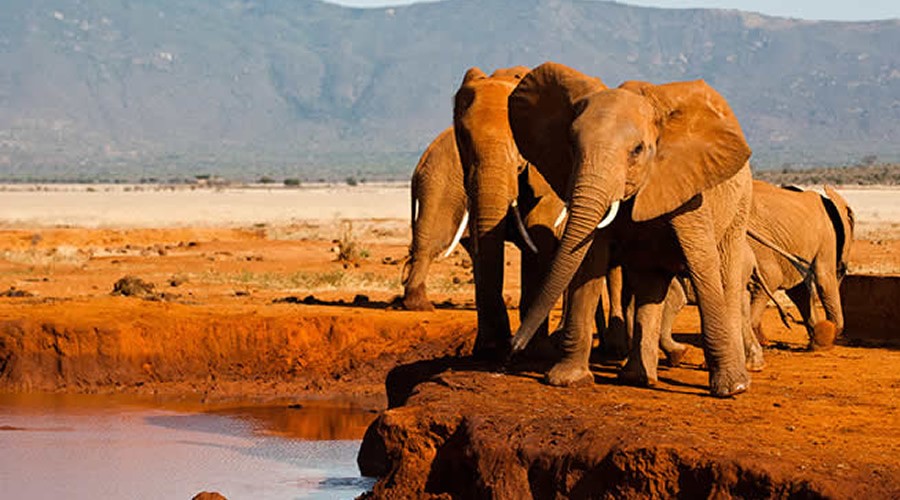
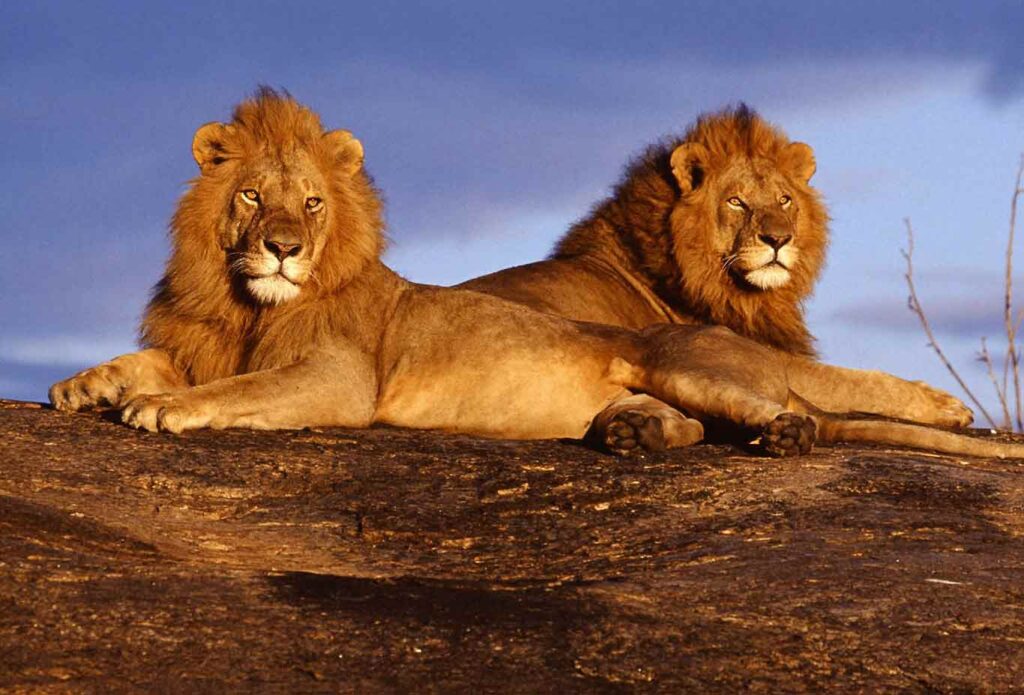
In the dry months, elephants march across red plains as lions bask beneath acacias. During the rains, the earth turns green, rivers swell, and new life flourishes everywhere.
Understanding when to visit Tsavo helps you see its best moments — from spectacular wildlife sightings to breathtaking landscapes and peaceful lodges.
Whether you crave sunny skies or lush scenery, Woodsly Adventures can plan your safari for the perfect time of year with their Tsavo National Park Adventure — designed to match your travel goals, comfort, and curiosity.
Table of Contents
-
Tsavo’s Climate Overview
-
The Dry Season (June to October, January to February)
-
The Green Season (November to December, March to May)
-
Wildlife Viewing by Season
-
Birdwatching in Tsavo
-
Photography and Light Conditions
-
Weather and Temperature Guide
-
Best Time for Families and First-Time Travelers
-
Best Time for Photographers and Nature Enthusiasts
-
When Not to Visit Tsavo
-
How to Plan Your Safari Dates with Woodsly Adventures
-
Final Thoughts – The Perfect Safari is About Balance
1. Tsavo’s Climate Overview
Tsavo’s climate is warm and semi-arid for most of the year, with two main seasons — dry and wet.
The park’s vast size means weather conditions vary between Tsavo East and Tsavo West. The East is hotter and drier, while the West is cooler and greener thanks to higher altitude and volcanic terrain.
Average daytime temperatures range between 25°C and 33°C (77°F–91°F). Evenings can be pleasantly cool, especially in Tsavo West.
2. The Dry Season (June to October, January to February)
This is considered the best time to visit Tsavo for classic safari experiences.
Why it’s ideal:
-
Wildlife gathers around waterholes and rivers, making sightings easy and predictable.
-
Grass is short, offering clear visibility.
-
Roads are dry and accessible, perfect for game drives.
-
Fewer mosquitoes and mild nights for campfires and stargazing.
Highlights:
-
Watch herds of red elephants bathing in the Galana River.
-
Spot lions, leopards, and cheetahs on open plains.
-
Enjoy perfect light for photography, especially at sunrise and sunset.
Recommended experiences:
Stay near Aruba Dam in Tsavo East or Kilaguni Serena in Tsavo West for unbeatable game-viewing right from your lodge terrace.
3. The Green Season (November to December, March to May)
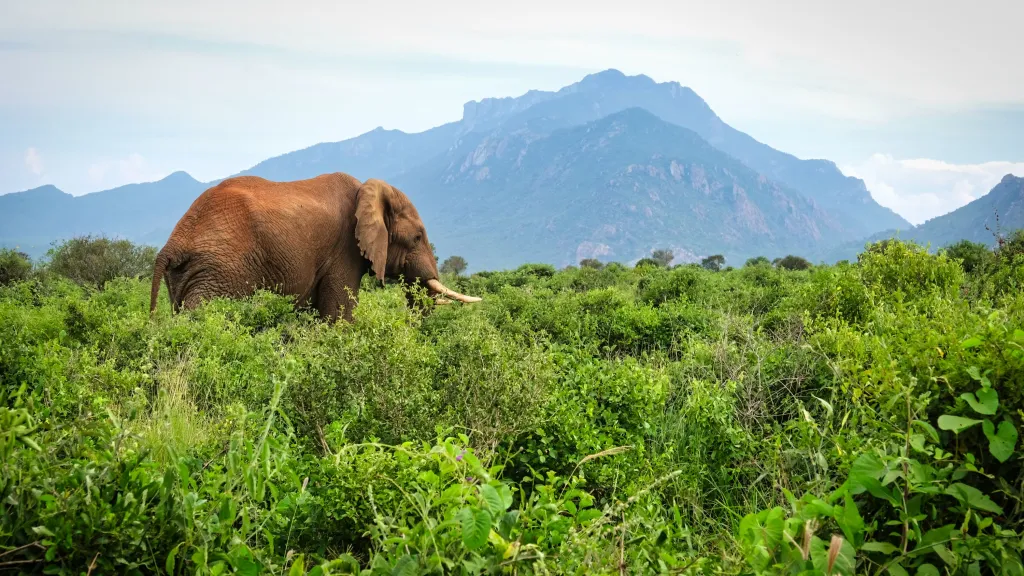
When the rains return, Tsavo transforms. Grasslands turn emerald, rivers flow strong, and wildflowers bloom.
Why visit during the green season:
-
The park is less crowded, offering peace and solitude.
-
Scenery becomes lush and photogenic.
-
Newborn animals appear — especially antelope, zebras, and elephants.
-
Birdlife explodes with color as migratory species arrive.
Challenges:
-
Roads may become muddy or slippery.
-
Some remote areas can be temporarily inaccessible.
But for travelers seeking atmosphere and serenity, this season feels like Tsavo reborn.
4. Wildlife Viewing by Season
Dry Season:
-
Best for seeing the Big Five — lions, leopards, elephants, buffaloes, and rhinos.
-
Animals gather at Aruba Dam, Mzima Springs, and Galana River.
Green Season:
-
Excellent for elephants and birdlife.
-
Predators are still active, though vegetation makes them harder to spot.
-
The park’s colors and light are dramatic and ideal for photography.
Tip: Combine both seasons in one trip — for example, visit in November when short rains start but animals remain active.
5. Birdwatching in Tsavo
For bird enthusiasts, the best time is November to April, when migratory species from Europe and Asia join local residents.
You’ll see everything from vivid rollers and weavers to eagles and hornbills. Tsavo’s wetlands and riverbanks are prime birding zones, especially near Mzima Springs and Lugard Falls.
Woodsly Adventures can arrange guided birding safaris with local experts to help you spot rare and endemic species.
6. Photography and Light Conditions
Light in Tsavo is magical all year, but it changes dramatically with the seasons.
Dry season:
-
Sharp golden light, ideal for high-contrast shots of red elephants and dusty plains.
-
Clear skies perfect for sunrise and sunset silhouettes.
Green season:
-
Softer, filtered light ideal for landscapes and portraits.
-
Vibrant greens and blues make colors pop naturally.
Pro Tip: Stay 3–4 nights minimum to capture different moods of the park — dawn mists, mid-day heat, and glowing sunsets.
7. Weather and Temperature Guide
| Month | Season | Avg. High | Avg. Low | Conditions |
|---|---|---|---|---|
| Jan–Feb | Dry | 32°C | 20°C | Hot, sunny, great for wildlife |
| Mar–May | Long rains | 29°C | 21°C | Wet, lush, fewer visitors |
| Jun–Oct | Dry | 27°C | 18°C | Cool, clear, best viewing |
| Nov–Dec | Short rains | 30°C | 20°C | Green, good mix of sun and showers |
The park is open year-round, but conditions vary — and Woodsly Adventures ensures your travel timing matches your comfort and photography goals.
8. Best Time for Families and First-Time Travelers
If you’re new to safari or traveling with children, aim for the dry months (June–October or January–February).
You’ll enjoy predictable weather, easy road access, and plenty of wildlife in concentrated areas — perfect for shorter drives and comfortable days.
Family-friendly lodges like Ngutuni Lodge or Ashnil Aruba Lodge make the experience smooth and memorable.
9. Best Time for Photographers and Nature Enthusiasts
For serious photographers, November to April offers the most dynamic landscapes and light variations.
This is also the best period for observing elephant herds in vibrant surroundings and dramatic skies after rainfall.
If you’re into bird photography, aim for January–March — when migratory flocks and baby animals fill the frame with life.
10. When Not to Visit Tsavo
There’s technically no bad time to visit, but if you want to avoid heavy rains, skip April and early May.
During this period, some roads may flood, and a few lodges close temporarily for maintenance. That said, wildlife is still present, and discounts are common for adventurous travelers.
Woodsly Adventures helps guests navigate these conditions with 4×4 vehicles and flexible itineraries, ensuring your experience remains comfortable.
11. How to Plan Your Safari Dates with Woodsly Adventures
Choosing when to visit Tsavo depends on your travel style:
-
For wildlife density: June–October, January–February.
-
For scenery and birdlife: November–April.
-
For privacy and deals: Green season (March–May).
Woodsly Adventures tailors each Tsavo National Park Adventure to your preferred season, combining Tsavo with other destinations like:
-
Amboseli Elephant Safari – best in dry months for clear Kilimanjaro views.
-
Masai Mara Safari – ideal during the Great Migration (July–October).
-
Mombasa Beach Retreat or Wasini Island Marine Park Excursion – for post-safari relaxation any time of year.
Every itinerary is balanced, ensuring you see Tsavo at its best — in comfort and style.
Final Thoughts – The Perfect Safari is About Balance
The truth is, Tsavo is breathtaking all year. Some come for the dust and drama of the dry season, others for the renewal and calm of the rains.
Each visit offers a new perspective — the same land, painted differently by time and weather.
With Woodsly Adventures, your safari isn’t bound by dates — it’s guided by insight. Whether you seek elephants under golden skies or green valleys alive with birds, they’ll make sure your timing matches your dream.
Book your Tsavo National Park Adventure today and experience Kenya’s wildest park in the season that speaks to you.