Introduction – A Land Where Legends Still Roam
Before Tsavo became Kenya’s largest protected wilderness, it was a place of stories — some terrifying, others inspiring, all unforgettable.
It’s where lions once hunted men on railway lines, where explorers carved paths through untamed terrain, and where today, elephants and rhinos walk in peace again.
This is Tsavo National Park, a land of legend and resilience. Its history is written in red earth, courage, and the timeless rhythm of the wild.
With Woodsly Adventures and their expertly crafted Tsavo National Park Adventure, you don’t just visit Tsavo — you walk through its stories, from the past that shaped it to the conservation success that defines it today.
Table of Contents
-
The Birth of Tsavo – Kenya’s Wild Frontier
-
The Legend of the Man-Eaters of Tsavo
-
Building the Iron Snake – The Railway Through the Wild
-
Early Explorers and the Discovery of Tsavo’s Beauty
-
From Fear to Protection – Tsavo Becomes a National Park
-
The Rise of Conservation and the Return of Wildlife
-
The Tsavo Man-Eater Lions – The True Story
-
The Cultural Significance of Tsavo to Local Communities
-
Tsavo Today – Where History Meets Nature
-
Explore Living History with Woodsly Adventures
1. The Birth of Tsavo – Kenya’s Wild Frontier
Long before fences, roads, and lodges, Tsavo was pure wilderness — a vast region of savannah, lava flows, and rivers stretching from the Chyulu Hills to the Indian Ocean.
For centuries, it remained largely unexplored due to its harsh climate, dense bush, and fierce wildlife. Yet it was also sacred land — home to the Taita and Kamba communities, who respected its power and lived in harmony with its rhythms.
When the British colonial railway began expanding through Kenya in the late 1800s, Tsavo became both a challenge and a legend.
2. The Legend of the Man-Eaters of Tsavo
In 1898, as the Uganda Railway (nicknamed the Iron Snake) was being constructed across Kenya, something terrifying happened near the Tsavo River.
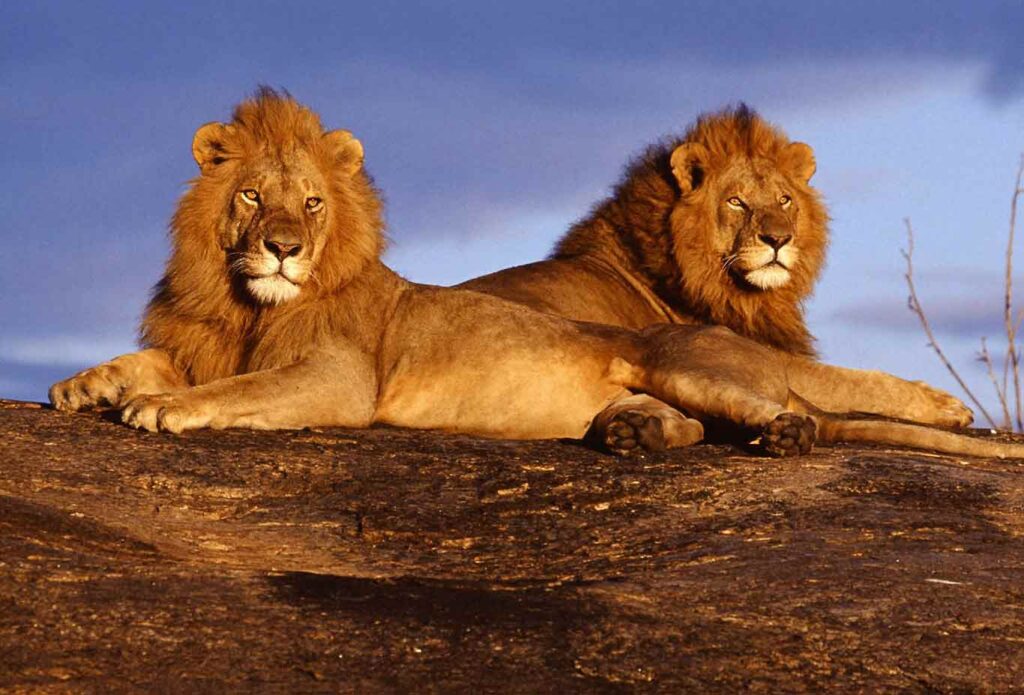
Two male lions began stalking the railway workers’ camps, attacking and killing dozens of men. These lions — large, maneless, and remarkably cunning — brought construction to a standstill and terrified the workforce.
The project’s overseer, Lieutenant Colonel John Henry Patterson, spent months hunting the lions. After several close encounters, he finally shot both. By then, the beasts had earned their place in history as “The Man-Eaters of Tsavo.”
Today, their story lives on in books, films (notably The Ghost and the Darkness), and local legend — a chilling reminder of how wild Tsavo once was.
3. Building the Iron Snake – The Railway Through the Wild
The railway’s construction through Tsavo was a triumph of engineering and endurance.
Thousands of laborers, many from India and East Africa, braved heat, disease, and danger to connect Mombasa to the interior. The railway transformed Kenya’s history, linking coast to capital, and still runs today as the modern SGR train, which travelers can use to reach Tsavo for safari.
Standing by the railway line today, watching elephants cross under the same sky, you can almost feel the echoes of those early pioneers who opened the path to adventure.
4. Early Explorers and the Discovery of Tsavo’s Beauty
After the railway was completed, Tsavo’s vast wilderness attracted explorers, hunters, and scientists.
They marveled at its diversity — from the lush oases of Mzima Springs to the sweeping plains of Tsavo East. The park’s dramatic landscapes and resilient wildlife soon caught the attention of naturalists and photographers, leading to the first conservation movements.
It wasn’t long before Kenya realized that this wild heart was something to be preserved — not conquered.
5. From Fear to Protection – Tsavo Becomes a National Park
In 1948, Tsavo was officially declared a national park, divided into Tsavo East and Tsavo West for management purposes.
What was once a feared wilderness had now become a sanctuary — a safe haven for elephants, lions, and rhinos that had been hunted relentlessly.
This transformation marked one of the most important conservation milestones in Africa. Today, Tsavo protects over 20,000 square kilometers of pure wilderness — a size larger than some countries.
6. The Rise of Conservation and the Return of Wildlife
In the mid-20th century, Tsavo faced new challenges — poaching, droughts, and human encroachment. But dedicated rangers and conservationists refused to give up.
Efforts by the Kenya Wildlife Service (KWS) and global partners helped restore balance. Anti-poaching units, community partnerships, and eco-tourism initiatives turned Tsavo into a model of wildlife management.
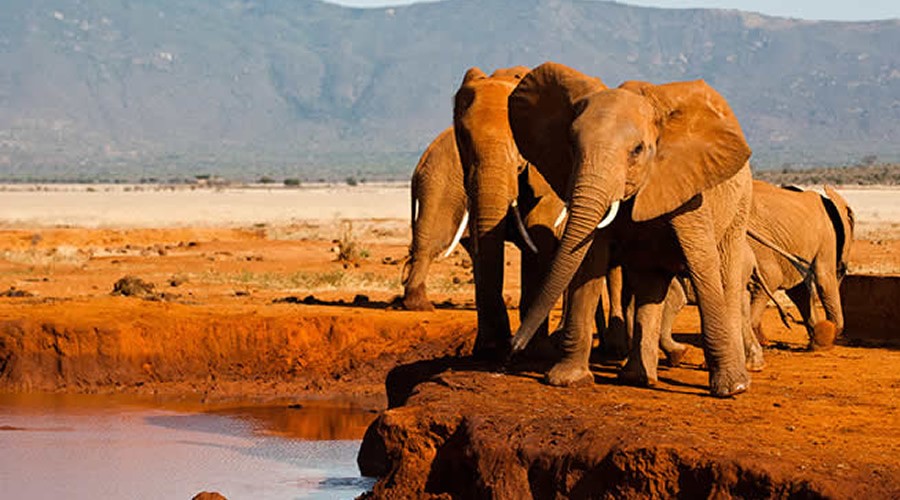
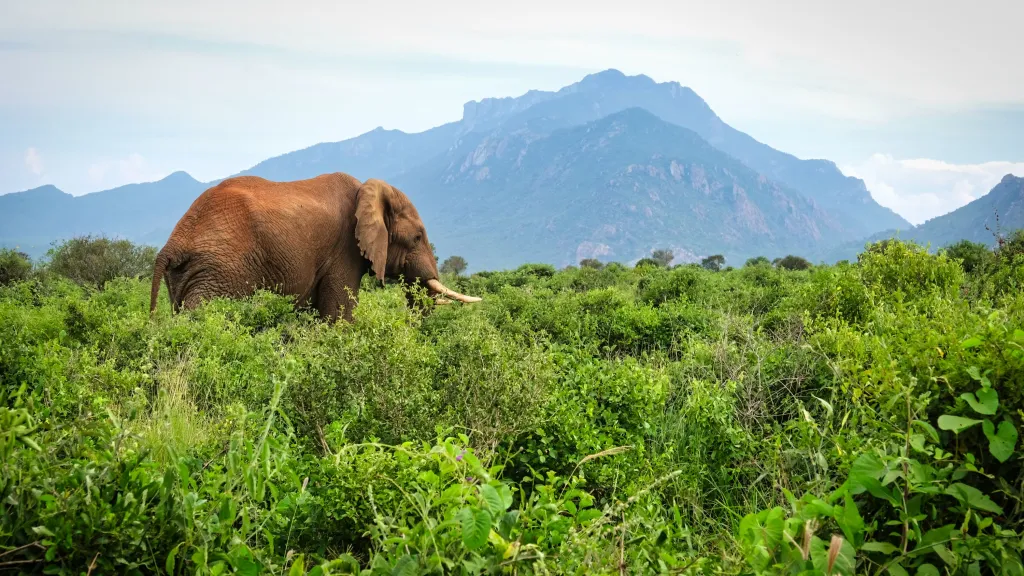
Today, Tsavo is home to one of Africa’s largest elephant populations, healthy lion prides, thriving giraffes, zebras, and the endangered black rhino — all roaming free once again.
7. The Tsavo Man-Eater Lions – The True Story
The man-eaters remain Tsavo’s most infamous chapter, but the truth is far more complex than legend.
Modern studies of the lions’ skulls (now preserved at the Field Museum in Chicago) suggest that starvation, dental injuries, and disease may have pushed them to hunt humans.
In other words, they weren’t monsters — just predators adapting to a harsh and changing world.
That balance between survival and adaptation still defines Tsavo today. Here, every life — from lion to lizard — plays its part in a fragile, perfect system.
8. The Cultural Significance of Tsavo to Local Communities
Beyond its wildlife, Tsavo has always been deeply spiritual to the people who live around it.
For the Taita and Kamba, Tsavo’s hills, springs, and valleys are places of legend and reverence. Ancient tales tell of spirits that guard the rivers, of sacred stones that bring rain, and of ancestors who walk unseen through the plains.
When travelers explore Tsavo with Woodsly Adventures, they have the opportunity to meet local guides and communities, experiencing the park not just as a safari, but as a living heritage.
9. Tsavo Today – Where History Meets Nature
Today, Tsavo stands as a powerful example of coexistence between man and nature.
Travelers can still visit the original bridge site where the man-eaters struck, explore the Shetani Lava Flow, marvel at Lugard Falls, and watch elephants bathe at Mzima Springs — all within a day’s journey.
The modern safari experience combines history, adventure, and comfort. Lodges like Kilaguni Serena and Ashnil Aruba offer breathtaking views where, a century ago, only pioneers dared to stand.
10. Explore Living History with Woodsly Adventures
With Woodsly Adventures, you don’t just hear Tsavo’s stories — you live them.
Their Tsavo National Park Adventure takes you from the plains of Tsavo East to the volcanic hills of Tsavo West, connecting you to the park’s past and present.
Extend your journey to the Amboseli Elephant Safari to follow ancient elephant routes, or unwind after your safari with a Mombasa Beach Retreat or Wasini Island Marine Park Excursion.
Each itinerary is designed to honor Tsavo’s wild history while supporting its sustainable future.
Final Thoughts – From the Ghosts of the Past to the Guardians of Tomorrow
Tsavo’s history is more than a tale of lions and legends — it’s a story of transformation.
What was once feared as a place of danger is now a sanctuary of hope, where wildlife thrives and humanity learns humility before nature.
When you walk its red earth, you’re walking through centuries of struggle, triumph, and wonder.
Let Woodsly Adventures take you there — where the ghosts of the past meet the guardians of tomorrow. Book your Tsavo National Park Adventure today and become part of Tsavo’s living legend.