The Great Wildebeest Migration is a monumental journey that captivates nature enthusiasts and wildlife photographers alike. In this article, we explore the optimal time to visit the Masai Mara to witness this extraordinary event, where over a million wildebeest traverse the African plains in a display of life’s resilience and beauty.
The Spectacle of the Great Migration
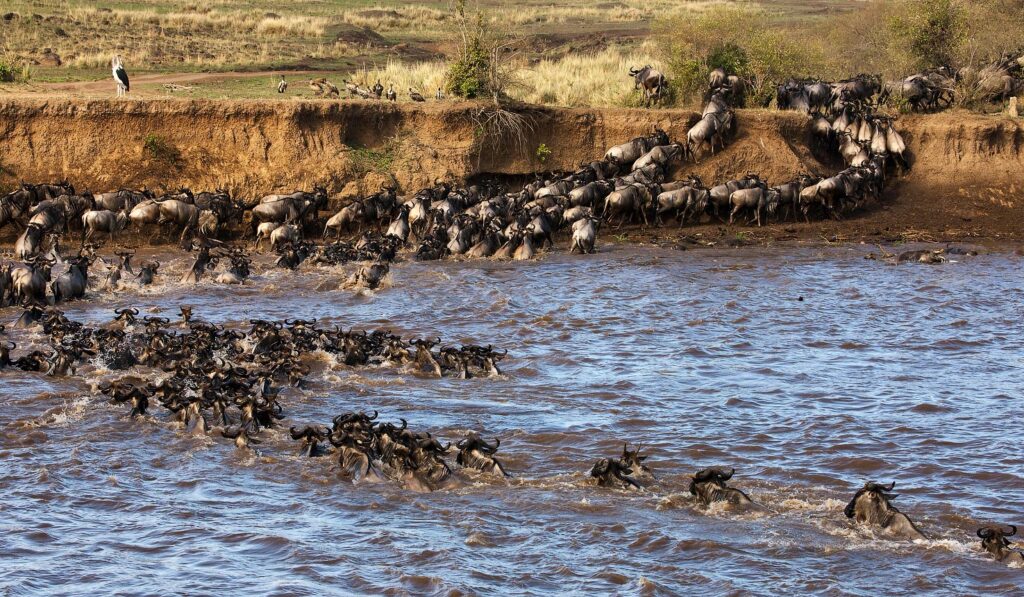
The prime season to witness the Great Wildebeest Migration in the Masai Mara, a spectacle that draws the gaze of the world, spans from July to October. During these months, the Mara becomes a theatre of nature’s drama, offering visitors unparalleled safari adventures. This period marks the peak of the migration when the herds have traversed the Serengeti and crossed the perilous Mara River, teeming with crocodiles, to graze in the lush pastures of the Masai Mara. The river crossing, in particular, is a highlight, showcasing a struggle for survival that leaves onlookers in awe.
The timing is governed by the rhythm of the rains, as the wildebeest follow the scent of the fresh rains and the promise of new grass. This quest for sustenance drives not only the timing but the direction of their journey. The peak migration season also coincides with the dry season in the Masai Mara, making wildlife viewing easier as animals congregate around scarce water sources.
For travelers looking to experience this natural marvel, planning a visit during this window ensures a front-row seat to the action. Observing as thousands of wildebeest brave obstacles, predators, and the elements to continue their ancient cycle is a testament to the enduring spectacle of the wild.
Understanding the Migration Routes
Understanding the migration routes of the wildebeest across the exquisite landscapes of Tanzania and Kenya reveals a mesmerizing testament to nature’s cyclic patterns. The journey pivots to a large extent on the intricate interplay between the seasons and rainfall. The Serengeti National Park and Masai Mara Reserve serve as the primary stages for this grand spectacle, with the herds’ movements largely dictated by the quest for lush grazing grounds and water.
The migration typically commences in the Serengeti around January to March, during the calving season when the grass is green and plentiful. As the dry season approaches around late June to July, the wildebeest begin their trek northwards to the Masai Mara, heralding one of the most breathtaking natural events—the Mara River crossings. These crossings are both dramatic and perilous, with crocodiles lying in wait for the migrating herds, adding a profound intensity to the survival saga.
The return journey to the Serengeti usually takes place after the short rains, around late October to November when fresh pastures and water beckon the herds back to the south, ensuring their survival and the continuation of the cycle. This period marks a significant movement as the animals navigate through diverse terrains, facing threats from predators besides the natural challenges of the migration.
This cyclical motion is fuelled by the instinctual search for sustenance, driven by the seasonal rainfall patterns that lushly carpet the grazing territories in the Serengeti and Masai Mara. Understanding these migratory patterns is crucial for selecting the optimal time for witnessing the great wildebeest migration, balancing the desire for adventure with the profound respect for the rhythms of nature.
Masai Mara’s Climate and Seasons
The semi-arid climate of the Masai Mara plays a pivotal role in the timing and movement of the Great Wildebeest Migration, creating a unique spectacle that draws visitors from around the globe. The region experiences two main rainy seasons: the long rains from April to May and the short rains occurring in November and December. These periods of precipitation have a significant impact on the migration patterns of the wildlife, particularly the wildebeest, zebras, and gazelles, whose movements are in pursuit of greener pastures.
During the long rains, the Masai Mara becomes lush and verdant, offering abundant food for the migrating herds and attracting them into the area. However, this season can make some roads impassable, challenging tourists’ travel plans. In contrast, the short rains rejuvenate the grasslands without significantly hindering travel, making it a favorable time for wildlife viewing.
Understanding these climate patterns is crucial for tourists planning their visit, as the migration’s timing can vary slightly each year based on rainfall. The herds typically move into the Masai Mara between July and September, a period falling shortly after the long rains when the reserve is most revitalized. Hence, aligning a safari trip with these weather conditions maximizes the chances of witnessing the dramatic river crossings and the vast congregations of wildlife, offering an unforgettable safari experience.
By considering the Masai Mara’s climate and its effects on wildlife movement, tourists can better plan their visits, ensuring they choose a time that aligns with their interests, whether it’s to see the dramatic river crossings or to enjoy the reserve’s abundant natural beauty post-rainfall.
Planning Your Safari: Best Migration Months
Building on the understanding of Masai Mara’s climate and its pivotal role in dictating wildlife movement, planning your safari to witness the Great Wildebeest Migration involves pinpointing the prime months for an unforgettable experience. The migration, a majestic display of nature’s cycle, is most vibrant between July and October. During this period, the Mara River crossing, a hallmark of the migration, showcases dramatic scenes as millions of wildebeest, along with zebra and gazelle, brave the perilous waters, often facing the jaws of waiting crocodiles.
July and August mark the onset of the dry season, resulting in sparse vegetation and making wildlife easier to spot. These months also coincide with the start of the wildebeest migration into the Masai Mara from the Serengeti, offering spectacular viewing opportunities. However, this is also when tourist traffic is at its peak, owing to the favorable weather and the migration spectacle. For a less crowded experience, September to October is advisable. The migration is still in full swing, and the onset of short rains in late October replenishes water sources, making wildlife viewing a continued attraction.
Contrasting these, the periods outside the July-October window offer their own merits. Before July, the herds are primarily in the Serengeti, and after October, the early short rains prompt the beginning of their return journey, offering a different phase of the migration to observe, especially for those interested in the ecological and behavioural aspects of these animals.
However, it’s the period between July and October that provides the quintessential Masai Mara migration experience, balancing spectacular wildlife viewing with the dynamic interaction of prey and predators. This sets the stage for the next chapter, which delves into the intricate role predators play in this annual journey, underlining the harsh yet mesmerizing reality of life on the savannah.
The Role of Predators During Migration
Having explored the prime times for witnessing the spectacular Great Wildebeest Migration, it’s essential to delve into the intrinsic role of predators during this monumental journey through the Masai Mara. This event presents a dynamic hunting ground for the region’s most formidable predators, including lions, leopards, cheetahs, and notably, the crocodiles awaiting in the Mara River.
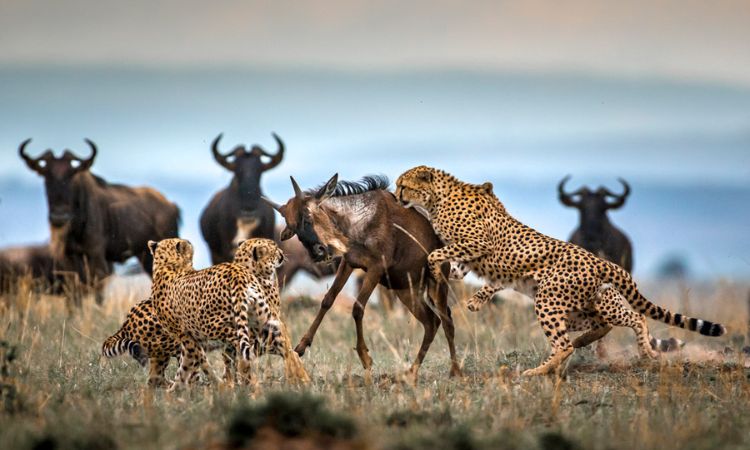
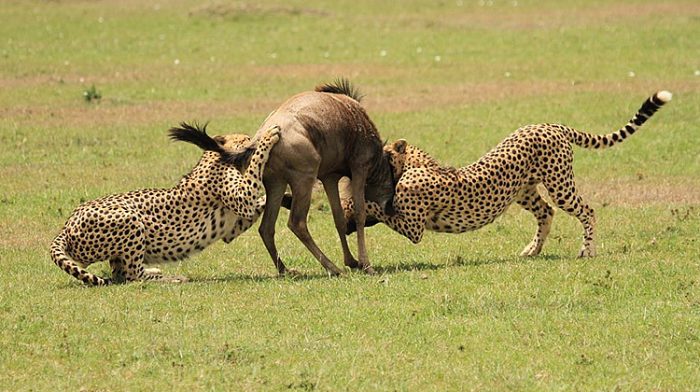
The migration is not merely a movement of herds but a dramatic display of life and survival, where the opportunistic nature of predators comes to the forefront. Lions take advantage of the sheer numbers, stalking the weaker, younger, or older wildebeests. Leopards, though more solitary, seize strategic opportunities to hunt, often targeting calves. Cheetahs, using their unmatched speed, chase down the stragglers separated from the herd.
However, it is perhaps the river crossings that encapsulate the rawest interaction between predator and prey. Crocodiles, some having waited all year for this season, launch ferocious attacks on crossing herds. These moments, while stark, underscore the harsh realities of nature and the circle of life, providing a gripping, albeit solemn, spectacle for safari-goers.
Understanding the impact of predators during the migration adds another layer to the safari experience, bridging the anticipation from knowing the best times to witness the migration to the choice of accommodation. As we transition to discussing the various lodging options near and within the Masai Mara, consider how proximity to key migration routes or predator hotspots could enhance your experience. From luxury lodges to eco-friendly camps, each offers a unique vantage point to immerse yourself in the drama and majesty of one of nature’s greatest events.
Accommodation and Safari Lodges
Accommodation options in Masai Mara during the Great Wildebeest Migration cater to a wide range of preferences and budgets, ensuring that every visitor can enjoy this natural spectacle comfortably and conveniently. Luxury safari lodges offer an unparalleled experience with amenities such as private decks, infinity pools, and personal butler services, positioned to offer breathtaking views of the migration routes. These establishments often feature guided game drives led by experienced rangers, providing guests with up-close encounters with the drama unfolding between predators and the migrating herds.
For environmentally conscious travelers, eco-friendly camps are designed to blend seamlessly with the surrounding landscape, minimizing their ecological footprint while maximizing the safari experience. These camps employ sustainable practices such as solar power and water conservation, allowing guests to enjoy their stay without compromising the pristine natural environment of the Masai Mara.
Budget-friendly accommodations, including campsites and guest houses, offer a more rustic experience without sacrificing the essence of the safari adventure. These establishments provide basic amenities and shared facilities, positioning visitors within reach of the migration routes without the luxury price tag.
Proximity to the migration routes is a critical factor in elevating the safari experience. Accommodations located near key crossing points or popular grazing areas offer guests the chance to witness the dramatic encounters between the migrating herds and their predators, connecting the dots to the preceding chapter’s exploration of the role these predators play in the migration’s drama.
Following this immersive lodging experience, guests can further enrich their understanding of the Masai Mara and its wonders through a variety of safari activities detailed in the next chapter, ranging from guided walks to cultural visits, each designed to complement the spectacle of the Great Wildebeest Migration.
A Guide to Safari Activities
Venturing beyond the confines of game drives, visitors to the Masai Mara during the Great Wildebeest Migration can immerse themselves in a variety of enriching safari activities that offer deeper connections with the landscape and its inhabitants. Guided bush walks present an intimate encounter with the African bush, enabling guests to learn about the flora and fauna from experienced guides, observe smaller wildlife up close, and understand the ecological significance of the migration.
For those seeking a bird’s eye view of the spectacular migration, hot air balloon safaris at dawn provide a serene and awe-inspiring perspective of the vast herds moving across the savannah, with the opportunity to capture panoramic photographs of the dramatic landscapes and wildlife below. This elevated vantage point is particularly coveted by photography enthusiasts and nature lovers eager to witness the sheer scale of the migration.
Cultural visits to nearby Maasai villages open up a window to the rich heritage and traditions of the Maasai people, who have coexisted with the wildlife of the Mara for centuries. These immersive experiences allow visitors to engage with Maasai warriors, learn about their pastoral lifestyle, traditional dances, and crafts, offering a meaningful context to the safari adventure.
Photographic tours, tailored specifically for capturing the essence of the migration, equip participants with expert advice and support to photograph the incredible scenes of predator-prey interactions, river crossings, and the vast herds grazing on the plains. These tours, often led by professional wildlife photographers, cater to both novice and experienced photographers wishing to hone their skills while documenting one of the world’s most spectacular natural events.
These activities, extending the safari adventure beyond observations from a vehicle, enrich the visitor’s experience in the Masai Mara, creating a well-rounded and unforgettable encounter with one of the planet’s most incredible wildlife spectacles. Engaging in these unique opportunities not only enhances personal understanding and appreciation of the ecosystem but also supports conservation efforts and sustainable tourism, as discussed in the following chapter.
Conservation Efforts and Sustainable Tourism
Following a thrilling overview of the array of safari activities available, it’s crucial to highlight the profound efforts in conservation and the promotion of sustainable tourism within the Masai Mara. The ecosystem’s health and the Great Migration’s continuity heavily depend on dedicated conservationists. These individuals and organizations tirelessly work to protect wildlife habitats from threats like poaching, habitat destruction, and the impacts of climate change.
Sustainable tourism plays a pivotal role in supporting these conservation efforts. By choosing eco-friendly lodges and tour operators who contribute to the preservation of the ecosystem, visitors directly support the local economy and conservation projects. This includes initiatives like anti-poaching patrols, community education programs, and wildlife research.
Visitors can also contribute to conservation efforts through responsible travel practices. This means adhering to park rules, minimizing plastic usage, and respecting wildlife by maintaining a safe distance during game drives and other activities. By being mindful of their environmental footprint, tourists can help ensure that the Masai Mara and the Great Wildebeest Migration remain vibrant for generations to come.
The essence of sustainable tourism in the Masai Mara is about creating a balance; ensuring that visitors have a transformative experience while contributing positively to the conservation of this magnificent ecosystem. As you prepare for your journey, bearing in mind the practical advice provided in the following chapter on the essentials for a safe and comfortable safari, remember to consider your impact and how you can make your visit beneficial for both the wildlife and the local communities living in and around the Masai Mara.
Preparing for Your Trip: Tips and Essentials
Preparing for your trip to witness the remarkable Great Wildebeest Migration in the Masai Mara requires thorough planning to ensure a memorable and hassle-free adventure. Following sustainable tourism practices, as discussed in conservation efforts, your preparation should not just focus on personal comfort but also on respecting the environs you’re about to explore. Here are essential tips and items to consider:
Packing Essentials:
– Lightweight, breathable clothing that blends with the natural environment; long sleeves and pants for protection against sun and insects.
– Comfortable, durable footwear for any walking or hiking activities.
– Broad-spectrum sunscreen, insect repellent, and a wide-brimmed hat to protect against the equatorial sun.
– High-quality binoculars and a camera with a good zoom function to capture distant wildlife without intruding on their space.
– Reusable water bottles and bags, emphasizing the importance of minimizing plastic waste in line with conservation efforts.
Health Preparations:
– Visit a travel clinic for advice on vaccinations well in advance of your trip. Essential vaccinations may include Yellow Fever, Typhoid, Hepatitis A, and Diphtheria.
– Malaria prophylaxis is recommended due to the presence of mosquitos in the area.
– Carry a personal first-aid kit equipped with basic necessities and any personal medication.
Travel Insurance and Documentation:
– Ensure your travel insurance covers medical evacuation and treatment, as remote safari locations may require airlifting in emergencies.
– Verify that your passport has sufficient validity and obtain a Kenyan visa if required.
Respecting the Environment and Local Communities:
As the next chapter will explore the cultural significance of the migration to the Maasai people, your preparation should also extend to understanding the customs and traditions of the local communities. Engaging with and contributing to the local economy respectfully and responsibly supports sustainable tourism and conservation efforts.
By preparing meticulously for your trip, not only do you ensure a comfortable and safe experience in the Kenyan wilderness but also contribute positively to the preservation of this magnificent natural phenomenon and the communities that coexist with it.
Reflecting on the Cultural Significance
Transitioning from the essentials of planning your trip, it is pivotal to delve into the profound cultural significance that the Great Migration holds for the Maasai people. The cyclical movement of the wildebeest through the Masai Mara is not merely a spectacle of nature but is deeply woven into the fabric of Maasai life. Historically, the Maasai have lived in harmony with the vast diversity of wildlife that shares their lands, including the migratory herds of wildebeest and zebra. These animals play a crucial role in the Maasai’s pastoral way of life, as their movement patterns dictate the health of pastures and the availability of water, both essential for the Maasai’s livestock.
The Great Migration embodies a time of renewal and is a significant event that marks the seasonality of the Maasai’s semi-nomadic lifestyle. It influences the timing of ceremonies and cultural rituals, with the patterns of migration closely observed and interpreted by Maasai elders. This deep spiritual connection underscores the respect and reverence the Maasai have for the land and its inhabitants, viewing the migration as a crucial phase of the natural cycle that sustains their way of life.
The Maasai’s traditional knowledge, passed down through generations, includes understanding the intricate behaviors of the migrating herds and their impact on the ecosystem. This knowledge underscores the coexistence between the Maasai community and wildlife, highlighting a relationship built on mutual respect and sustainability. The Great Migration, therefore, is not only a stunning natural phenomenon but also a cornerstone of Maasai cultural heritage, symbolizing the enduring bonds between the people, their livestock, and the wild animals that traverse their ancestral lands.
Conclusions
The Great Wildebeest Migration is not only a mesmerizing natural phenomenon but also a testament to the Masai Mara’s rich biodiversity. To experience this event in its full glory, a visit between July and October is ideal, when the Mara River becomes the stage for dramatic crossings and the circle of life unfolds before your eyes.