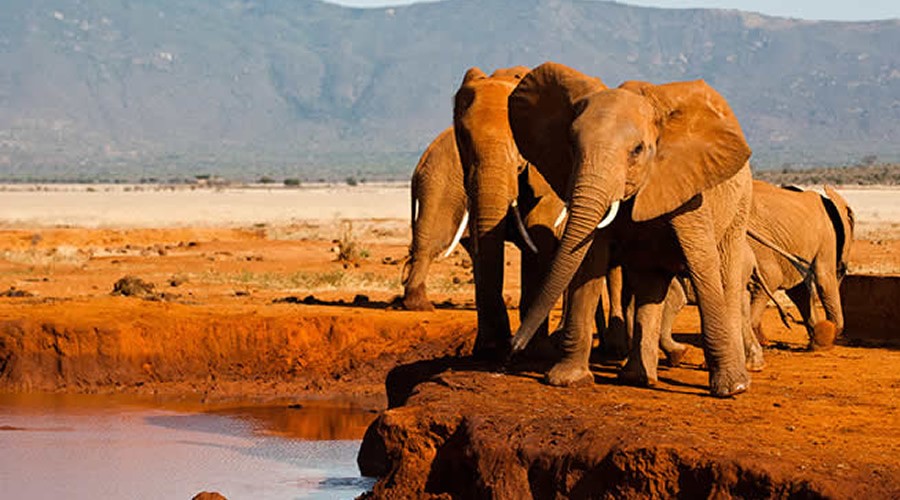
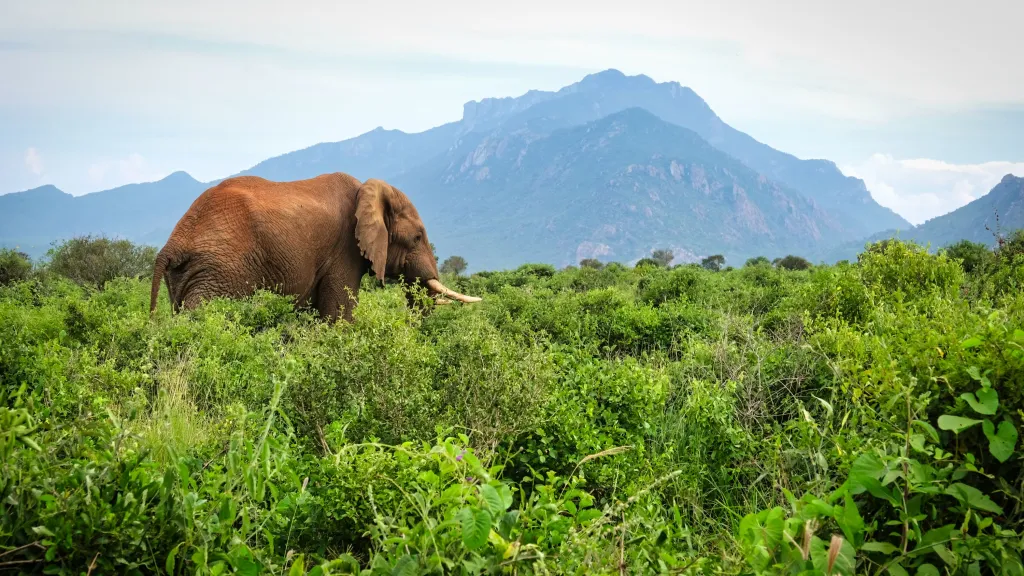
Some places aren’t just seen — they’re felt. Tsavo is one of those places. The light, the color, the scale — everything seems designed for a lens. The red earth, the vast skies, the silhouettes of elephants against the setting sun — each scene feels like a living masterpiece waiting to be captured.
For photographers, Tsavo National Park is more than a destination. It’s an endless studio of light and motion. Whether you’re chasing the perfect sunrise shot, documenting a lion’s gaze, or capturing the crimson dust clouds that define the park, every click of the shutter brings you closer to nature’s raw poetry.
Join Woodsly Adventures for the ultimate Tsavo National Park Adventure — a photography safari built around patience, precision, and passion.
Table of Contents
-
Why Tsavo is a Photographer’s Dream
-
The Colors and Light of Tsavo
-
Wildlife Photography Highlights
-
The Art of Patience in the Wild
-
Golden Hour – The Magic of Dawn and Dusk
-
Essential Photography Gear
-
Shooting the Big Five and Beyond
-
Landscapes and Composition Tips
-
Ethical Wildlife Photography
-
Guided Photo Tours with Woodsly Adventures
-
Combining Tsavo with Other Iconic Locations
-
Common Mistakes and How to Avoid Them
-
Final Thoughts – Capturing More Than Images
1. Why Tsavo is a Photographer’s Dream
Tsavo isn’t just one of Kenya’s largest national parks — it’s one of its most visually striking. Covering over 20,000 square kilometers, it offers everything a photographer could hope for: open savannahs, volcanic ridges, rivers, lava fields, and dramatic skies.
Unlike busier parks, Tsavo’s vastness means fewer vehicles and more authentic compositions. You don’t have to wait your turn to frame a shot; the wild is all yours.
For photographers seeking depth and solitude, Tsavo provides space — both creative and emotional.
2. The Colors and Light of Tsavo
Photographers often talk about “light,” but Tsavo offers something rarer: atmosphere. The park’s signature red soil reflects sunlight in a way that gives photos warmth and contrast unlike anywhere else.
At sunrise, the plains glow orange and pink. At midday, light bounces off the red dust, creating strong tones and textures. By sunset, everything turns to gold, and even the air feels luminous.
This constantly shifting light turns every shot into a story — a dance between fire and shadow.
3. Wildlife Photography Highlights
From the red elephants of Tsavo East to the leopards of Tsavo West, the park’s wildlife is as diverse as its terrain.
Top subjects for photographers:
-
Elephants: Their red hue, a result of Tsavo’s dust, creates incredible contrast with the landscape.
-
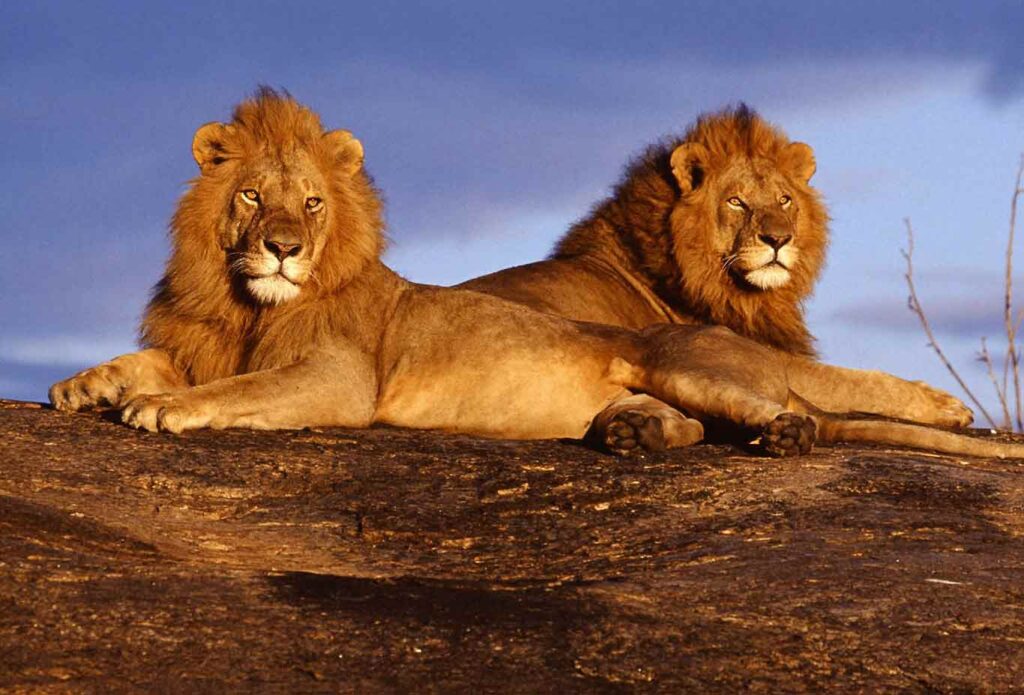
Lions: Often seen resting on open plains or rocky ledges.
-
Giraffes: Graceful silhouettes at sunrise.
-
Zebras: Perfect for black-and-white shots emphasizing pattern and texture.
-
Hippos and crocodiles: Best captured around Mzima Springs.
-
Birdlife: From lilac-breasted rollers to eagles, over 500 species offer endless opportunities for close-up and flight photography.
Every corner of Tsavo has its own subject and mood.
4. The Art of Patience in the Wild
Photography in Tsavo isn’t about chasing — it’s about waiting. The best shots often come when the world seems still. A lion’s slow yawn, an elephant calf nuzzling its mother, or the shimmer of dust rising after a herd passes.
Woodsly Adventures’ expert guides understand animal behavior, helping photographers position themselves at the right place and time — without disturbing nature’s rhythm.
Patience here is rewarded not just with images, but with experiences.
5. Golden Hour – The Magic of Dawn and Dusk
Ask any seasoned photographer — golden hour in Tsavo is pure magic.
Morning light (6:00–8:30 AM):
Soft, low light brings warmth to the red earth and catches the mist rising from the plains. Ideal for elephant portraits and landscapes.
Evening light (5:00–6:30 PM):
Rich, warm tones bathe the land in fire. Perfect for silhouettes and close-ups with dramatic skies.
Tip: Plan your game drives to coincide with these hours. Woodsly Adventures ensures photographers get the best conditions for each scene.
6. Essential Photography Gear
You don’t need an entire studio — just the right tools.
Recommended gear:
-
Camera body: A DSLR or mirrorless with fast autofocus.
-
Lenses:
-
70–200mm for general wildlife.
-
300–600mm for distant subjects.
-
24–70mm for landscapes and camps.
-
-
Accessories:
-
Bean bag for stability.
-
Extra batteries and memory cards.
-
Polarizing filter for midday glare.
-
Lens cloth (the dust is real).
-
And don’t forget your eyes — your best lens is your awareness of light and emotion.
7. Shooting the Big Five and Beyond
Tsavo offers all members of the Big Five, but each requires a unique approach.
-
Elephant: Capture texture. Focus on skin details and dust clouds.
-
Lion: Wait for golden light and eye-level angles.
-
Leopard: Early morning or late evening near trees and rocky areas.
-
Buffalo: Shoot in herds for scale and symmetry.
-
Rhino: Found mostly in Ngulia Rhino Sanctuary — use long lenses and quiet patience.
Beyond the Big Five, focus on smaller stories: an antelope in motion, a bird perched on a termite mound, or a storm rolling over the horizon.
8. Landscapes and Composition Tips
Tsavo’s drama lies in its contrasts — vast plains interrupted by lone baobabs, red ridges cutting through golden grass.
Composition ideas:
-
Use foreground elements (tracks, shrubs, or rocks) for depth.
-
Incorporate clouds and horizons to create balance.
-
Include wildlife in landscapes to show scale.
-
Experiment with symmetry — reflections on waterholes make powerful frames.
Every photo here tells not just what you see, but how it feels to stand there.
9. Ethical Wildlife Photography
True wildlife photography respects the subject.
Woodsly Adventures promotes responsible practices such as:
-
Never using flash on animals.
-
Keeping a respectful distance.
-
Avoiding feeding or calling animals for shots.
-
Leaving no trace in natural habitats.
The goal is to capture truth — wild, unscripted, and beautiful.
10. Guided Photo Tours with Woodsly Adventures
Woodsly Adventures offers specialized photo safaris where guides and drivers understand light, animal behavior, and positioning.
Each itinerary is flexible to suit photographers’ needs — from long waits for perfect lion shots to spontaneous detours for breathtaking landscapes.
Whether you’re shooting for art, documentation, or memory, these safaris help you create images that go beyond pictures — they become emotions on film.
11. Combining Tsavo with Other Iconic Locations
A true photography journey doesn’t end in one park. Woodsly Adventures helps travelers link Tsavo to other visual treasures across Kenya:
-
Amboseli Elephant Safari: Capture elephants with Mount Kilimanjaro as a backdrop.
-
Masai Mara Safari: Document the Great Migration and dramatic predator scenes.
-
Mombasa Beach Retreat: Transition from savannah sunsets to ocean horizons.
-
Wasini Island Marine Park Excursion: Perfect for underwater and coastal photography.
Together, these destinations create Kenya’s most photogenic circuit.
12. Common Mistakes and How to Avoid Them
-
Over-editing: Let the natural color of Tsavo’s light speak for itself.
-
Ignoring composition: Don’t just zoom in; step back and frame.
-
Chasing shots: Wait. The best moments unfold naturally.
-
Neglecting backup gear: Memory cards fail; dust happens. Always prepare.
Remember, photography is about connection, not perfection.
13. Final Thoughts – Capturing More Than Images
A photography safari in Tsavo isn’t just about taking pictures — it’s about seeing differently. It teaches patience, presence, and respect. It’s where you learn that beauty isn’t staged; it’s spontaneous.
Every shot becomes a memory, every memory a story. And with Woodsly Adventures, those stories are framed not just in pixels, but in emotion.
Book your Tsavo National Park Adventure today and let your camera — and your heart — capture Kenya’s wildest masterpiece.