There are few places on earth where light, land, and life align as perfectly as they do in Amboseli National Park. Every morning, the golden sun rises behind Mount Kilimanjaro, casting long shadows across the plains where elephants graze. Every evening, the dust turns amber, and silhouettes move against the mountain like scenes from a dream.
For photographers, Amboseli is not just a destination — it’s a revelation. It’s where patience and timing meet perfection. Where every click of the camera feels like capturing the soul of Africa.
At Woodsly Adventures, our Amboseli Elephant Safari is tailored not just for travelers, but for storytellers — those who see beauty in the curve of a tusk, the shimmer of heat, and the dance of light over ancient land. Whether you’re a seasoned professional or an aspiring photographer, Amboseli will give you the images and emotions you’ve always dreamed of.
Table of Contents
-
Why Amboseli Is a Photographer’s Paradise
-
The Magic of Mount Kilimanjaro
-
The Elephants – Gentle Giants in Golden Light
-
The Seasons of Light – Timing Your Safari for the Perfect Shot
-
Best Locations for Photography in Amboseli
-
Tips for Wildlife and Landscape Photography
-
Meeting the Maasai – Portraits of Culture and Color
-
Night Photography Under African Skies
-
Combining Amboseli with Other Photo Destinations
-
Conclusion – Capture the Story, Not Just the Scene
1. Why Amboseli Is a Photographer’s Paradise
Amboseli is small by African standards — just 392 square kilometers — yet its beauty is immense. Its open plains, shimmering salt pans, and reflective marshes form natural studios where wildlife, light, and composition come together effortlessly.
The secret lies in contrast. Every shot offers something powerful — the vastness of space beside the intimacy of animal behavior, the pale dust rising behind dark silhouettes, or the snow of Kilimanjaro glowing above a sunburnt savannah.
For photographers, Amboseli is forgiving yet endlessly surprising. You don’t have to search for beauty here; it comes to you — walking, flying, or thundering across the horizon.
2. The Magic of Mount Kilimanjaro
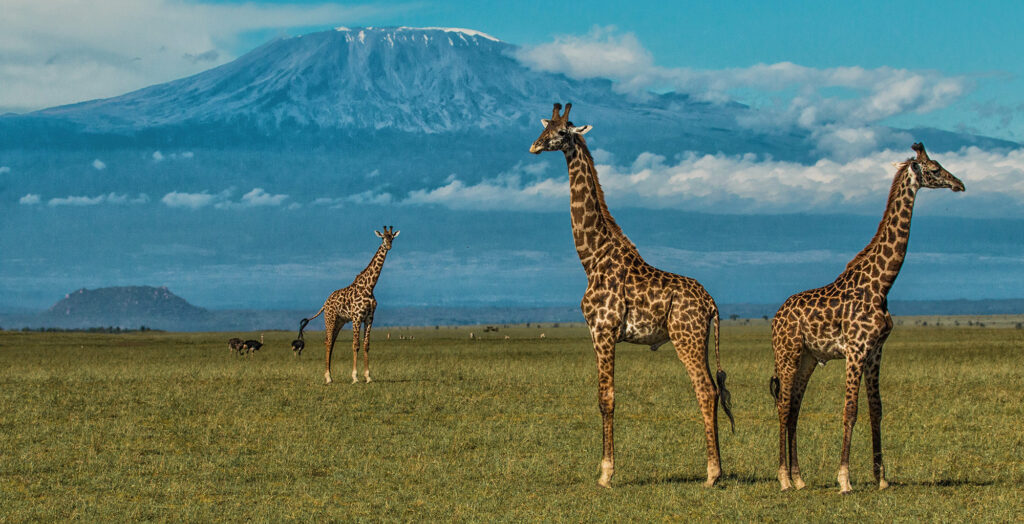
No photograph of Amboseli feels complete without Mount Kilimanjaro, Africa’s tallest peak and one of the most recognizable backdrops in wildlife photography.
The mountain rises not from Kenya, but from Tanzania, yet its most majestic view is from Amboseli. At dawn, when the air is cool and clear, Kilimanjaro’s snow-capped summit seems to float above the plains.
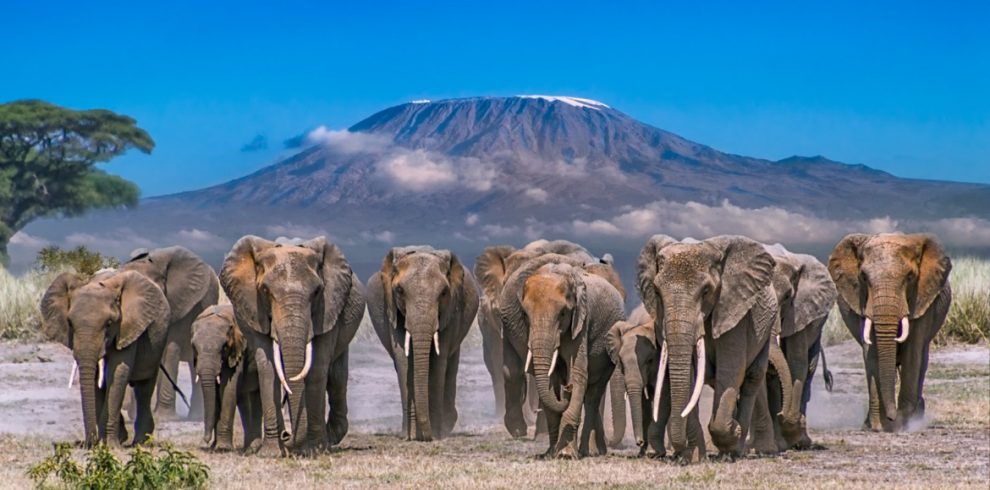
Photographers dream of that perfect composition — elephants in the foreground, mountain in the distance. It’s a scene that has graced the pages of National Geographic and countless wildlife calendars, but seeing it in person is incomparable.
Woodsly Adventures designs its morning game drives to maximize this light. Guides know the angles and timing that best capture the mountain before clouds gather mid-morning. It’s not just about being there — it’s about being there at the right moment.
3. The Elephants – Gentle Giants in Golden Light
Amboseli’s elephants are among the most famous in the world — and the most photographed. These herds are descendants of long-protected lineages, known for their immense tusks and calm behavior.
They often move in family groups across the plains, creating perfect compositions of scale and emotion. Photographing them requires both patience and empathy — understanding how they interact, communicate, and move through the landscape.
During the dry season, elephants gather near the marshes, dusting themselves with red earth as the sun sets behind them. It’s a moment photographers call the “Amboseli glow” — a soft, coppery light that makes every frame look cinematic.
Travelers on the Amboseli Elephant Safari often capture breathtaking portraits here, guided by experts who position the vehicle for ideal lighting and perspective.
4. The Seasons of Light – Timing Your Safari for the Perfect Shot
Light in Amboseli is never static. It changes not only by hour but by season. Understanding this is key to creating extraordinary photographs.
-
June to October (Dry Season): Clear skies, crisp air, and golden light. Best for wildlife photography and mountain visibility.
-
November to December (Short Rains): Lush greens return, reflections form on wet plains — perfect for landscapes and birds.
-
March to May (Long Rains): Dramatic clouds, moody light, and vibrant colors ideal for creative photography.
-
January to February: Transitional light — a balance between clarity and softness, excellent for both portraits and wide shots.
Woodsly Adventures customizes itineraries based on these seasonal rhythms. Their local guides know exactly where to go and when, ensuring you’re never chasing light — you’re meeting it.
5. Best Locations for Photography in Amboseli
Amboseli offers diverse shooting environments within short distances. Some key spots include:
-
Observation Hill: A panoramic view of the park, especially beautiful at sunrise or sunset.
-
Enkongo Narok Swamp: Home to hippos, elephants, and countless birds reflected in still water.
-
Elephant Corridors: Between Amboseli and Tsavo National Park, where long-tusked herds migrate through red soil and acacia woodland.
-
Dust Plains: The open areas at sunset produce hauntingly beautiful silhouettes.
-
Maasai Settlements: Rich with color, movement, and cultural depth.
Each site offers a different story — from wide-angle landscapes to close-up wildlife portraits.
6. Tips for Wildlife and Landscape Photography
To truly capture Amboseli’s essence, combine technical skill with emotional awareness. Here are field-tested tips from Woodsly Adventures guides and photography partners:
-
Start Early, End Late: The best light happens within two hours of sunrise and before sunset.
-
Use a Zoom Lens: A 200–400mm lens is ideal for capturing wildlife without intrusion.
-
Compose with Context: Include Kilimanjaro or acacia trees to give scale and story.
-
Mind the Dust: Amboseli’s dryness creates beautiful haze but can damage gear — keep lenses protected.
-
Be Patient: Wait for behavior — a mother leading her calf, an elephant raising dust — moments that tell emotion.
Amboseli photography isn’t about speed. It’s about stillness — letting the landscape speak.
7. Meeting the Maasai – Portraits of Culture and Color
Beyond wildlife, Amboseli offers another world of photographic inspiration — its people. The Maasai add depth and color to every frame, their red shúkà cloths contrasting beautifully against the earth tones of the plains.
Photographing the Maasai requires respect and participation. Through Woodsly Adventures, travelers meet local communities ethically — no staged scenes, no exploitation. Guests are invited to learn first, then photograph, ensuring images reflect real connection, not observation.
Maasai portraits, taken in soft light or beside village fires, often become guests’ most cherished photographs — images that tell stories of dignity, resilience, and harmony with nature.
For deeper immersion, pair your Amboseli photo safari with a visit to a Maasai village, guided by community members themselves. It’s not just about taking pictures — it’s about listening through the lens.
8. Night Photography Under African Skies
When the sun sets, Amboseli doesn’t go dark — it glows differently. The night skies here are astonishingly clear, unpolluted by city lights. The Milky Way stretches across the horizon, and Kilimanjaro’s outline becomes a faint silhouette against starlight.
Night photography sessions with Woodsly Adventures capture these celestial moments safely and beautifully. Using tripods and long exposures, photographers can frame acacia trees, glowing camps, or even wandering elephants under a billion stars.
It’s an experience that turns photographers into poets — where silence, stars, and shadow blend into something unforgettable.
9. Combining Amboseli with Other Photo Destinations
For photographers exploring Kenya, Amboseli works perfectly within a broader visual journey.
-
Masai Mara Safari: Dramatic predator-prey scenes, Great Migration, and wide savannah light.
-
Tsavo National Park Adventure: Rugged terrain, red elephants, and cinematic landscapes.
-
Mombasa Beach Retreat: Coastal sunrises, dhows at sea, and tranquil ocean reflections.
-
Wasini Island Marine Park Excursion: Underwater photography with coral reefs and dolphins.
Each destination offers unique textures and tones — from Amboseli’s golden dust to Mombasa’s turquoise waves — creating a full visual story of Kenya through the lens.
10. Conclusion – Capture the Story, Not Just the Scene
Photography in Amboseli is not about chasing perfect conditions — it’s about surrendering to them. The mountain may hide behind clouds, or elephants may wander in unexpected directions, but every frame holds truth.
Here, beauty is not staged — it’s real, raw, and ever-changing. The dust, the light, the silence — all become part of the image.
With Woodsly Adventures, every moment in Amboseli becomes more than a photo; it becomes a memory crafted with intention, guided by experts who understand both the rhythm of nature and the art of photography.
Book your Amboseli Elephant Safari today and bring home more than images — bring home the feeling of standing beneath Kilimanjaro, camera in hand, heart wide open.